

The 10 Best Bass Preamp Pedals: How to Choose, Where to Put It, and How to Dial It In
Every rehearsal room has a different amp. Every stage has a different PA. A bass preamp is how you bring your sound to all of them. For many bassists it's the one pedal that never leaves the board.
We're a bass-only shop in Japan, and preamps are one of the things customers ask us about most. Here are the 10 we recommend, plus what a preamp actually does, how to choose one, where to put it, and how to set it.
The 10 Preamps at a Glance
| Model | Type | EQ | DI out | Drive | Price |
|---|---|---|---|---|---|
| Beyond Bass Wired 2S | Tube, clean | 3-band | No | Tube texture | $$ |
| Sadowsky SBP-2 | Onboard circuit in a pedal | 2-band boost | No (SBP-1 has it) | No | $ |
| Jad Freer Audio CAPO | Dual preamp + saturator | 3-band | 2 outputs | Yes | $$$$ |
| MXR M80 Bass D.I.+ | 2-channel | 3-band + Color | Yes | Yes | $$ |
| Tech 21 SansAmp Bass Driver DI V2 | Amp simulator | 3-band + switchable | Yes | Yes | $$ |
| NUX Melvin Lee Davis | Multi-function, IR | 3-band | Yes | Blend | $ |
| Darkglass Microtubes B7K | Drive + preamp | 4-band | Yes | Yes | $$$ |
| EBS MicroBass 3 | 2-channel | Sweepable mid | Yes | Yes | $$$ |
| BOSS BB-1X | Drive + preamp | 2-band | Yes | Yes | $ |
| Inner Bamboo B-II | Clean, always-on | 3-band | No | No | $$$ |
What Does a Bass Preamp Do?
1. It's your amp's tone section, in a box
A bass amp has two parts. The power amp makes the signal loud enough to drive speakers. The preamp shapes the tone with gain and EQ. A preamp pedal is that tone-shaping section on its own, small enough to fit in your gig bag. Whatever amp you plug into, your core sound comes with you.
2. It lowers impedance
A passive bass puts out a high-impedance signal. It picks up noise easily, and long cables roll off the highs so the bass sounds thinner. A preamp converts it to low impedance, so cable length and noise matter much less. That's why so many passive bass players swear by them.
3. It's often a DI, too
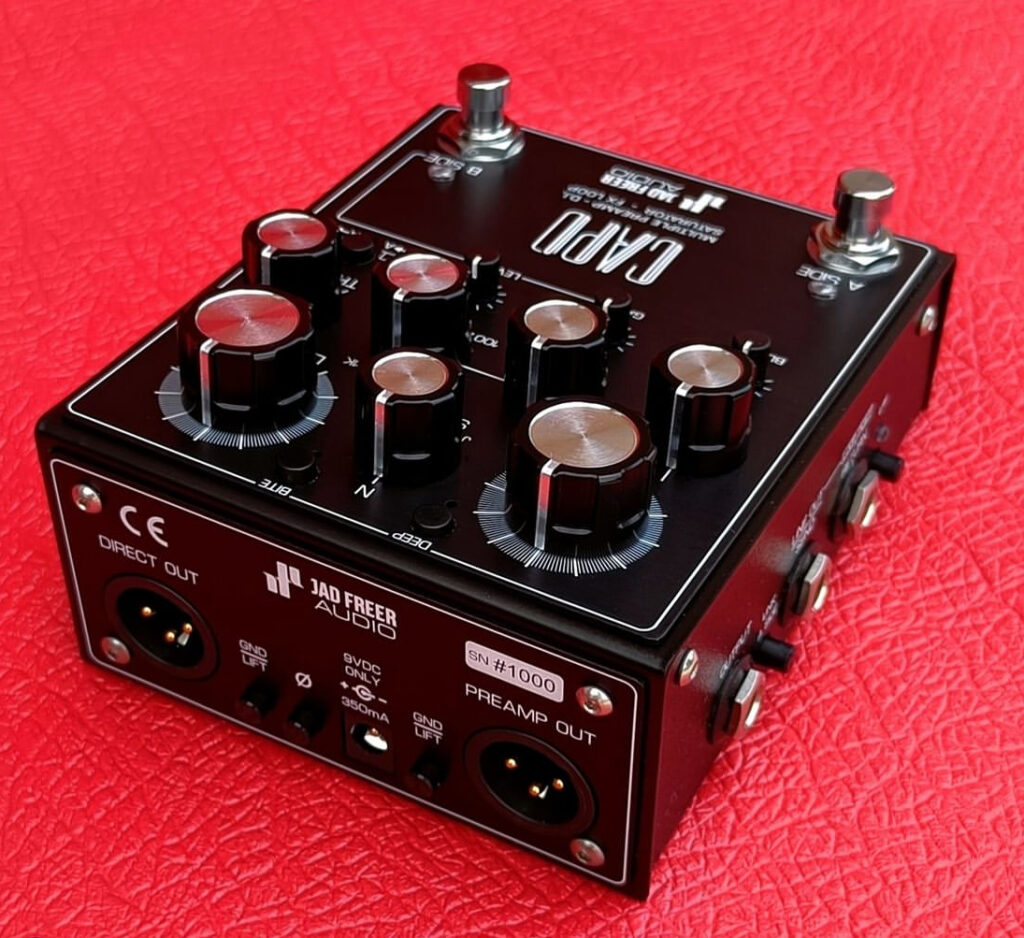
At most venues, the audience hears what goes to the mixing desk, not your amp. A DI turns your signal into a balanced one that travels long distances without noise. A preamp with an XLR output does this job too, so you can go straight to the desk or your audio interface.
Pedal vs. Onboard Preamp
Pedal preamps live on your board. Switch basses or amps and your setup stays the same. They're easy to swap and carry, but you'll need power and extra cables. They suit players who use several basses or play through a different amp every night.
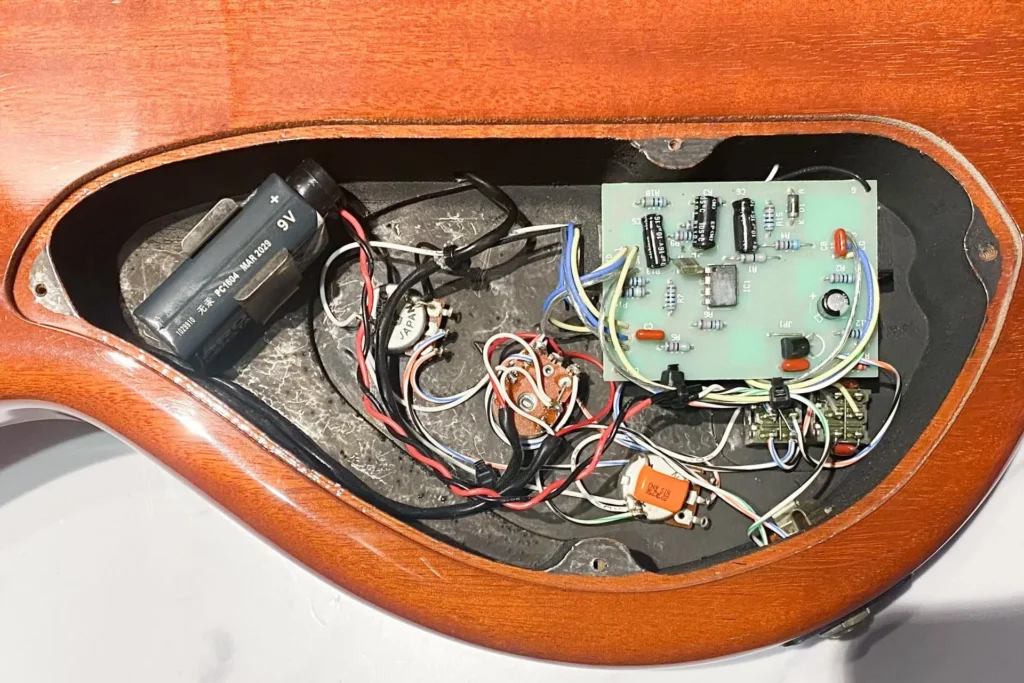
Onboard preamps live inside the bass, which is what makes it "active." No board or extra cables, and you can change your tone right at your fingertips. You'll need to change batteries, and adding one to a passive bass means modifying it. Most high-end basses are active. Plenty of players use both: the pedal sets the foundation, and the onboard EQ handles small changes mid-song.
How to Choose
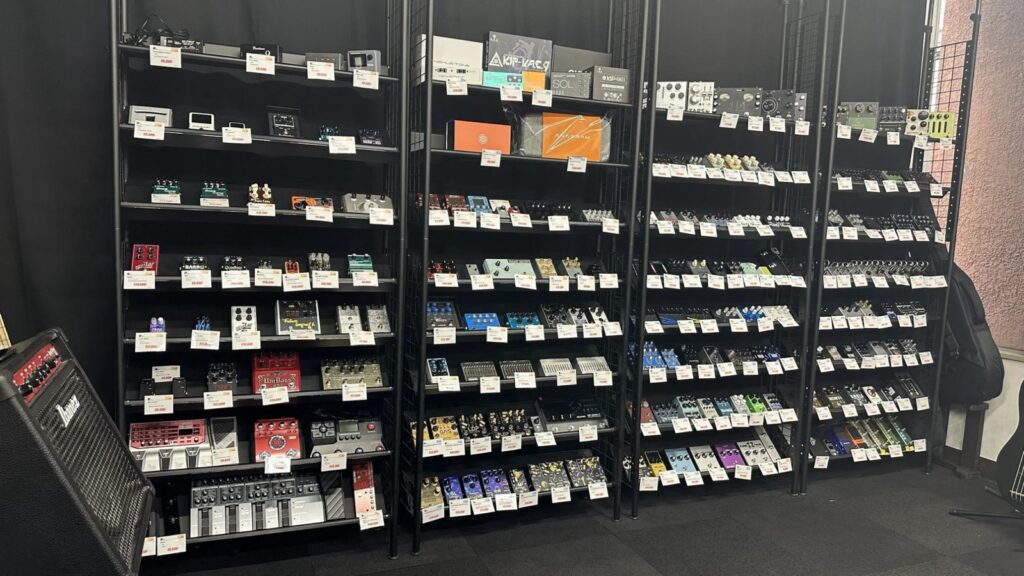
Our effects store in Yokohama.
By budget
- Entry ($): BOSS BB-1X, NUX Melvin Lee Davis, Sadowsky SBP-2. A great first preamp, or all you need if you just want to fix your tone.
- Mid ($$): MXR M80, SansAmp Bass Driver DI V2, Beyond Bass Wired 2S. The proven live workhorses. Choose by character: drive, tube warmth, or clean.
- Premium ($$$+): Darkglass B7K, EBS MicroBass 3, Inner Bamboo B-II, Jad Freer Audio CAPO. For when drive quality, routing, or pure fidelity is worth paying for.
By use
- Locking in your live sound: pick one with an XLR DI and ground lift (M80, SansAmp V2, B7K, MicroBass 3).
- Home practice and recording: look for a headphone out or a cab simulator (NUX Melvin Lee Davis, MicroBass 3).
- Drive in the same box: M80, B7K, MicroBass 3, or BB-1X.
- Keeping your bass's natural voice: Sadowsky SBP-2, Inner Bamboo B-II, or Beyond.
A quick test when you try one
Set every EQ knob to noon and switch the pedal on and off. The less it changes, the more it's a "corrective" preamp. The more it changes, the more it's a "character" preamp. Neither is better. Just know which one you're buying.
Where to Put It in Your Signal Chain
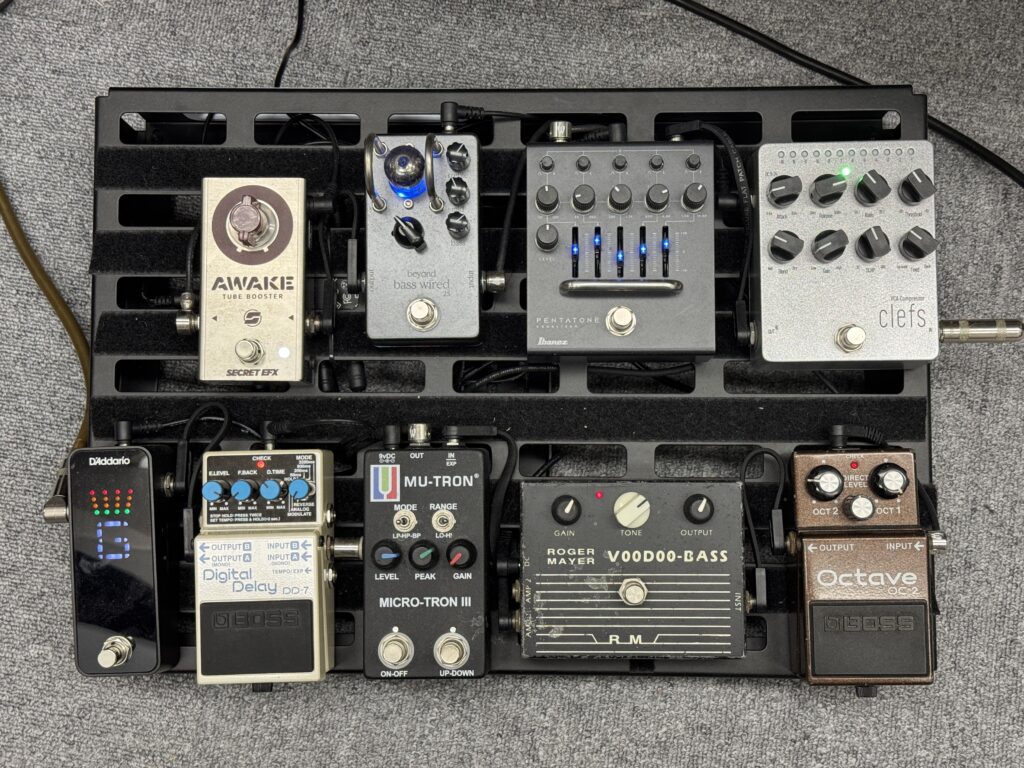
The default: last on the board, right before the amp or PA. The preamp finishes your sound, so you don't want other pedals changing it afterward.
- Bass → preamp → other pedals → amp: lowers impedance first, so it's the most noise-resistant. Effects reach the amp but not the PA.
- Bass → other pedals → preamp → amp: the most common setup. Your full sound, effects included, goes to the PA through the DI.
- Bass → pedals → preamp → pedals → amp: treats the preamp as a drive. Handy if you want reverb or delay after your distortion.
Amp input or effects return?
Plug into the input and the amp's own preamp adds its character. Plug into the return (power amp in) and you skip the amp's preamp, so you hear your pedal and nothing else. The amp's gain and EQ won't work in that case, so start with the volume low and bring it up slowly.
How to Set It
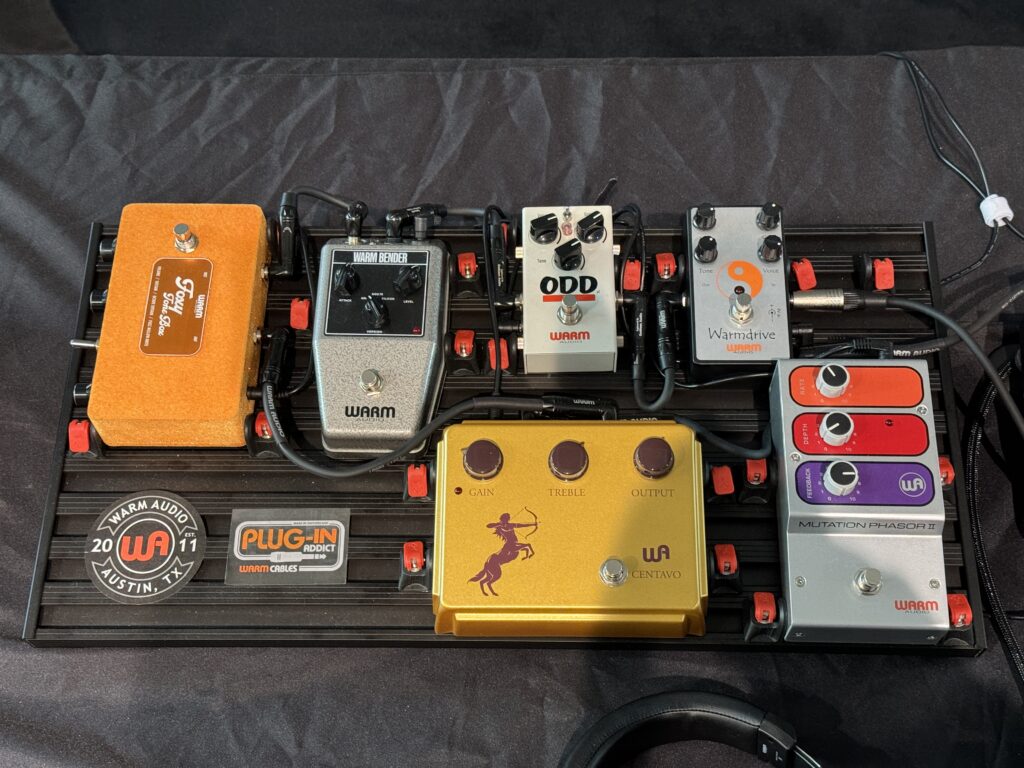
Gain: as high as you can without clipping
Dig in hard and set the input gain just below where it clips. Too low and you'll end up boosting noise later in the chain. Then match the output level so there's no volume jump when you switch it on.
EQ: cut before you boost
- Start with everything at noon.
- If it sounds muddy, cut a little bass. If it lacks definition, add a little mid.
- Set the treble last for attack. Too much brings up noise and finger squeak.
The mids are where the human ear is most sensitive. A small cut makes room for guitar and vocals; a small boost pushes you forward in the mix. And decide which EQ does what: if the preamp and the amp both boost the lows, the sound gets muddy fast.
Our 10 Recommended Bass Preamps
1. Beyond Bass Wired 2S Bass Preamp
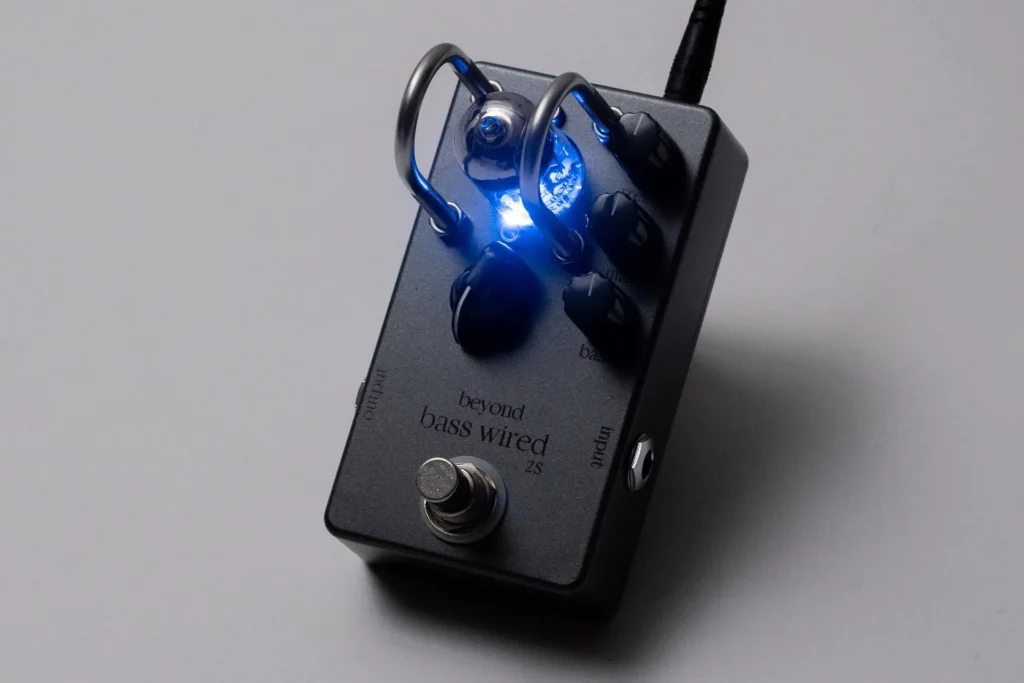
A tube-equipped preamp from Beyond, a Japanese company founded by former Sony engineers. Our team at Geek IN Box was involved in its development. The controls are simple: Volume, Bass (65 Hz), Middle (500 Hz), and Treble (4 kHz).
Most bass EQs center the low band at 40 Hz. Beyond chose 65 Hz to avoid the boominess you often get from a 40 Hz boost, so you control the bass's presence and push, not the mud. Just running your bass through it adds density from the lows to the mids, with a touch of compression and saturation. A GIB-exclusive blue LED version also exists.
2. Sadowsky SBP-2 Bass Preamp
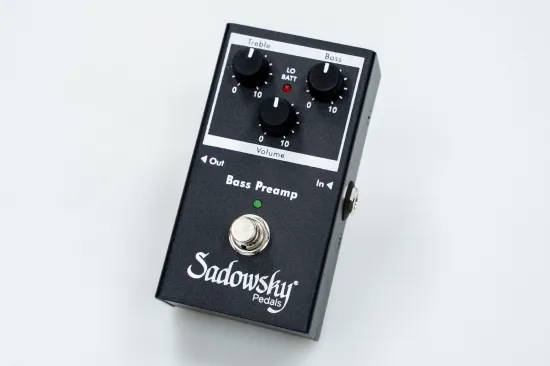
The famous Sadowsky onboard circuit, loved by Marcus Miller and Will Lee, in pedal form. The EQ only boosts: bass at 40 Hz and treble at 4 kHz, up to +18 dB. It's built to add what's missing, and it's great at giving the bass a clear place in the mix. Run a passive Jazz Bass through it and you get that Sadowsky weight and clarity. Need an XLR DI? Go for the SBP-1.
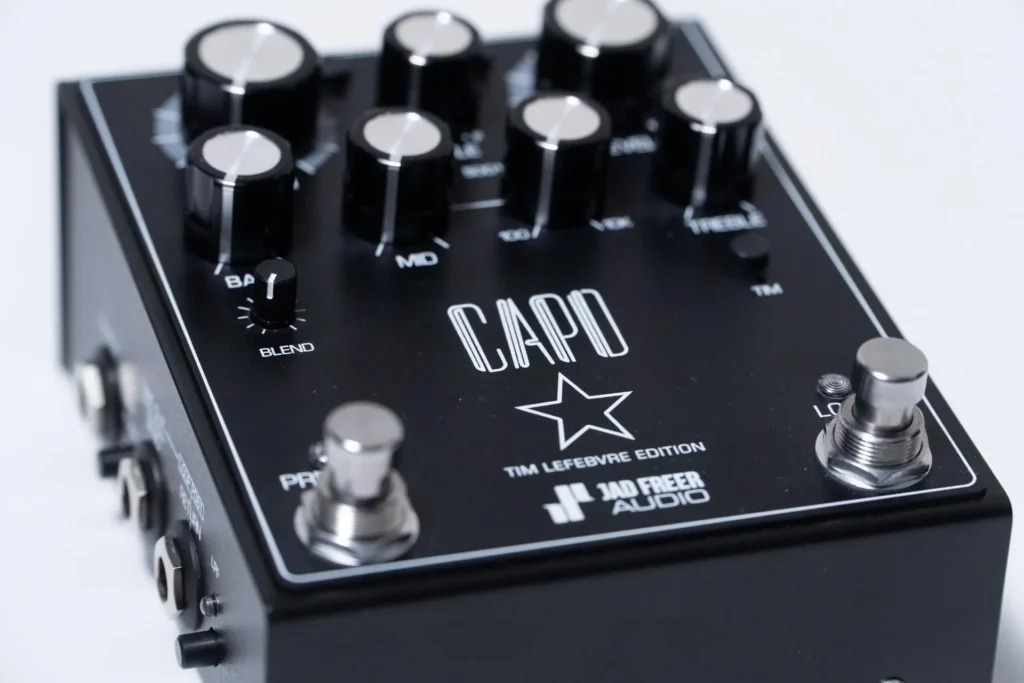
3. Jad Freer Audio CAPO Bass Preamp
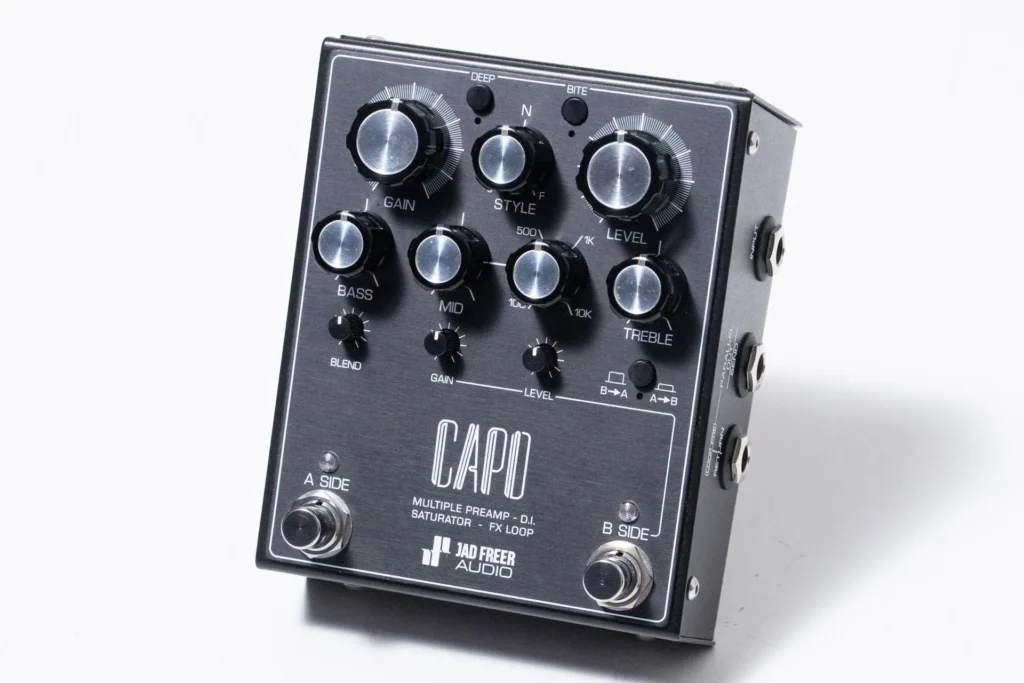
From Italy, a two-in-one preamp: a clean A SIDE and a tube-amp-style B SIDE that can also run in series. Its J & F saturator blends in amp-like grit while keeping the clean signal intact. With a 3-band EQ, two DI outputs, and two effects loops, it's expensive, but it can replace your preamp, drive, and routing in one box.
4. MXR M80 Bass D.I.+
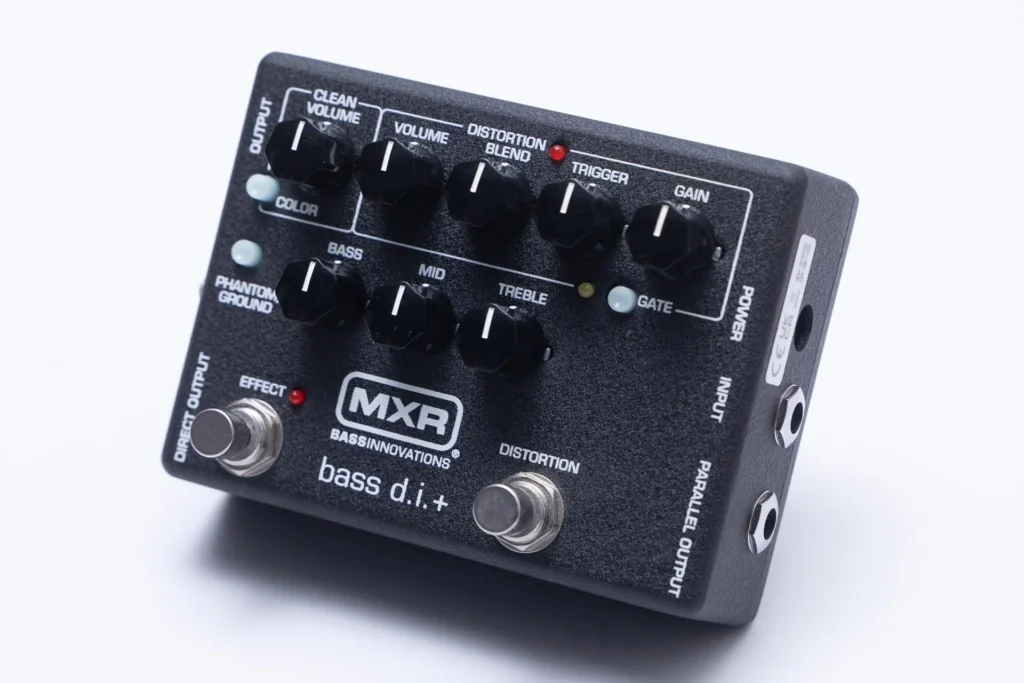
A true standard, used by pros in every genre. The clean channel is honest and corrective, with a 3-band EQ and a Color switch that adds a scooped lows-and-highs boost. The separate distortion channel is raw and high-gain, with a Blend knob and a noise gate. Two channels, one pedal, ready for any gig. If you don't need drive but want a sweepable mid, look at the MXR M81.
5. Tech 21 SansAmp Bass Driver DI V2
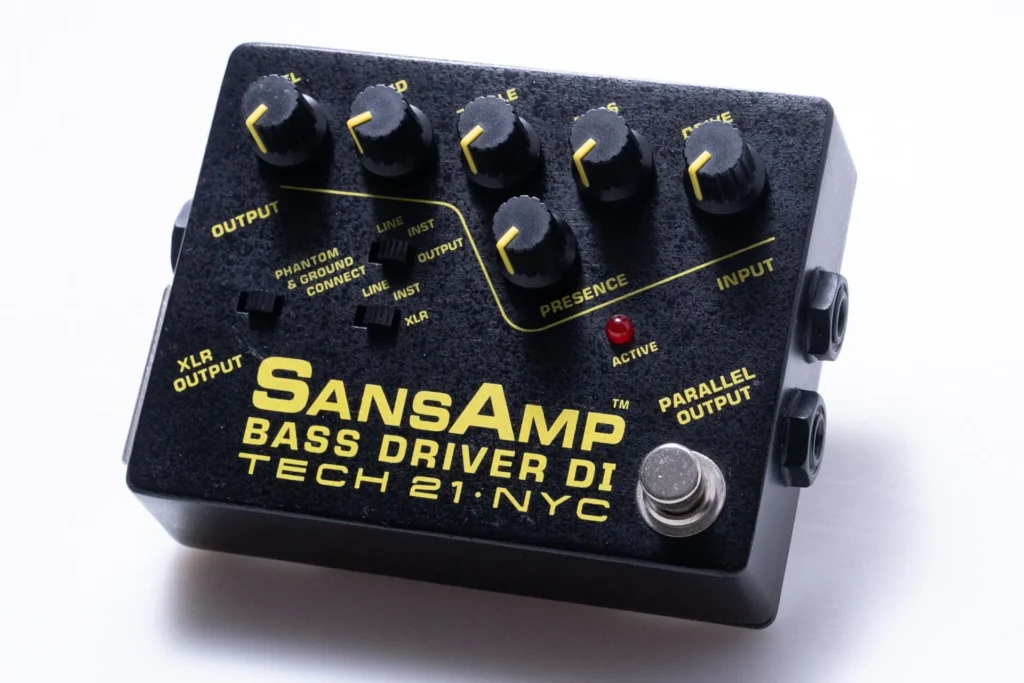
The black box with yellow lettering that helped define modern bass tone. Version 2 adds a Mid control plus switches to change the mid and bass frequencies. Many players find it easier to use than the older, heavily scooped version. It runs on a 9V battery, an adapter, or 48V phantom power through the XLR. If you want one DI preamp to start with, this is the classic choice.
6. NUX Melvin Lee Davis Bass Preamp + DI
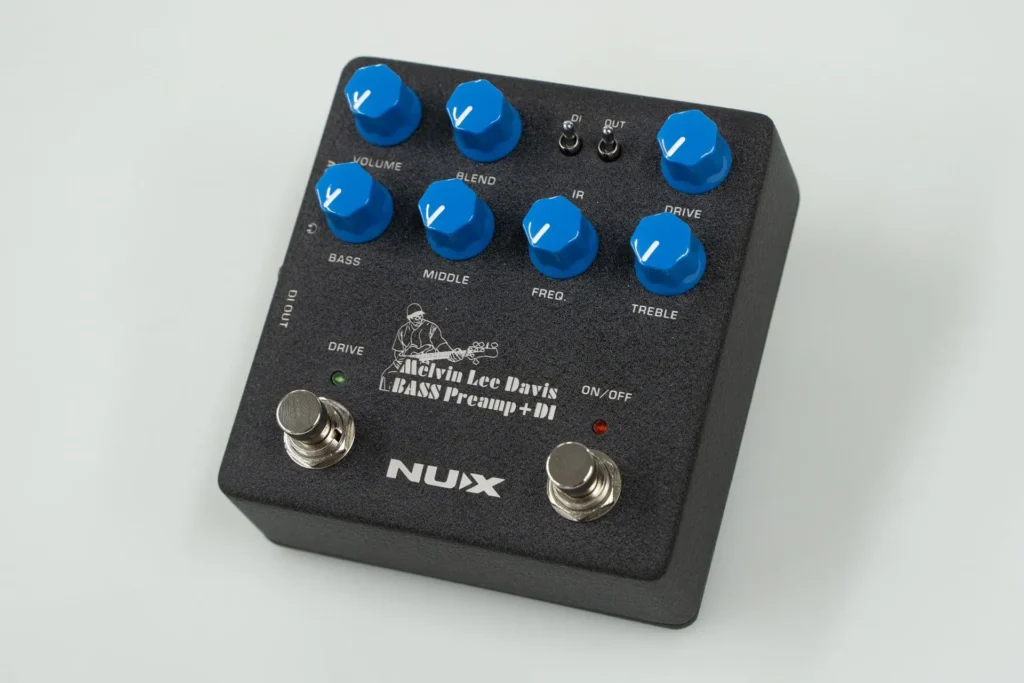
Melvin Lee Davis's signature pedal adds IR cab simulation to a 3-band EQ. Use the DI out or headphone jack and it sounds like you're standing in front of an amp, which makes it ideal for practicing and recording at home. A blendable, saturated overdrive rounds it out. A lot of features and good sound for the price.
7. Darkglass Microtubes B7K
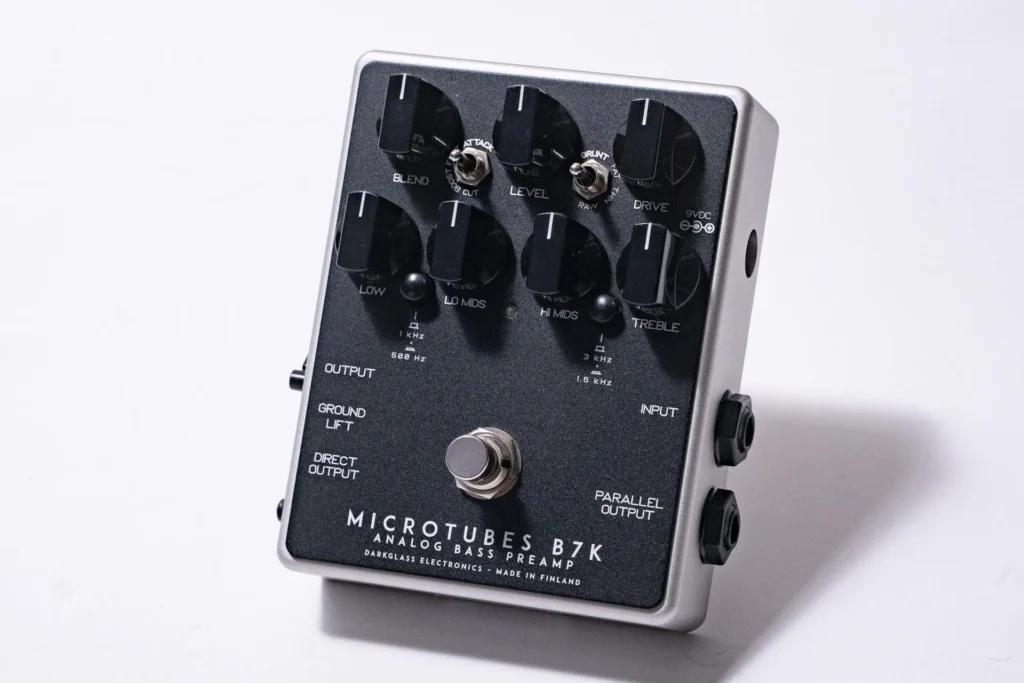
Finland's Darkglass at its most iconic. Deep, aggressive drive, with low mid and high mid bands that each have switchable frequencies, plus Grunt and Attack switches to shape the lows and highs. The current lineup includes the B7K V2 and the B7K Ultra V2, which adds a cab-simulated XLR out, headphone out, and aux in. EQ and switches differ between them, so check the specs before you buy.
8. EBS MicroBass 3
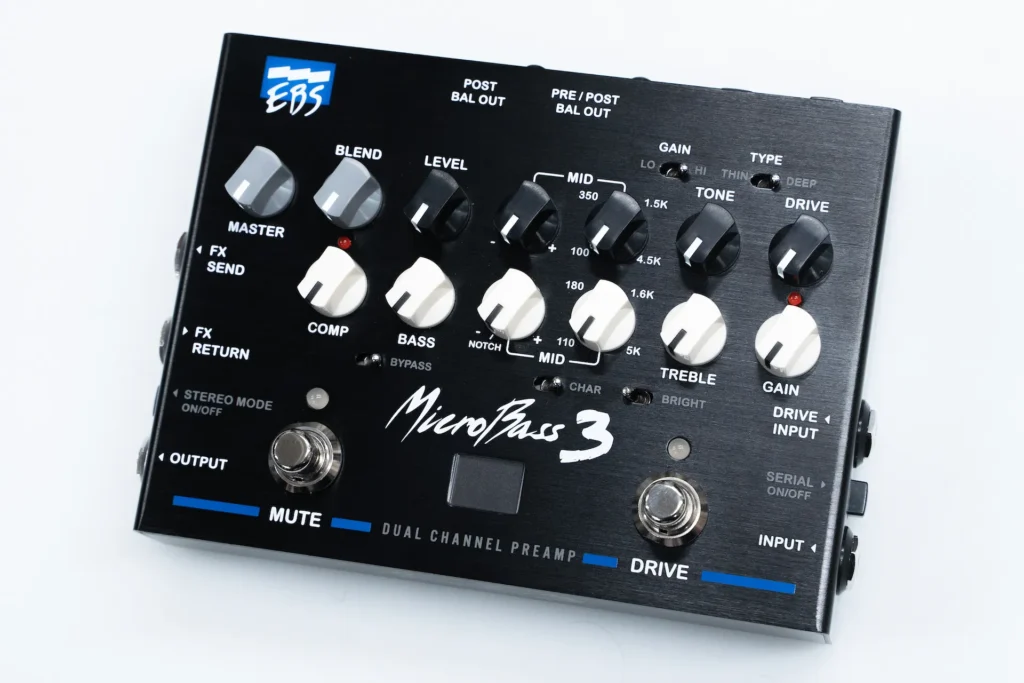
The latest in Sweden's long-running MicroBass series. The clean channel is classic EBS: clear, hi-fi, and true to your bass. The drive channel adds amp-like saturation and compression. With a sweepable mid, DI out, aux in, and headphone out, it covers studio, stage, and home practice in one unit.
9. BOSS BB-1X
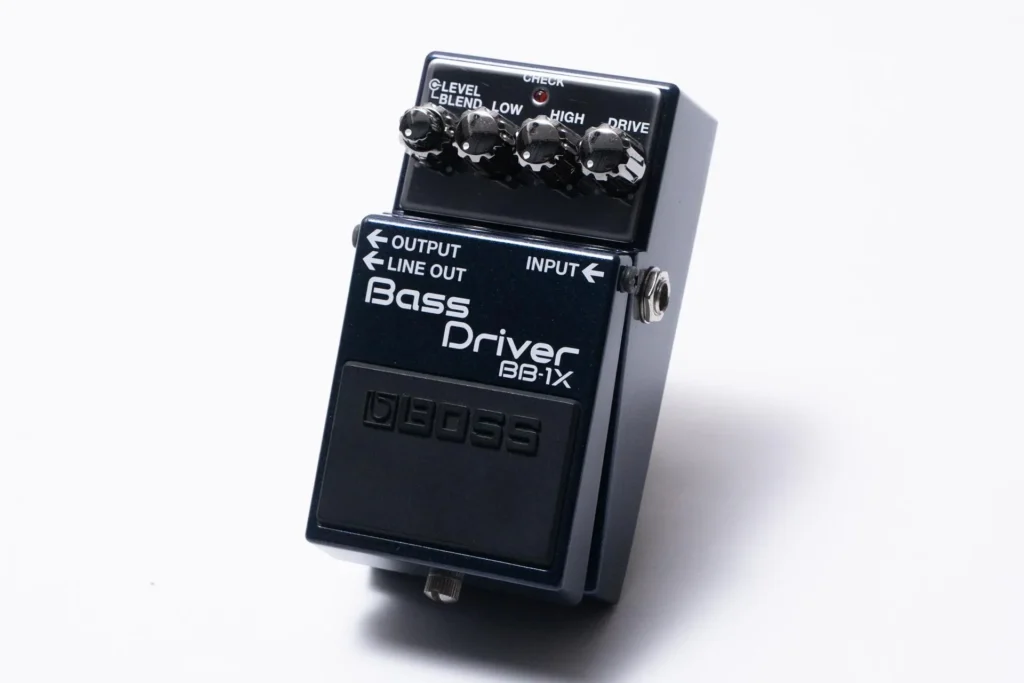
BOSS's bass drive and preamp in a compact pedal. The Drive goes from natural grit to heavy distortion, and Blend keeps your core tone intact. It's thick and punchy, and it holds onto your playing's nuance even at high gain. A balanced output lets you go straight to the PA or recorder. A drive pedal and a preamp in one, at a great price and size.
10. Inner Bamboo Bass Instruments B-II Bass Preamp
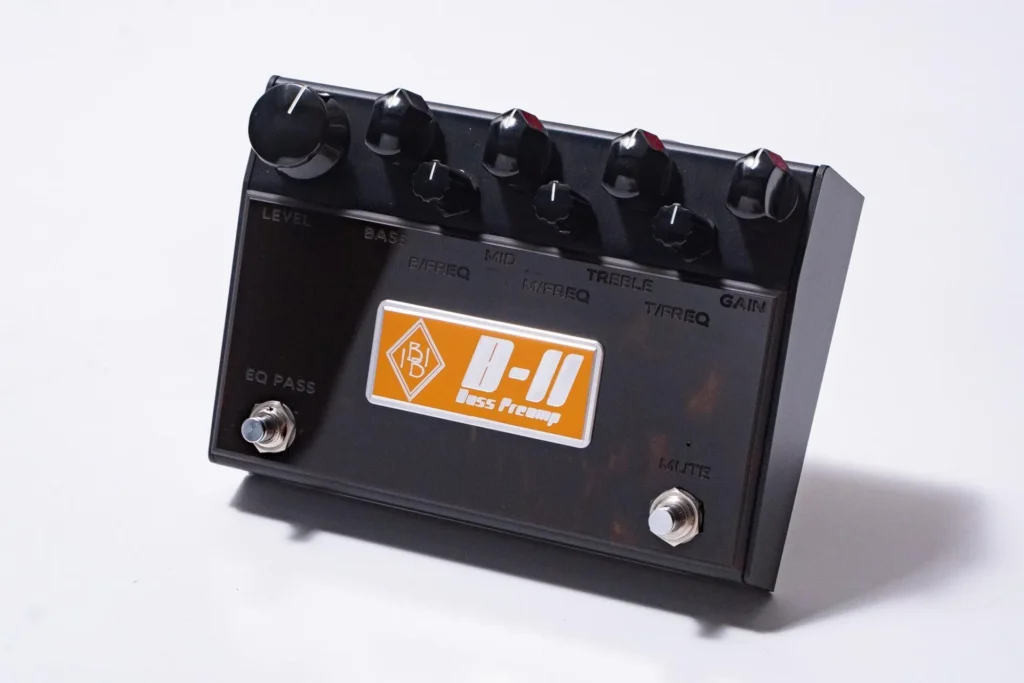
A "real" preamp in the original sense, with enough gain to drive a power amp directly. Internal voltage boosting gives it plenty of headroom. The sound is very clear and uncolored, and that's exactly why players love it: few pedals simply give you your bass back. Bass and treble have four selectable frequencies, the mid is fully sweepable, and the pedal can't be bypassed. It's designed to stay on all the time. It can also power other pedals.
From the GIB Bench

Shunsuke Saga, founder of Geek IN Box.
On the Beyond Bass Wired 2S, which our founder Shunsuke Saga helped develop, we deliberately kept the bass and mid bands narrow. When the bands are too wide, turning a knob changes the overall volume too much, and the low end gets blurry. Some players might feel the EQ is too subtle at first, but a stronger EQ isn't always a more useful one.
FAQ
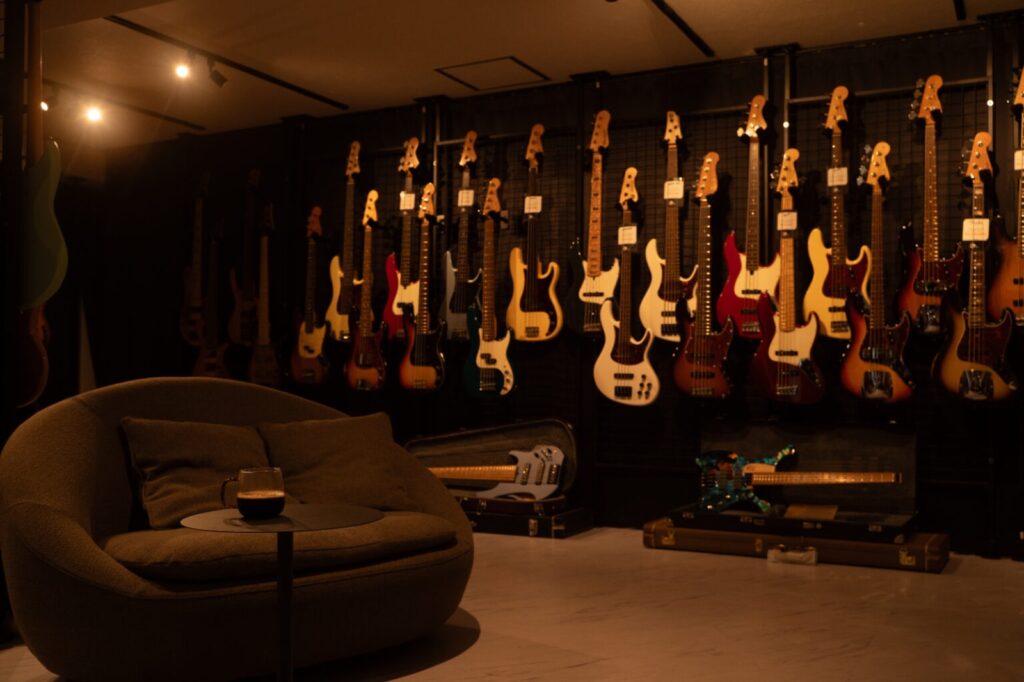
GIB Lounge, our test-play floor in Yokohama.
Do I need a preamp pedal with an active bass?
Not necessarily, since the bass already has one built in. It still helps if you play through a different amp every gig or want to lock in what goes to the PA. Keep one of the two EQs close to flat so you don't double-boost the same frequencies.
Do I need both a preamp and a DI?
A preamp with an XLR out does both jobs. On bigger stages, some players still add a separate DI, because if the preamp loses power, the PA signal goes with it.
Should a preamp stay on all the time?
Clean preamps, yes. With drive models, the usual approach is to leave the clean side on and switch the drive in when you need it. Match the on and off volume so nothing jumps.
Can I use a guitar preamp or amp sim on bass?
You can plug it in, but most cut the low end, so your bass loses its foundation. Stick with bass-specific models, or ones with a blend control.
Shop with Confidence from Japan
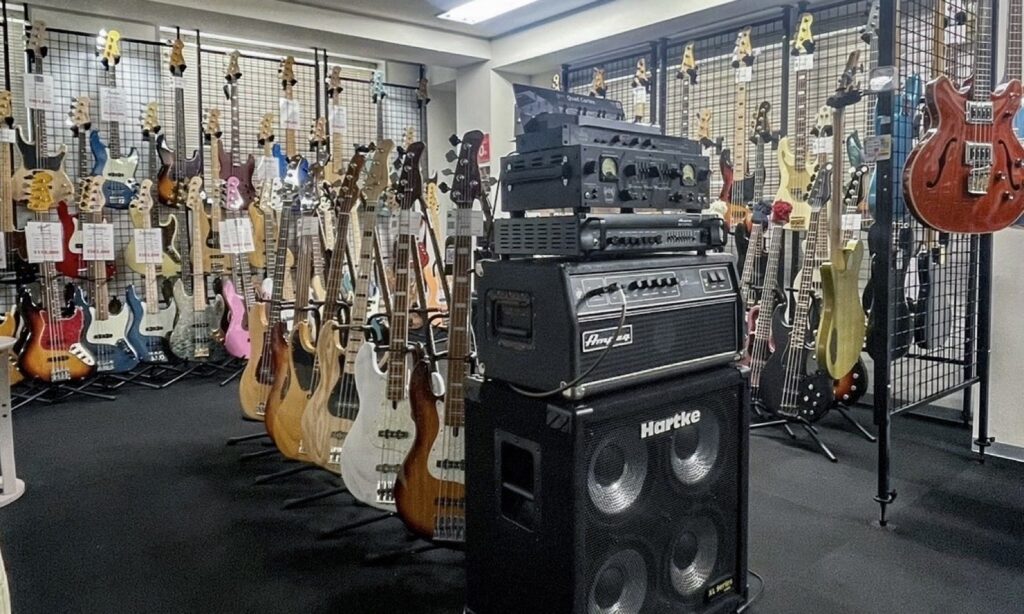
Geek IN Box Yokohama.
Geek IN Box ships worldwide, and every price already includes shipping and import duties, so there are no surprise charges when your order arrives. Every instrument goes through our highest level of quality control before it leaves Japan.


