

Bass Pedal Order: Where to Put Your Compressor, Drive, Preamp, and More
Once you own more than a couple of bass pedals, one question always comes up: what order should they go in? The same pedals can sound thicker or thinner, cleaner or noisier, just by changing their order.
Here's the order we recommend at our bass shop, and the reasoning behind each spot.
The Short Answer

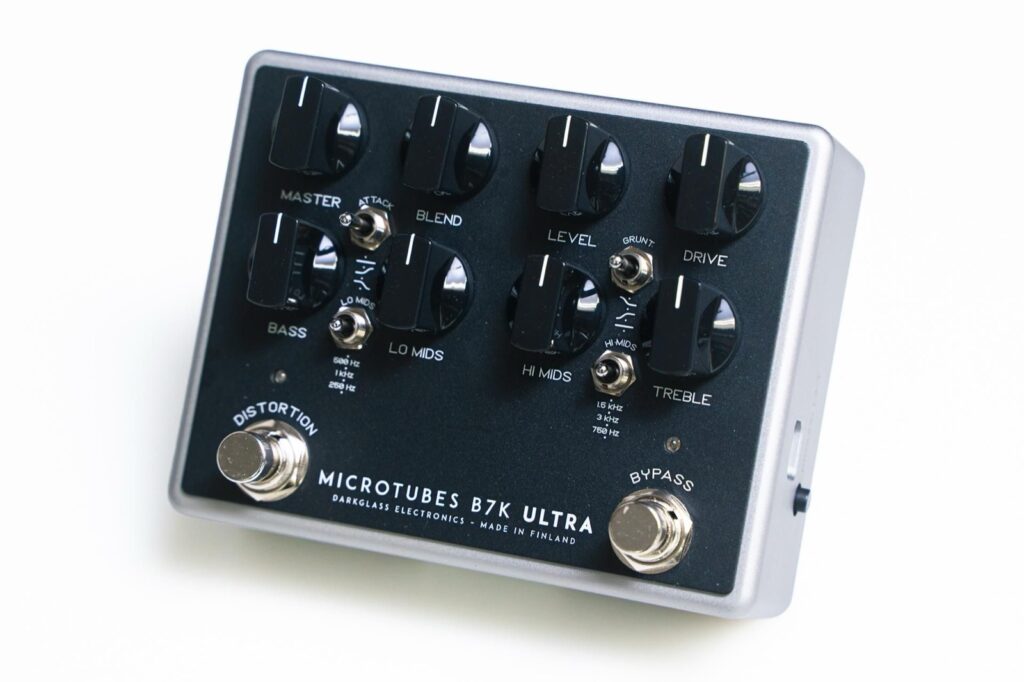
Darkglass Microtubes B7K Ultra V2.
If you're not sure, start here:
Bass → Tuner → Octave / pitch → Compressor → Envelope filter → Drive → Preamp / EQ → Modulation → Delay / reverb → Amp or DI
The logic is simple: pedals that read or tidy up your signal go first; pedals that spread it out or add space go last. There's no single right answer, but this is the base you can always come back to.
Where Each Pedal Goes, and Why
Tuner: first
A tuner reads most accurately when it gets your bass's raw signal. Most pedal tuners also mute the output when engaged, so putting it first makes tuning between songs or switching basses quick and silent.
Octave and synth: near the front

Aguilar Octamizer.
Octavers and bass synths detect the pitch you play and build a new sound from it. After drive or modulation, the signal is too complex to track, so notes warble or drop out. Keep them as close to your dry signal as possible.
Compressor: before drive

Aguilar TLC Compressor.
A compressor evens out your dynamics. Before the drive, it feeds a consistent signal into it, so the distortion behaves more evenly. After the drive, it controls the volume of the distorted sound instead. Start with it in front, and try it after if you want something different.
Envelope filter: after the compressor, before drive
An envelope filter reacts to how hard you play. After a compressor, it responds more evenly. Before the compressor, every change in your attack comes through. For funk, where your dynamics are the effect, putting it before the compressor is worth trying.
Drive: in the middle
Overdrive and fuzz sit in the middle of the chain. Drive also boosts any noise coming from the pedals before it, so if noise bothers you, add a noise gate right after it.
Preamp and EQ: after drive, or last
After the drive, a preamp or EQ shapes your final tone, distortion included. A preamp with a DI output usually goes at the very end of the board, feeding the PA. We go deeper on this in The 10 Best Bass Preamp Pedals.
Modulation and ambience: toward the end
Chorus, flanger, delay, and reverb add movement and space to a finished sound. Put them before the drive and the drive distorts the swirl and the echoes too, which muddies everything. Keep them near the end.
Things That Only Bass Players Need to Watch
Check you're not losing low end
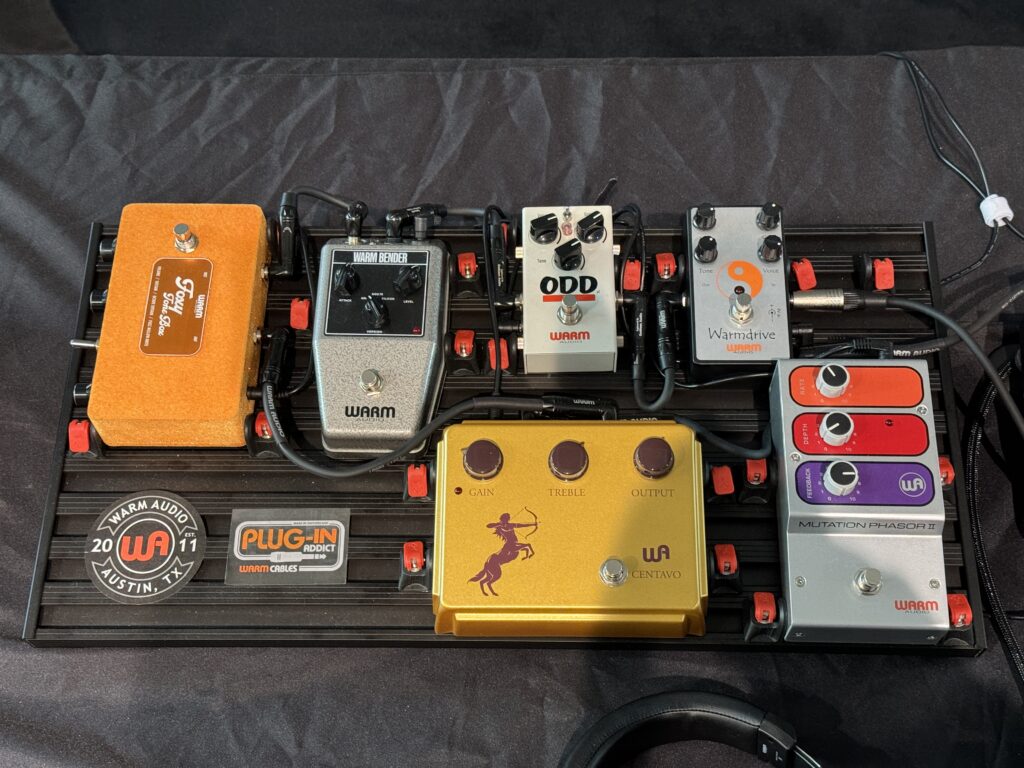
Many guitar pedals cut lows, so your bass gets thin. For drive and modulation especially, choose pedals with a blend (dry/wet) control so your fundamental stays intact.
Cable length and buffers
Chain a lot of true-bypass pedals and the total cable length adds up, slowly rolling off your highs. On bigger boards, put a buffer at the start. Some tuners and compressors already have one built in, so check what you own.
Power supply noise
More pedals means more chances for power noise, especially when digital pedals and drives share a supply. A power supply with isolated outputs solves most of it.
Example Boards
Simple board (3–4 pedals)
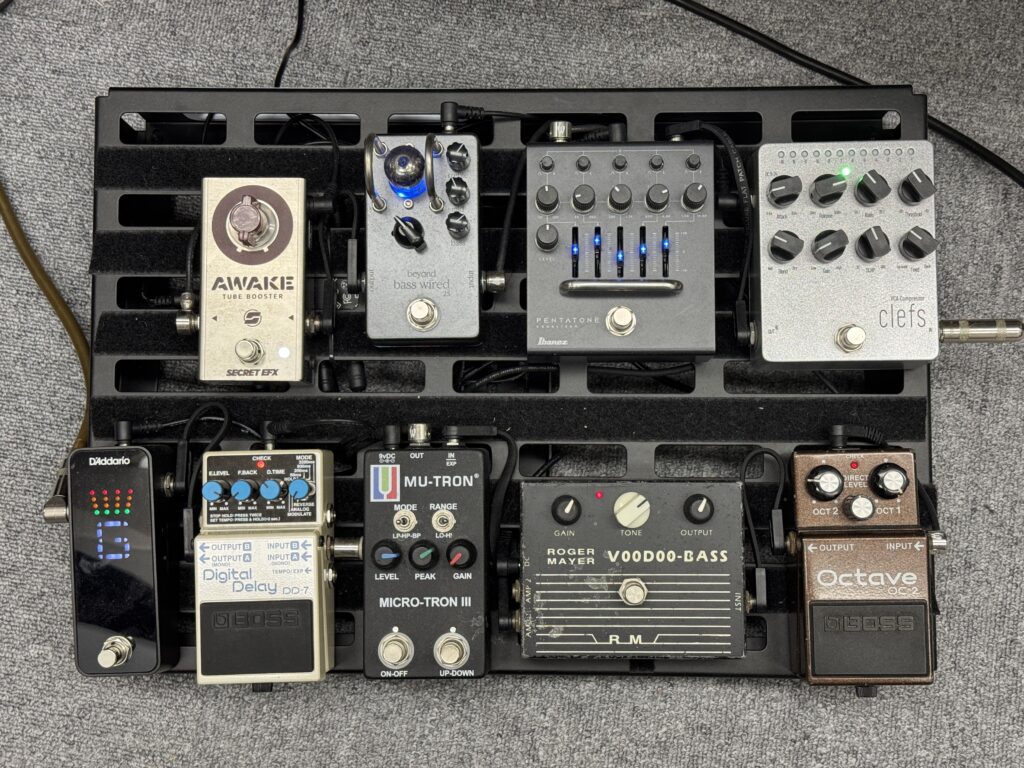
Tuner → Compressor → Drive or preamp → DI
The classic first board. The compressor evens things out, the drive or preamp sets your tone, and the DI sends a solid signal to the PA.
Drive-heavy rock
Tuner → Compressor → Drive → Noise gate → EQ → DI
With the EQ after the drive, you can target exactly the frequencies that cut through the band.
Funk and slap
Tuner → Envelope filter → Compressor → Octave → Preamp / DI
The filter goes first to catch every dynamic, and the compressor tames the overall level after it. Octavers can be picky about placement, so try a couple of spots with your actual pedal.
Summary
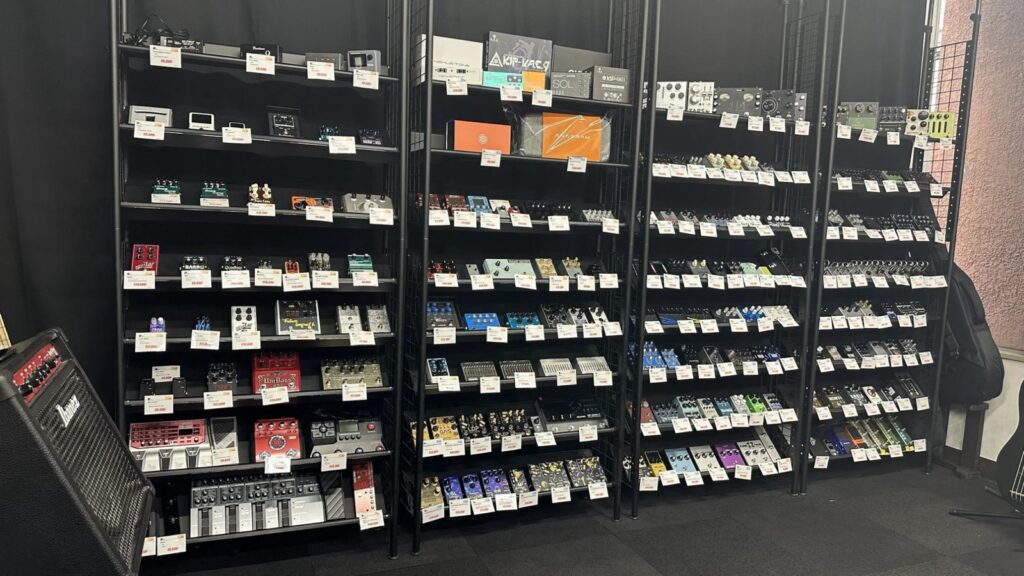
Our effects store in Yokohama.
The basic order is tuner → pitch → compressor → filter → drive → preamp/EQ → modulation → ambience. Use it as your starting point, then move things around to suit your music and your ears.
Shop with Confidence from Japan
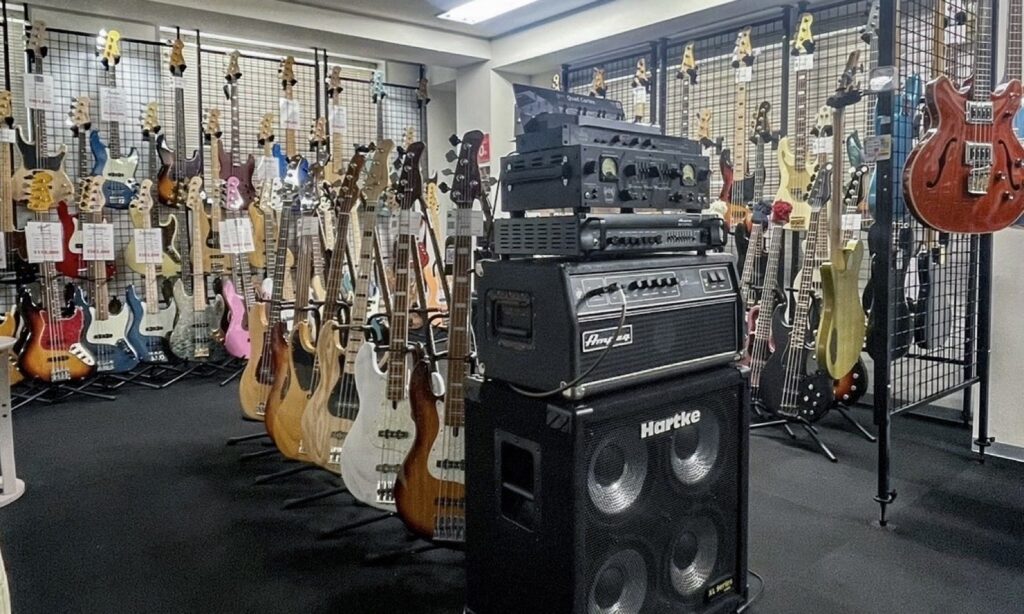
Geek IN Box Yokohama.
Geek IN Box ships worldwide, and every price already includes shipping and import duties, so there are no surprise charges when your order arrives. Every instrument goes through our highest level of quality control before it leaves Japan.


