

Music Man StingRay: Complete History, Spec Guide & Rare Japan-Made Models (EX/VT)
In the history of the electric bass, the Music Man StingRay reigns as the "third standard" alongside Fender's Precision Bass and Jazz Bass.
Since its debut in 1976, the StingRay has revolutionized the music scene as the original active bass, captivating countless bassists with its uniquely punchy, cutting tone — especially when it comes to slap technique.
In this article, GIB takes a deep dive into the StingRay's history, the finer details of its spec changes over the decades, and the Japan-made variation models like the "EX" and "VT" that remain highly sought after on the used market.
The History of the Music Man StingRay (A Timeline Overview)
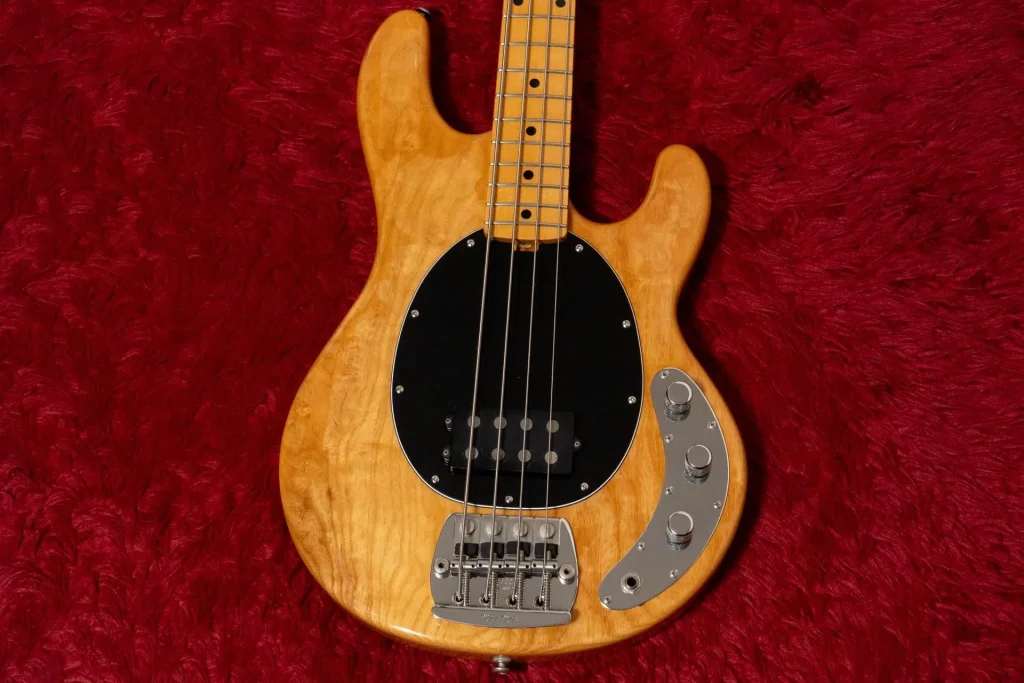
The StingRay's history can be broadly divided into two eras.
The Pre-Ernie Ball Era (1976–1984)
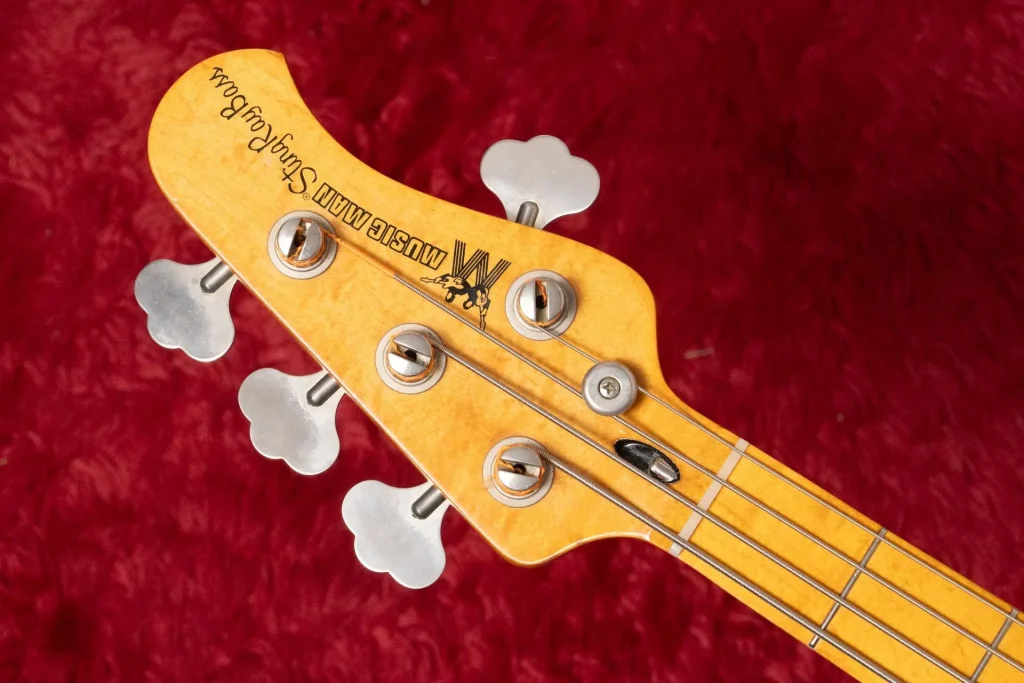
Music Man was founded by Leo Fender, the founder of Fender, together with Tom Walker, who had worked alongside him at Fender. In 1976, they released the StingRay to the world.
With its oversized humbucker pickup, an onboard 9V-powered preamp (active electronics), and the distinctive "3+1" tuner layout, it broke every convention of the time. Basses from this period are known as "Pre-Ernie" models, and today they're revered as vintage instruments on the used market, commanding extremely high prices.
The Ernie Ball Era (1984–Present)

In the early 1980s, Music Man was acquired by Ernie Ball, the famous string manufacturer.
Under Ernie Ball's stewardship, quality control tightened significantly, and the StingRay went through a series of major updates — body contouring for a comfortable fit, the adoption of a 3-band EQ, and a reinforced neck joint — cementing its status as the "modern StingRay" we know today.
[For the Enthusiasts] Detailed Spec Changes Through the Years
Here we break down the finer spec changes that no StingRay discussion would be complete without.
Preamp / EQ Circuit (2-Band vs. 3-Band)
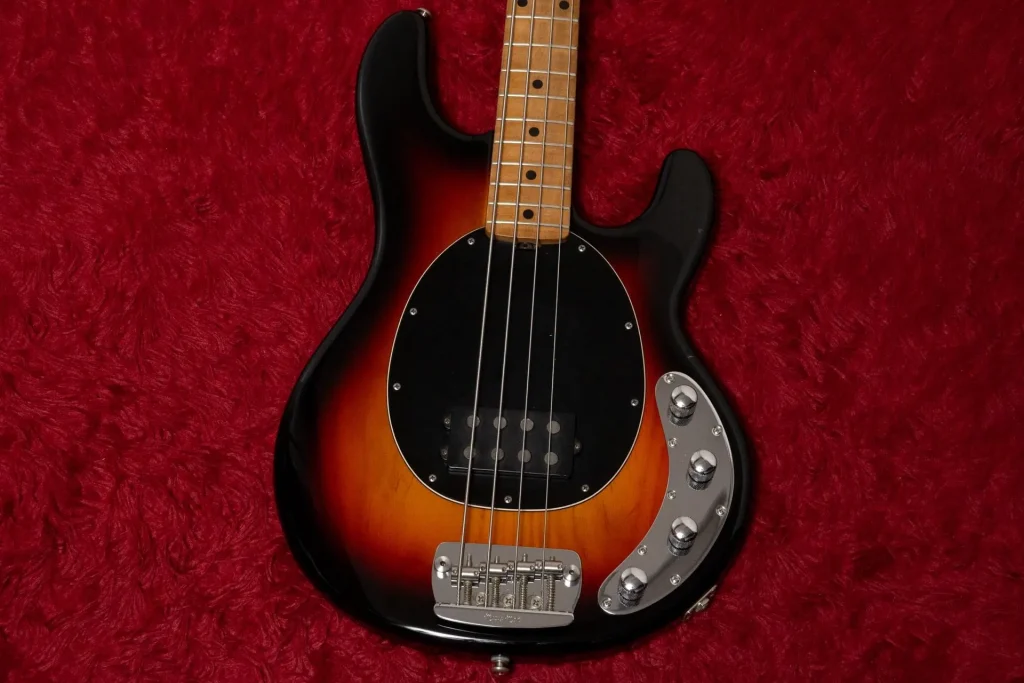
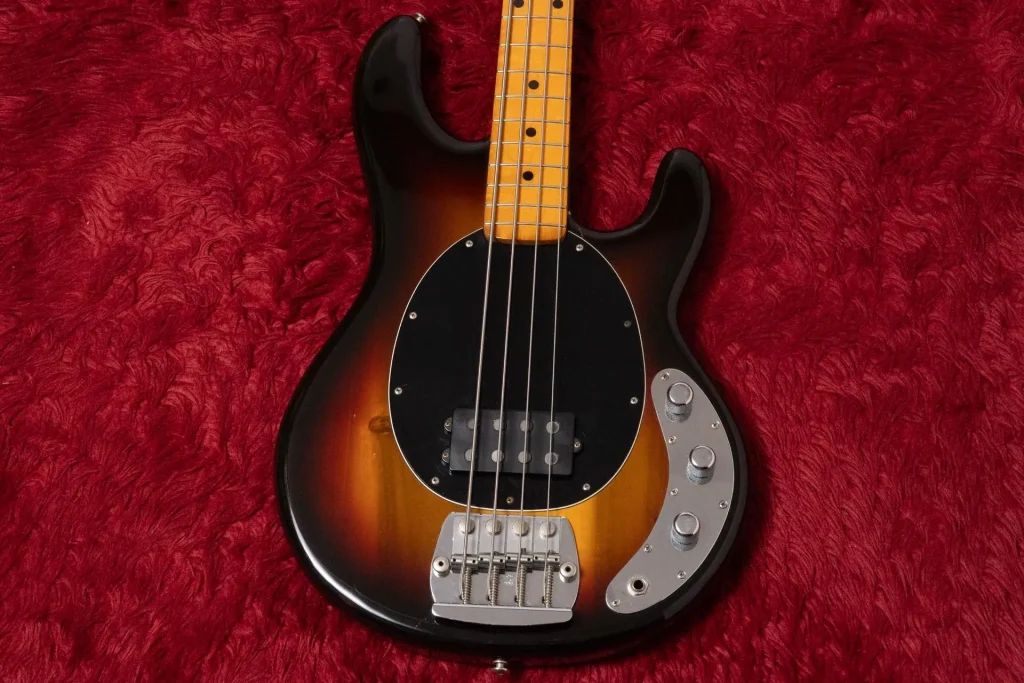
- 2-Band EQ (Treble/Bass): Present since the very beginning, this is the StingRay's original circuit. With boost/cut control, it delivers that raw, punchy, scooped-mid "donshari" slap tone that only a 2-band setup can produce.
- 3-Band EQ (Treble/Mid/Bass): Introduced during the Ernie Ball era (around 1990). Adding a midrange control dramatically expanded the tonal range, allowing for far more detailed and precise sound-shaping.
Neck Joint and Truss Rod Adjustment Mechanism
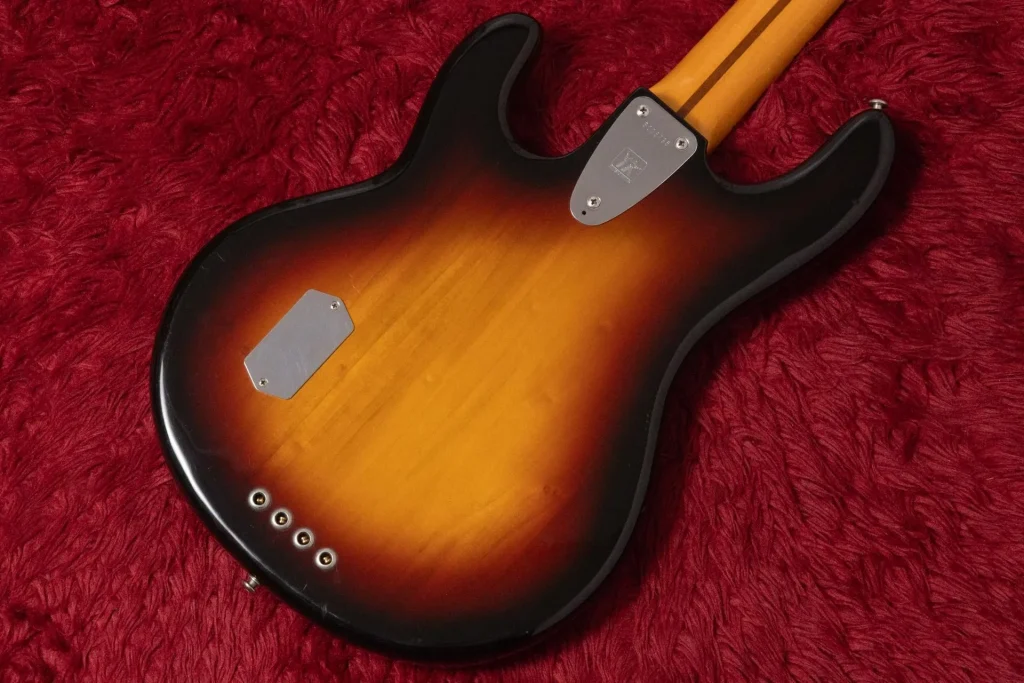
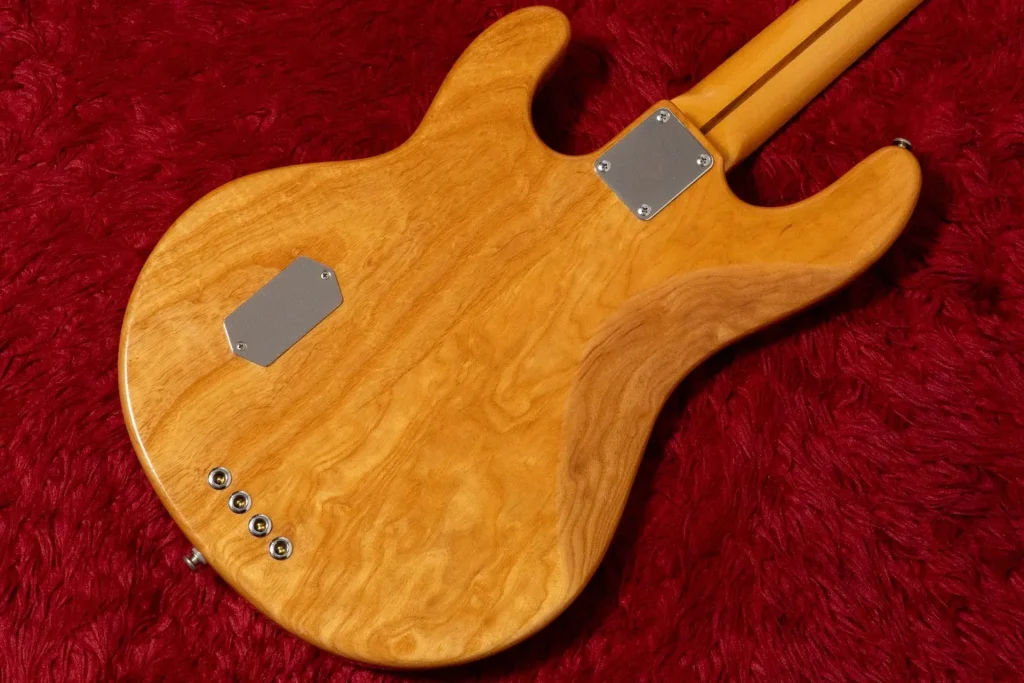
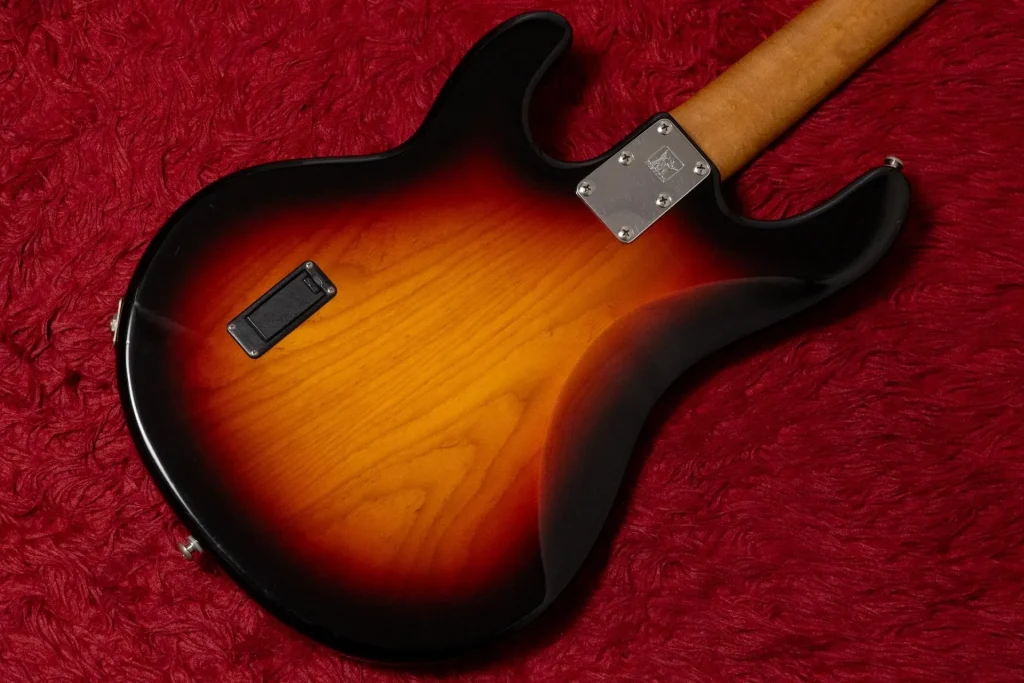
- Joint Evolution: Early models used a 3-bolt neck joint with a micro-tilt function (neck angle adjustment). This later became a sturdier 4-bolt joint, and today's models (like the Special) mainly use an even more stable 6-bolt joint.
- The Wheel Nut: One of Ernie Ball's biggest contributions was introducing the "wheel nut" (early 1990s), which lets you turn the truss rod easily right at the base of the neck. This mechanism — adjustable without removing the neck — is now found on many high-end basses.
Bridge and Mute Mechanism
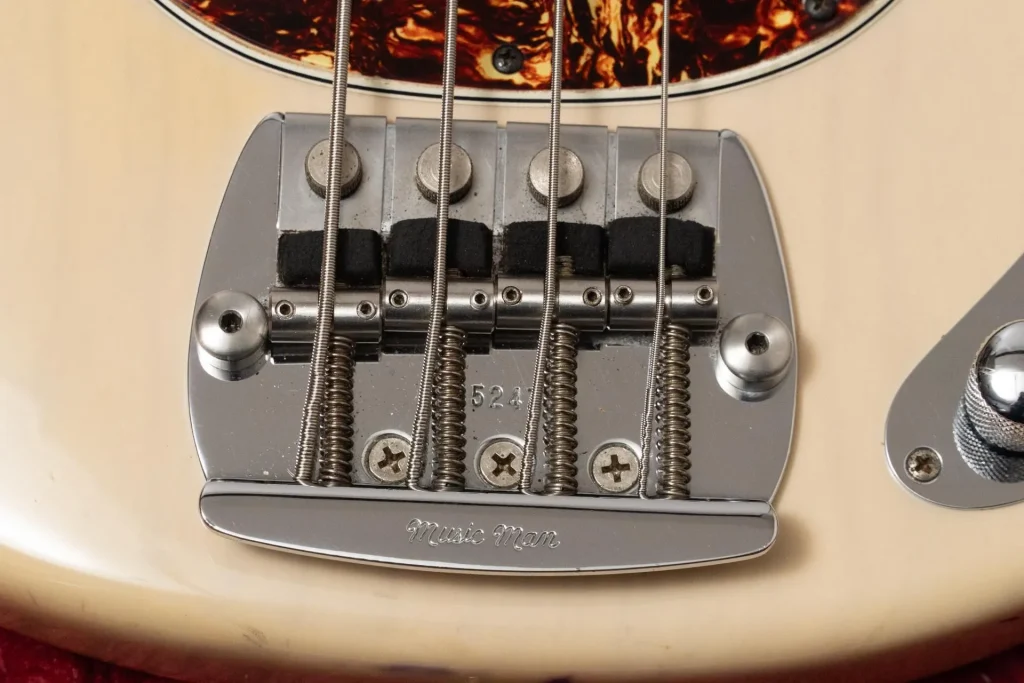
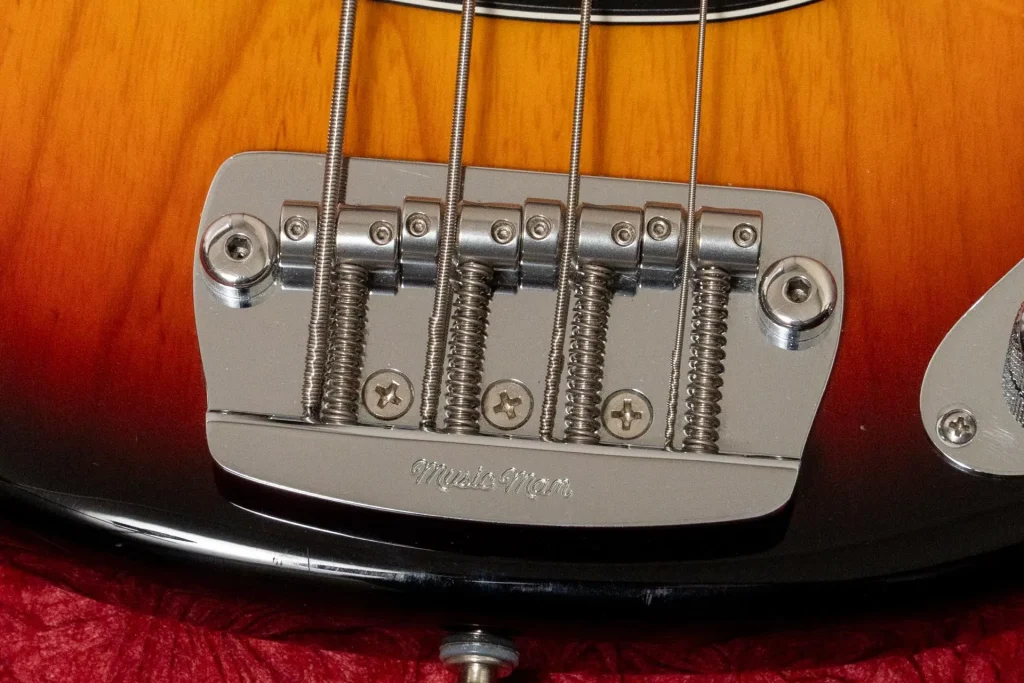
The earliest StingRay bridges featured a "mute pad" designed to dampen string vibration for an upright-bass-like tone. Strings were also strung through the back of the body (back-loading).
As slap playing grew popular over time, the mute mechanism was dropped and stringing switched to top-loading.
Pickup Spec Changes
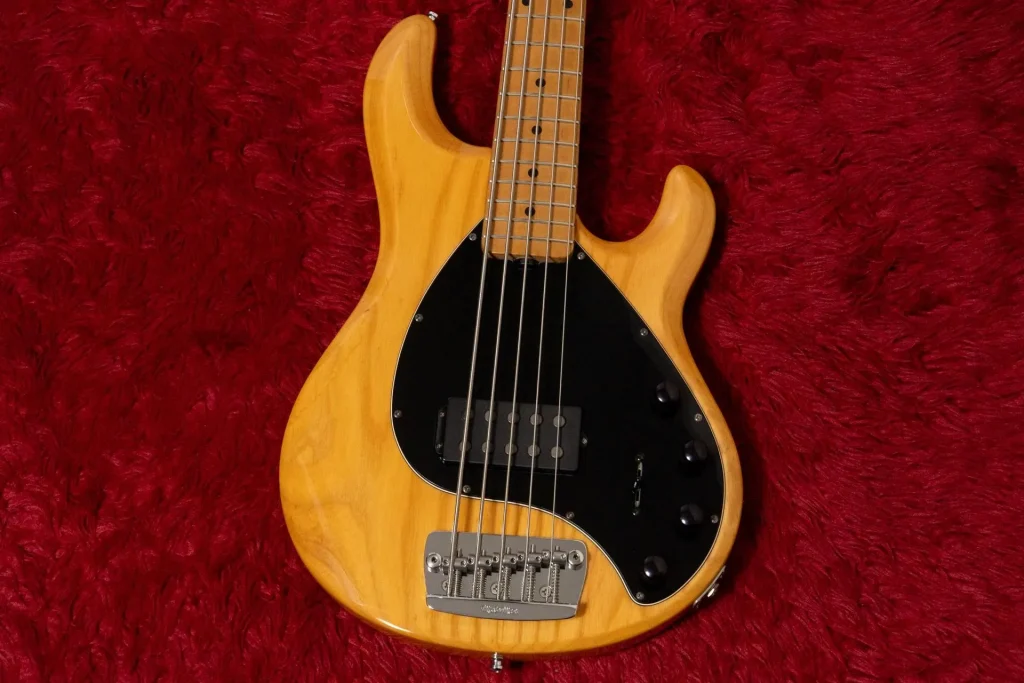
The StingRay's pickup has traditionally used an Alnico magnet, prized for its warm, punchy tone. That said, certain years of the 5-string model (StingRay 5) featured a tighter, clearer Ceramic magnet instead.
Today's Special series uses an extremely powerful, wide-range Neodymium magnet.
A World of Variant Models — and the Secret of the "Made in Japan" StingRay
The StingRay lineup includes numerous variants that are well worth targeting on the used market.
The StingRay EX and StingRay VT: Japanese Craftsmanship at Its Finest
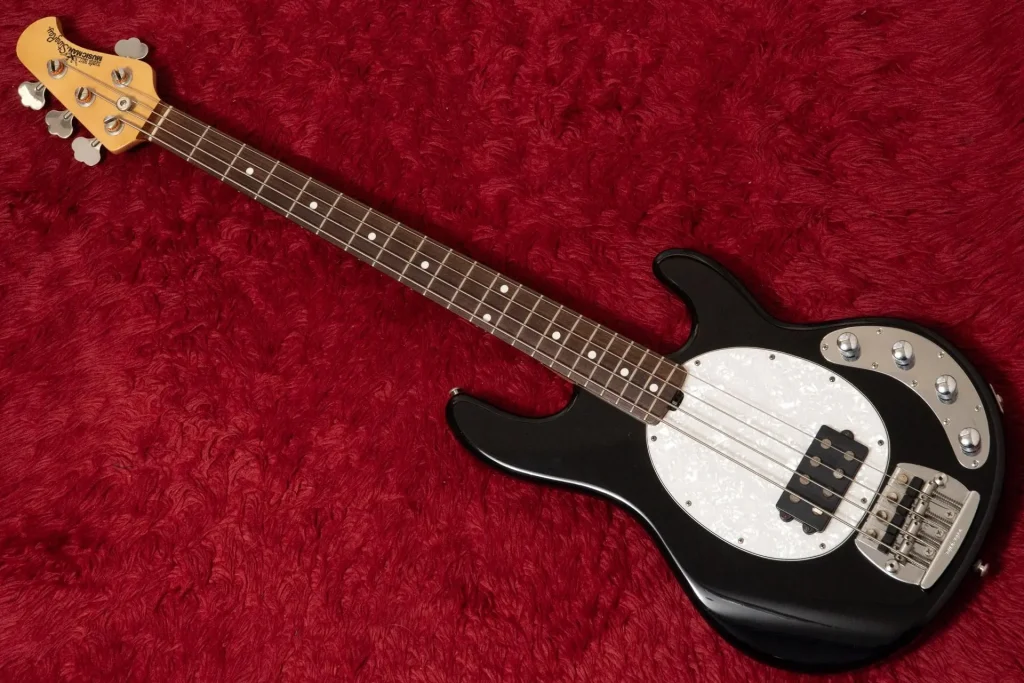
One of the most frequent inquiries we get at GIB is about the "Made in Japan" StingRays that were once produced.
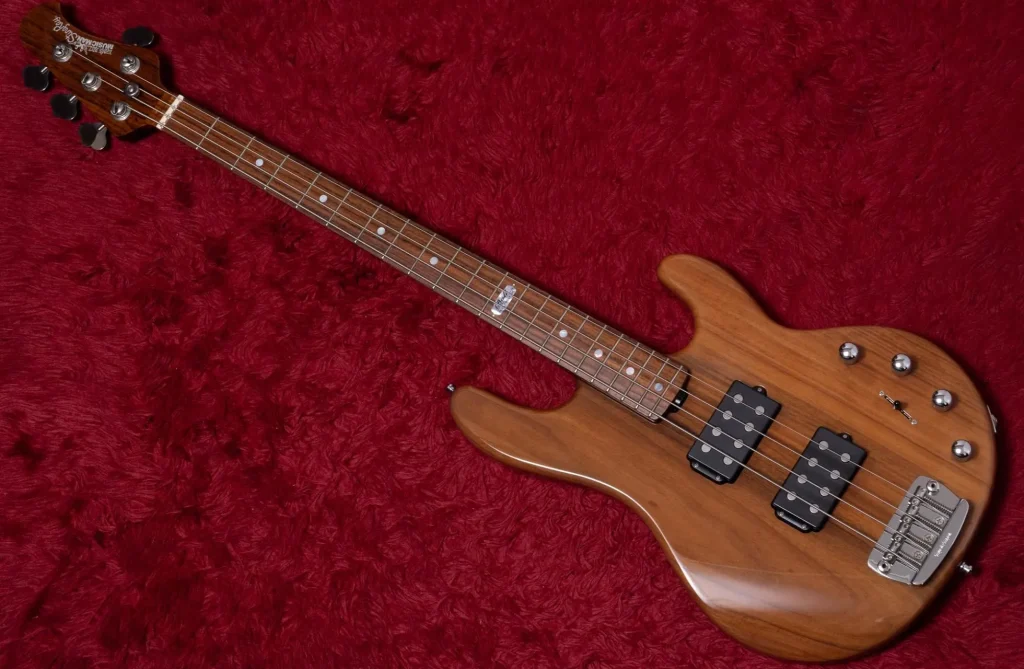
- StingRay EX: Built using USA-made woodwork and electronics (pickups, preamp, etc.), assembled and finished at a workshop in Japan under distributor Kanda Shokai. It delivers sound quality on par with the USA models at a more accessible price, which is why it remains highly popular today.
- StingRay VT (Vintage): Within the EX series, this deep-cut model faithfully reproduces Pre-Ernie-era vintage specs — 2-band EQ, a mute-pad bridge, back-loaded strings, and more. Units are scarce on the used market, and plenty of players are actively hunting for one.
StingRay 5 (The 5-String Model)
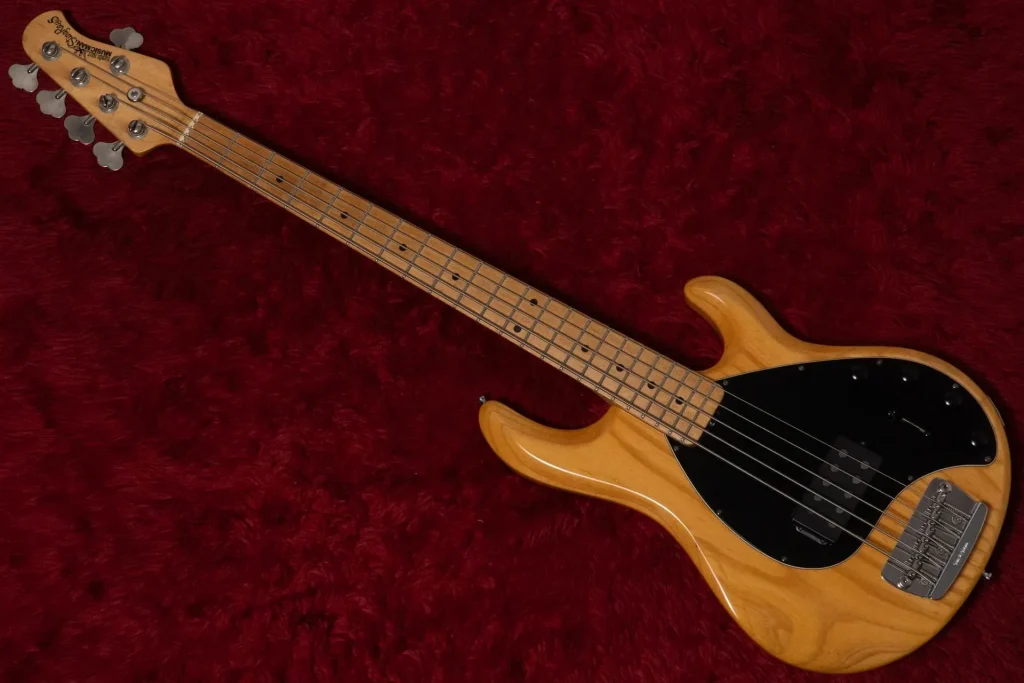
Launched in 1987, this 5-string model isn't just a 5-string version of the StingRay — it evolved on its own terms, with a redesigned pickguard shape and a 3-way switch (series/single/parallel). Regarded as one of the definitive 5-string basses, it's beloved by professionals worldwide across every genre.
StingRay Classic (Classic Collection)
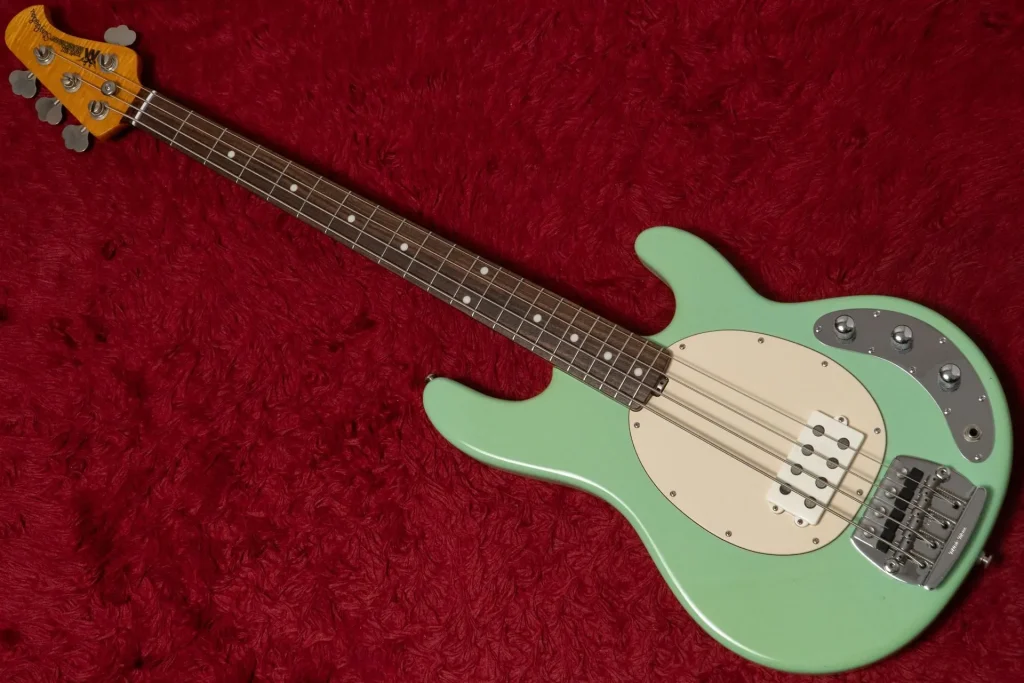
A series recently released from the USA that officially revives Pre-Ernie-era specs. With its 2-band EQ, slab body (no contouring), mute-equipped bridge, and back-loaded strings, it's a fantastic way to experience genuine vintage character in a brand-new (or recent used) instrument.
Sub-Brands and Budget Models, Sorted Out
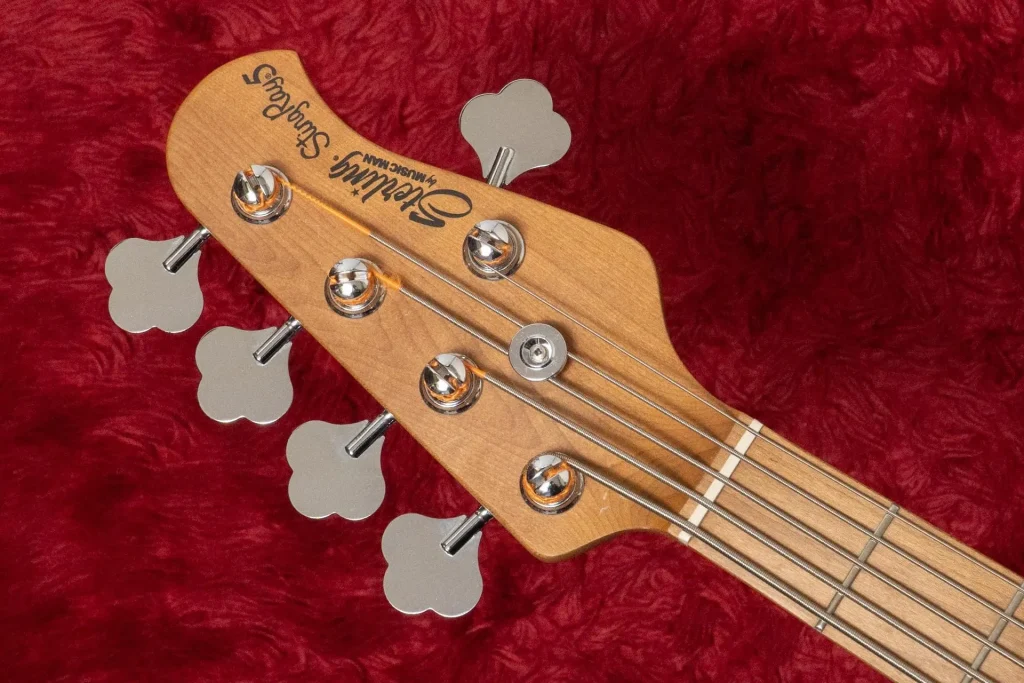
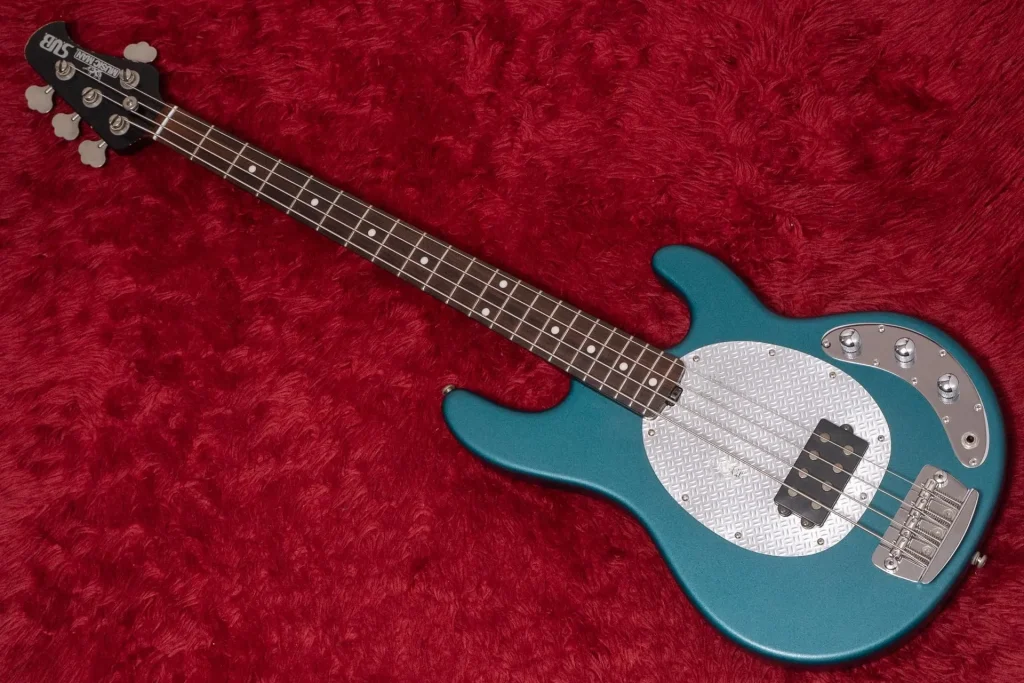
- Sterling by Music Man: The official sub-brand of Ernie Ball Music Man, manufactured in factories in Asia. Affordably priced, yet it faithfully carries the StingRay's DNA. (Note: this is a different instrument from the USA-made "Sterling," a smaller-bodied bass.)
- SUB (Sports Utility Bass): An entry-level series offering great value, letting even beginners enjoy that signature StingRay sound.
There are also a handful of other derivative models, including short-scale versions and the model known as the BFR.
What About Today's Current Models?
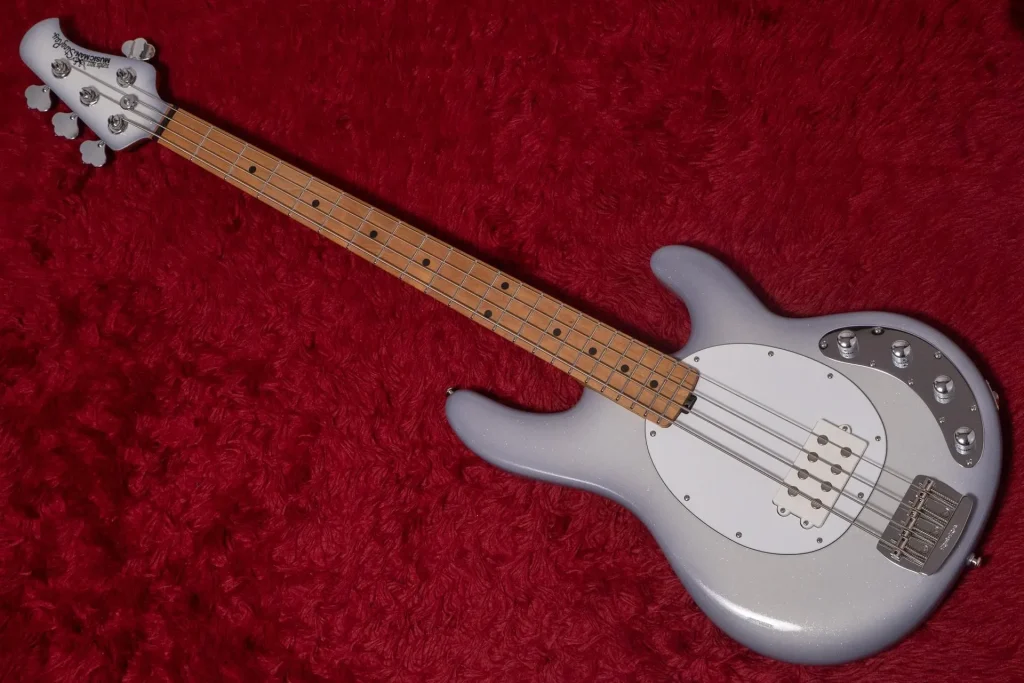
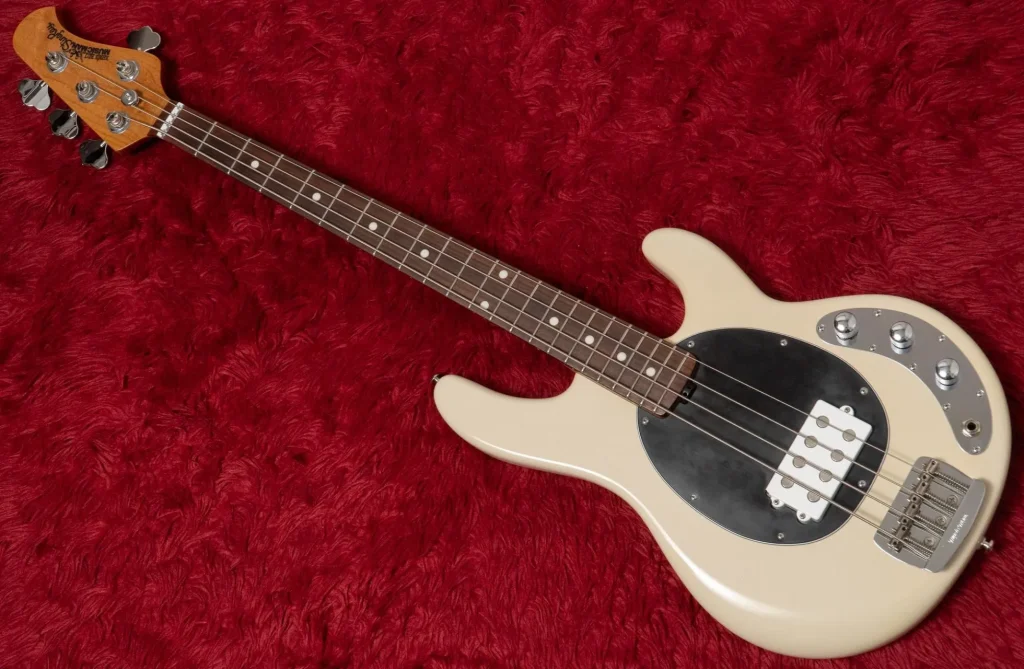
As of 2026, the current mainstream model is the StingRay Special mentioned above.
It features a roasted maple neck for added strength and a beautifully aged tone, dramatic weight reduction thanks to extensive use of aluminum parts, and a clear, punchy 18V-driven neodymium pickup.
It completely shatters the old "StingRays are heavy and unwieldy" reputation, evolving into a refined instrument that can go toe-to-toe with any modern high-end bass.
Legendary Pro Bassists Who Play the StingRay
The StingRay's history has been shaped by the legendary performances of these players.
- Flea (Red Hot Chili Peppers): The early Red Hot Chili Peppers sound simply can't be told without the StingRay.
- Louis Johnson: One of the "fathers of slap bass." He gave input to Leo Fender during development and played a major role in bringing the StingRay to completion.
- Tony Levin: A master known for his work with King Crimson and others. His weighty, distinctive groove is also underpinned by the StingRay — especially the 5-string.
How to Choose a Used StingRay (GIB's Perspective)
If you're looking to pick up a StingRay, the right approach is to choose based on "what sound you want."
- Want raw, scooped-mid slap tone? Look at Pre-Ernie-era vintage models, the Classic Collection, the Japan-made "VT," or any 2-band EQ model.
- Want a versatile, band-friendly tone? Go for a regular USA model with 3-band EQ from roughly 1990–2017, or the Japan-made "EX."
- Want lightness, playability, and modern clarity? The current StingRay Special.
The Japan-made "EX" and "VT" in particular are hidden gems that deliver quality well beyond their price. If you come across one on the used market, we highly recommend giving it a try.
In Summary
Nearly half a century after its debut, the Music Man StingRay is a truly remarkable bass that keeps evolving while remaining at the top of its game. Every era and every spec variation holds its own completely distinct appeal.


