

How to Adjust Bass Pickup Height: Starting Measurements and Settings by Playing Style
Pickup height is one of the cheapest, fastest tone upgrades on any bass. One screwdriver, ten minutes, and a bass that sounded flat and quiet can suddenly sound clear and present.

The short version: measure the gap between the string and the pole piece with the string fretted at the last fret. On a Jazz Bass, start at 2.0 mm (treble side) / 2.5 mm (bass side) for the bridge pickup and 2.5 mm / 3.0 mm for the neck pickup. Closer means a better signal-to-noise ratio, but too close and the magnet starts to disturb the string. Get as close as you can without crossing that line.
Quick Reference: Starting Heights
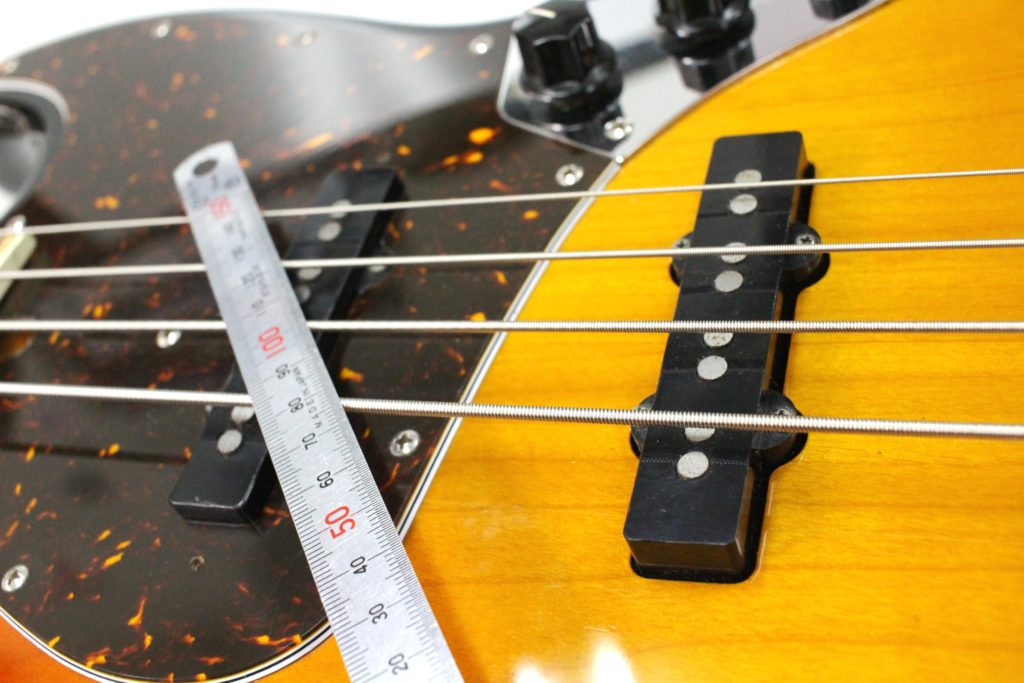
All measurements are from the bottom of the string to the top of the pole piece (or cover), with the string held down at the last fret.
| Pickup | Treble side | Bass side | Why |
|---|---|---|---|
| Jazz Bass, bridge | 2.0 mm (0.08") | 2.5 mm (0.10") | Strings move least here, so it sits closest |
| Jazz Bass, neck | 2.5 mm (0.10") | 3.0 mm (0.12") | Strings move more here, so a little further away |
| Precision Bass | 2.5–3.0 mm | 2.5–3.0 mm | Big string movement; don't go closer than 2.5 mm |
| High-output passive | A bit lower | A bit lower | Stronger magnets pull on the strings more |
| No visible poles (EMG etc.) | Can be a bit closer | Can be a bit closer | Magnets sit deeper; measure from the cover |
| Mostly pick playing (JB) | Bridge 2.5 / neck 3.0 mm | Bridge 3.0 / neck 3.5 mm | Lower overall to avoid clipping |
These are starting points. The ideal height depends on the pickup and your string gauge.
Tools and Step-by-Step
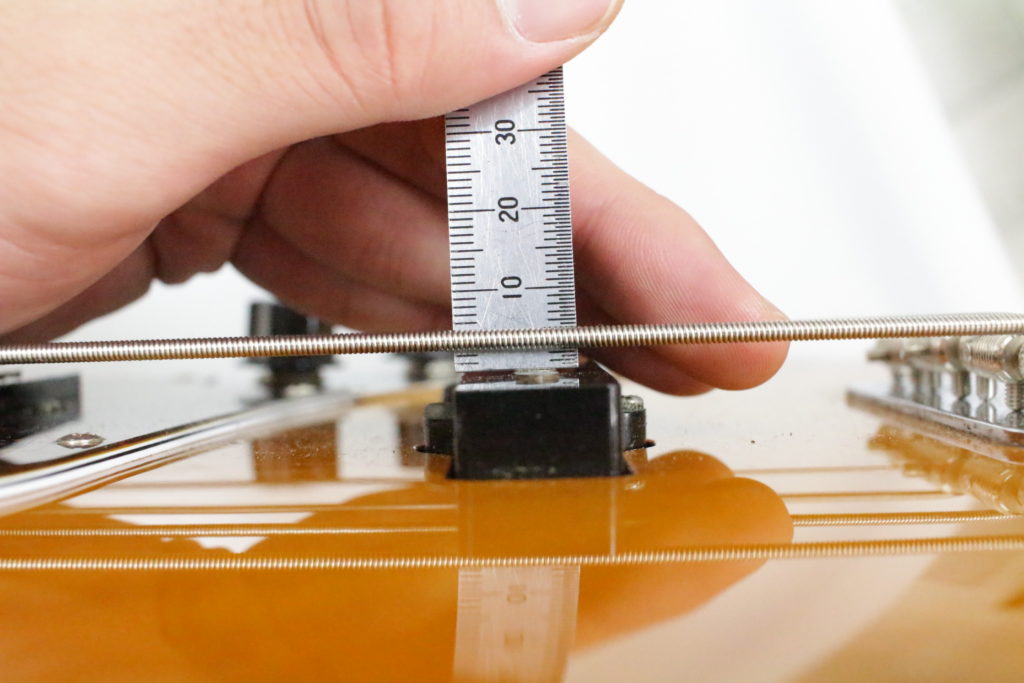
You'll need a Phillips screwdriver that fits the height screws, a steel ruler marked in 0.5 mm steps, and a tuner.
- Tune to pitch. String tension changes where the string sits.
- Set the neck and action first. Pickup height is measured from the string, so if the neck or action changes later, you'll have to start over. See How to Check Your Bass Neck and How to Adjust Bass String Height.
- Fret the string at the last fret. That's when the string is closest to the pickup. Measuring open can leave the pickup too close up high.
- Measure. Stand the ruler on the pole piece and read the gap to the bottom of the string. On a Jazz Bass, start with the treble side of the bridge pickup.
- Turn the screws. Usually clockwise raises the pickup and counterclockwise lowers it. Alternate between the two sides until you hit the target.
- Repeat for the other side and the other pickup.
- Listen. Solo each pickup and check that all four strings are even, then blend both.
- Check high up the neck. If notes on the E string waver, growl, or die quickly at the top frets, it's too close.
- Retune one last time.
If your pickups were set very low (around 4 mm), just bringing them to these numbers can make the bass sound noticeably clearer and more forward.
Why Height Changes Your Tone
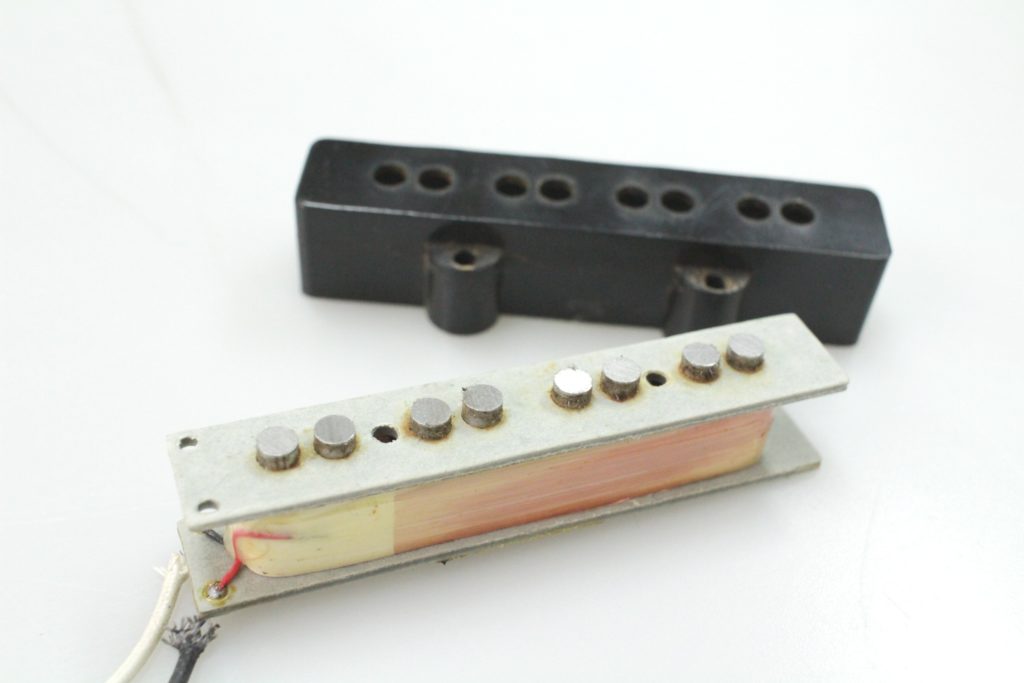
A pickup is a set of magnets (the pole pieces) wrapped in fine copper wire. When a steel string vibrates in that magnetic field, it induces a current in the coil, and that's your signal. The magnets don't move; the string does. So how strong the field is where the string vibrates decides your output and tone.
Signal-to-noise comes first
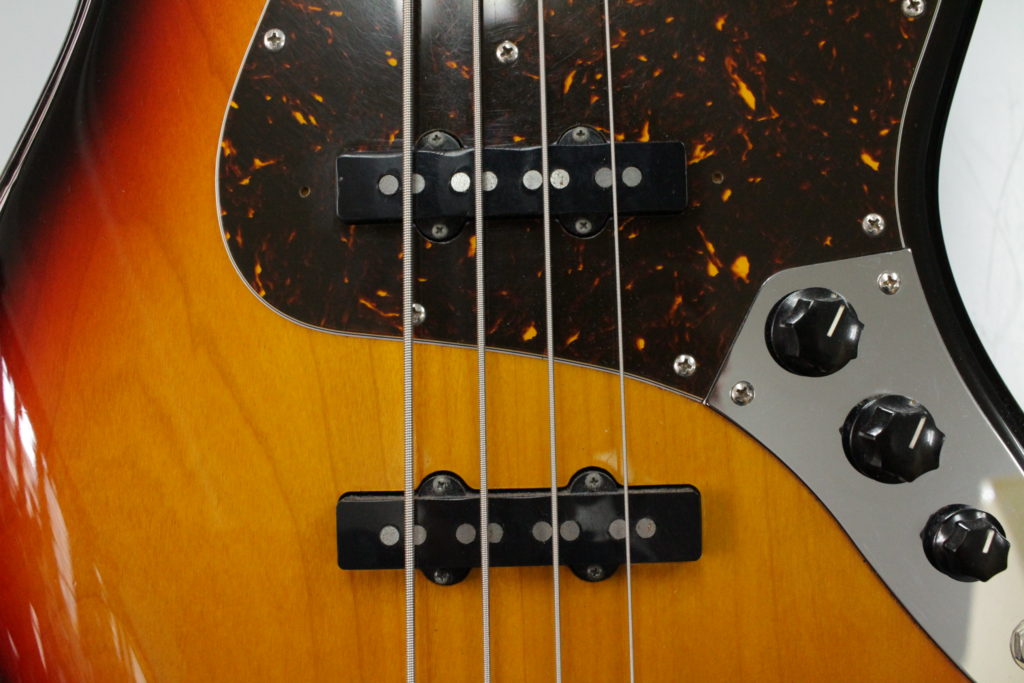
Closer pickups sound more powerful; lower pickups sound flatter and more even. That part is taste. But one thing is just physics: the closer the string, the louder the signal, while the noise stays about the same. A better signal-to-noise ratio never hurts, so in general, closer is better.
Where the string moves most
Strings swing wider near the neck and less near the bridge, and the low strings swing wider than the high ones. That's why, on a Jazz Bass, the bridge pickup sits closer than the neck pickup, and the treble side sits closer than the bass side.
Too Close or Too Far? The Signs
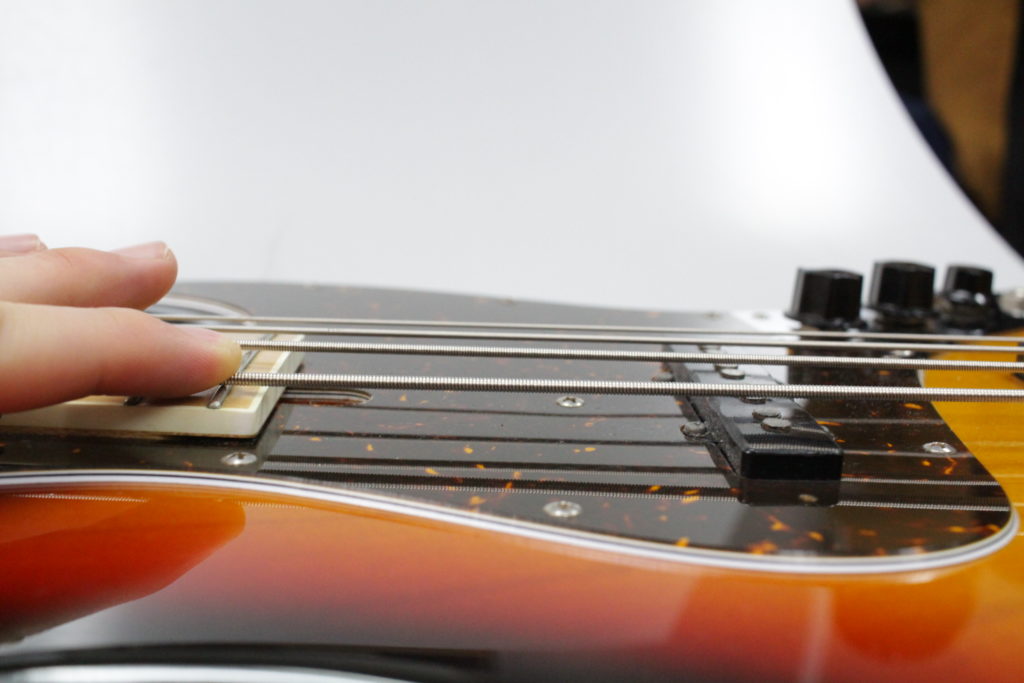
A pickup is a magnet, so if it's too close it pulls on the string and disturbs its vibration. The goal is as close as possible without affecting the string.
| Too close | Too far | |
|---|---|---|
| Pitch | Notes waver or go out of tune up high | No issue |
| Tone | Growling, muddy, low strings distort oddly | Thin, dull, no punch |
| Volume | One string much louder than the rest | Quiet overall; you keep turning the amp up |
| Noise | No issue | Noise becomes obvious as you add gain |
| Playing | String hits the pickup when you dig in | No issue |
Notes by Pickup Type
Jazz Bass (two single coils): the tone comes from the balance between the two pickups, so any height difference becomes a tone difference. Each pickup has two screws, so use them to even out string-to-string volume too.
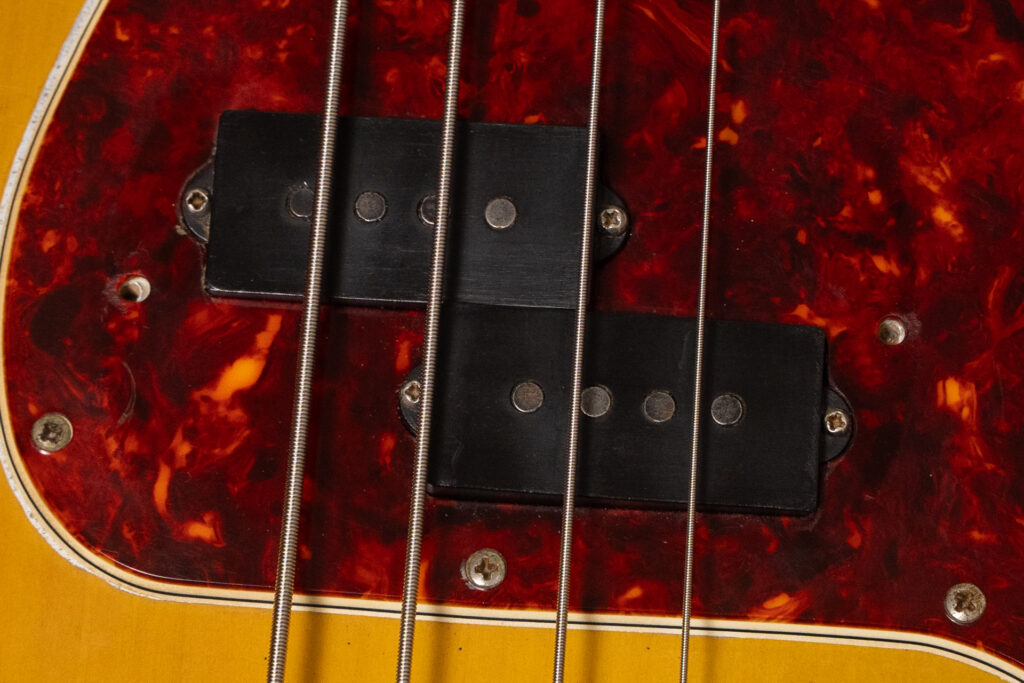
Precision Bass (split coil): the E/A half and the D/G half each have their own screws. The pickup sits where the strings move a lot, so keep at least 2.5–3.0 mm. The two halves often end up uneven, so compare single notes as you go.
Humbuckers and soapbars: with four screws, turn them evenly so the pickup doesn't tilt. Many humbuckers are hot, so watch out for going too close.
Active pickups (EMG etc.): measure from the cover. The magnets sit deeper inside, so they can usually go a bit closer than a passive Jazz pickup.
Just swapped pickups? New pickups have different output and magnet strength, so the old height won't be right. Start again from the table. Looking for replacements? See 5 Best Jazz Bass Pickups.
Settings by Playing Style
Pick-playing rock bassist
With a pick the strings move a lot all the time, so the first thing to watch is clipping: like an overdriven amp input, the tone gets squashed and distorted. Lower everything a little. On a Jazz Bass, start around bridge 2.5 / 3.0 mm and neck 3.0 / 3.5 mm, then creep closer as long as nothing clips or wavers.
Tight, defined pitch
For drop tunings or heavy bands where every note needs to be heard, raise the bridge pickup relative to the neck pickup. The firmer, tighter bridge tone makes the low end easier to hear clearly.
Open, bouncy slap
For a more open slap tone with a touch of natural compression, raise the neck pickup a little. The springy neck-pickup tone comes forward and slap feels great.
Fat fingerstyle
Set both pickups to the table and keep them close in balance, then shape the highs with your tone knob or amp. Lowering the pickups to get "fatter" usually just costs you signal-to-noise.
From the GIB Bench

Shunsuke Saga, founder of Geek IN Box.
When we set up a bass in our shop, we like the owner to be right there, so we can explain what state the bass is in and why each change affects the sound. Our founder Shunsuke Saga's approach to pickup height: first bring it to his own baseline, as close as it can go without affecting the strings, then fine-tune for the instrument and the player. Knowing your own instrument changes how you play it.
When Not to Do It Yourself
- The screw turns but the pickup doesn't move, or stays sunk: the springs or foam underneath may be worn out or missing.
- The screw spins freely: the screw hole in the body or pickguard may need repair.
- Fully raised and still too far: the cavity may be too deep, or the neck angle may need adjusting.
- Crackling or dropouts when you touch the pickup: likely a broken lead or bad solder joint. See Bass and Guitar Noise.
- One string stays much quieter no matter what: the pickup itself or its pole heights may be the problem.
- The neck or action is off to begin with: fix those first.
FAQ

Can I measure with the string open?
We recommend fretting at the last fret. That's the closest the string gets, so setting your baseline there avoids the pickup grabbing the string up high. If you measure open, remember the result will change with your action.
Why are the treble and bass sides different?
Low strings swing wider. At the same height they'd sound louder than the high strings, and they're also more easily pulled by the magnet.
Does lowering the pickups make the tone fatter?
It makes it quieter and a bit flatter, not necessarily fatter. Turning the amp up to compensate adds noise too. Set the table heights first, then use EQ.
Should I readjust after changing strings?
If you change gauge or type, yes. The string's swing, position, and action all change.
Shop with Confidence from Japan
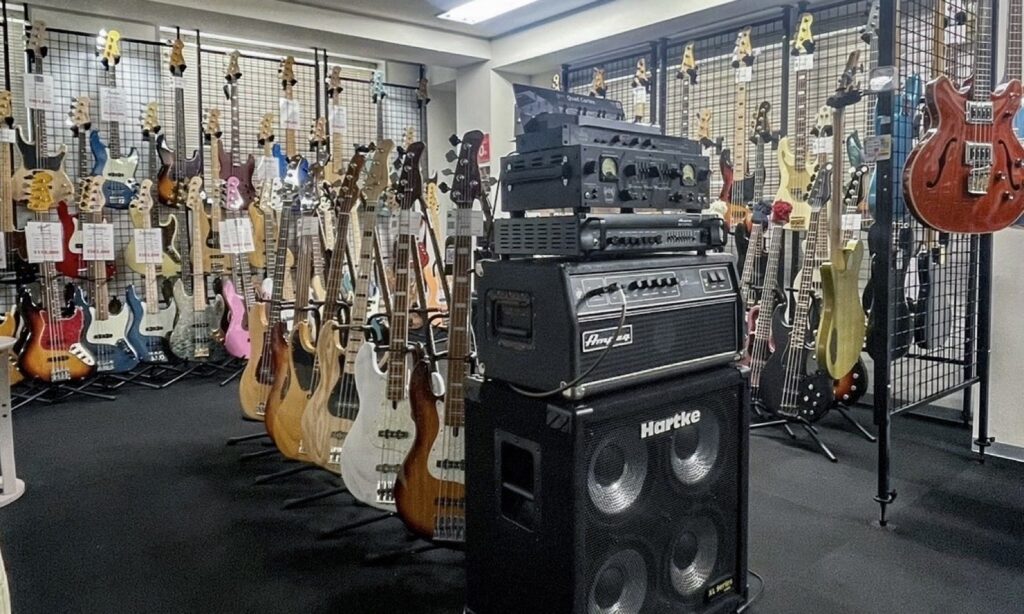
Geek IN Box Yokohama.
Geek IN Box ships worldwide, and every price already includes shipping and import duties, so there are no surprise charges when your order arrives. Every instrument goes through our highest level of quality control before it leaves Japan.


