

Bass and Guitar Noise: What Causes Hum and How Shielding Fixes It
Noise is every musician's worst enemy. So how do you beat it? In a word: shielding. In this guide from the Geek IN Box repair bench, we explain what causes noise in a bass or guitar, the different ways to shield an instrument, and how shielding changes the sound.
What Causes Noise in a Bass or Guitar?
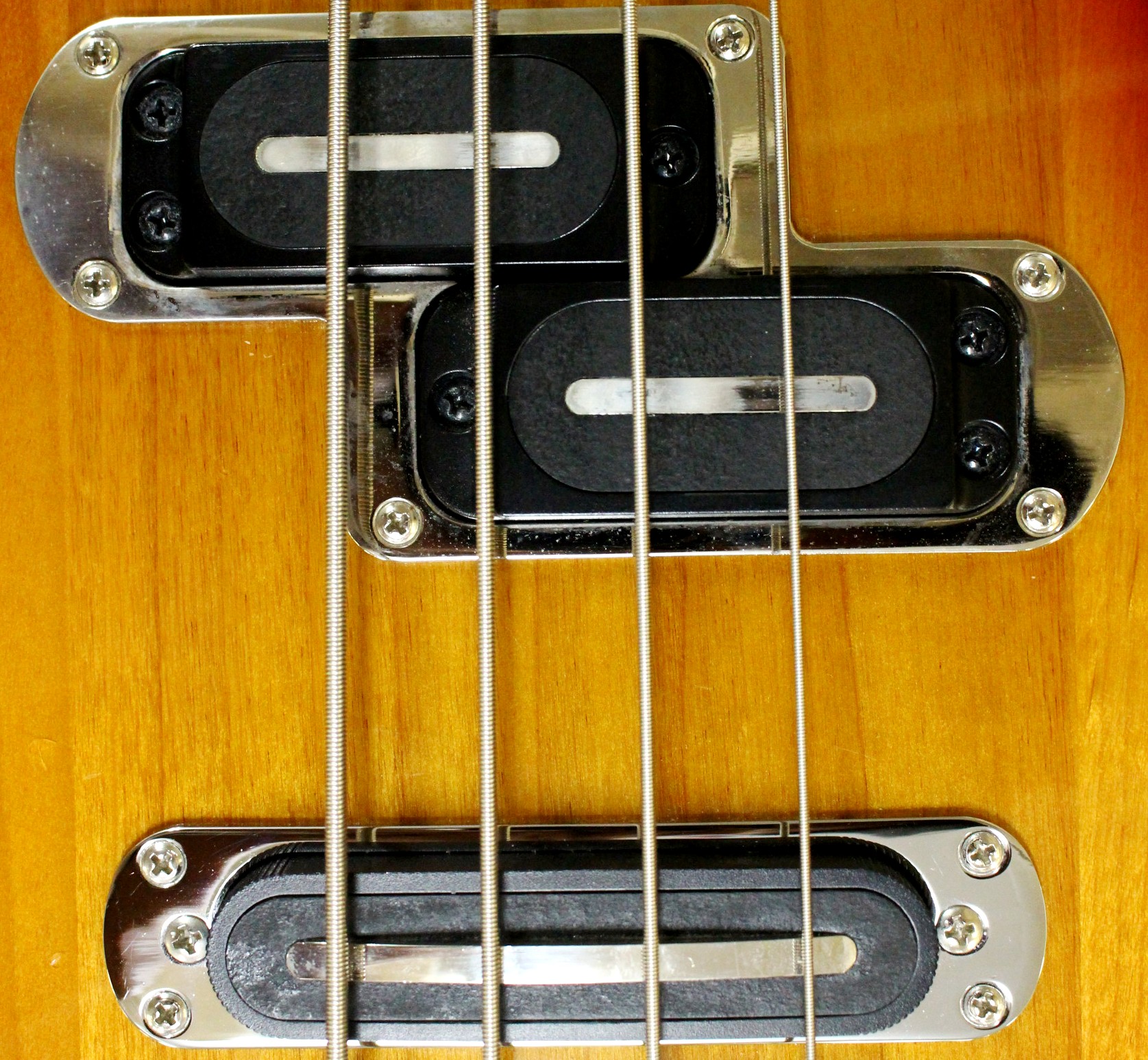
That steady buzz and hiss is annoying, but there is a clear reason for it: electromagnetic waves drifting through the space around you. When they get into the signal of your bass or guitar, they come out of the speaker as hum and hiss.
A high-impedance signal picks up this interference more easily than a low-impedance one, which is why passive instruments are more vulnerable to noise.
Why does the noise stop when I touch the strings?
Metal parts such as the plug, the bridge and the strings pick up electromagnetic interference easily. When you touch them, they are being grounded through your body, and the noise drops. In recording sessions, the bridge or plug is sometimes kept connected to ground at all times to keep noise down.
How to Reduce Noise: Shielding
The way to reduce noise is shielding, which means protecting the instrument's signal from outside electromagnetic waves. The shielded cable between your bass and your amp takes its name from exactly this. There are several kinds of shielding, so let's go through them one by one.
1. Conductive paint
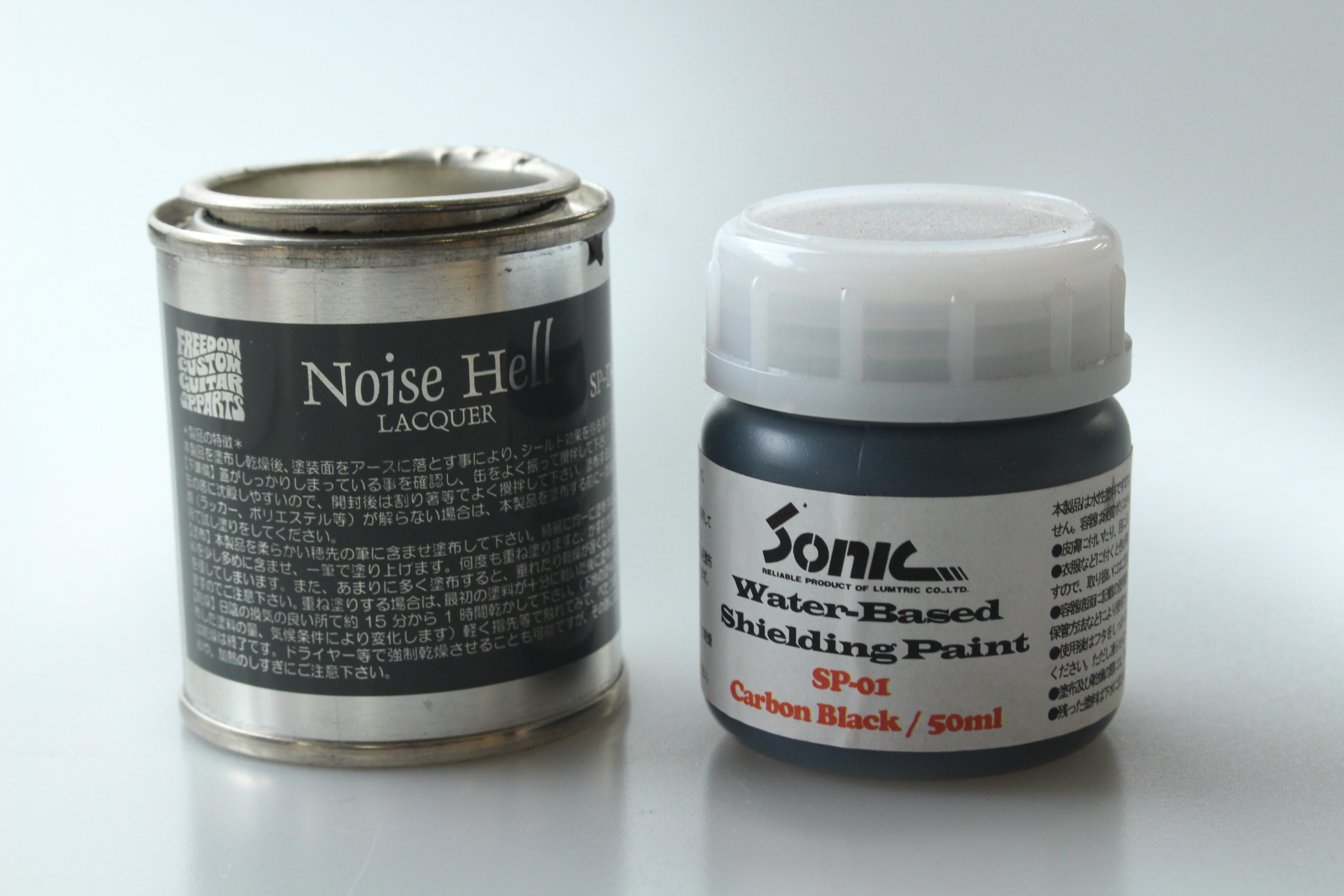
Conductive paint contains carbon or copper powder. You apply it to the control cavity and pickup routs and connect it to ground, which shields the entire cavity wall by holding it at zero potential. The ground connection is made with a small metal part called a ground lug.
There are several things to be careful about. Get them wrong and you can lose your sound entirely or end up with more noise than before.
- Check compatibility with the body's finish. Solvent-based conductive paint over nitrocellulose lacquer will dissolve the finish into a mess and will not go on properly.
- Build up thickness with several coats. Without a certain thickness it does not work.
- Always connect it to ground. Ungrounded shielding makes noise worse.
- Ground large areas at several points. One point may not be enough for the shield to be effective.
- Never let it short against the hot terminal. If it does, you get no sound.
2. Metal tape
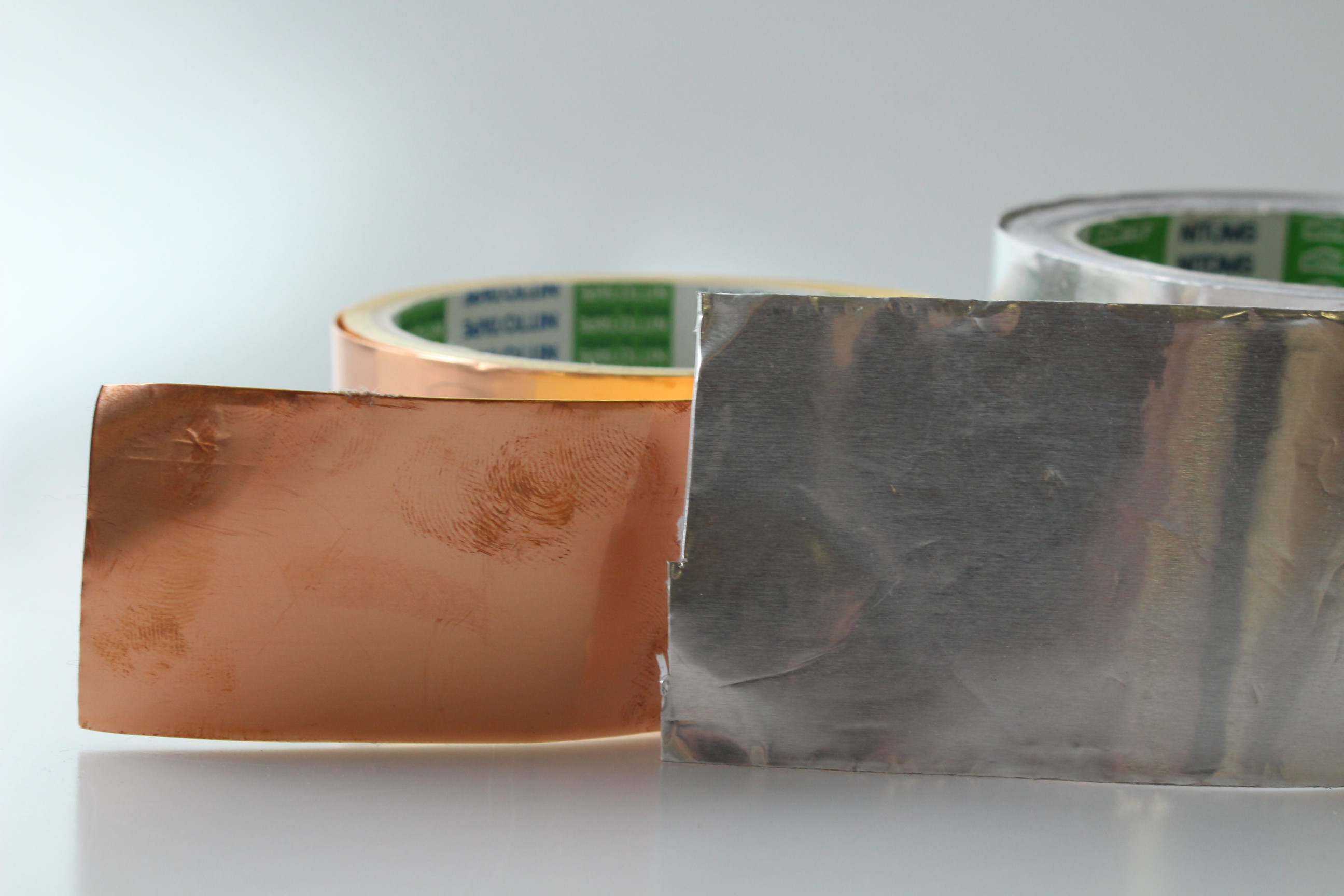
Here you surround the area you want to protect with metal tape and connect it to ground. It is often combined with conductive paint: the cavity is painted, and the cover plate or pickguard that closes it is lined with tape. Some makers shield the cavity itself with tape instead of paint.
Both aluminum and copper foil tapes are available. Copper is preferred because it is highly conductive and can be soldered to directly.
3. Shielded wire
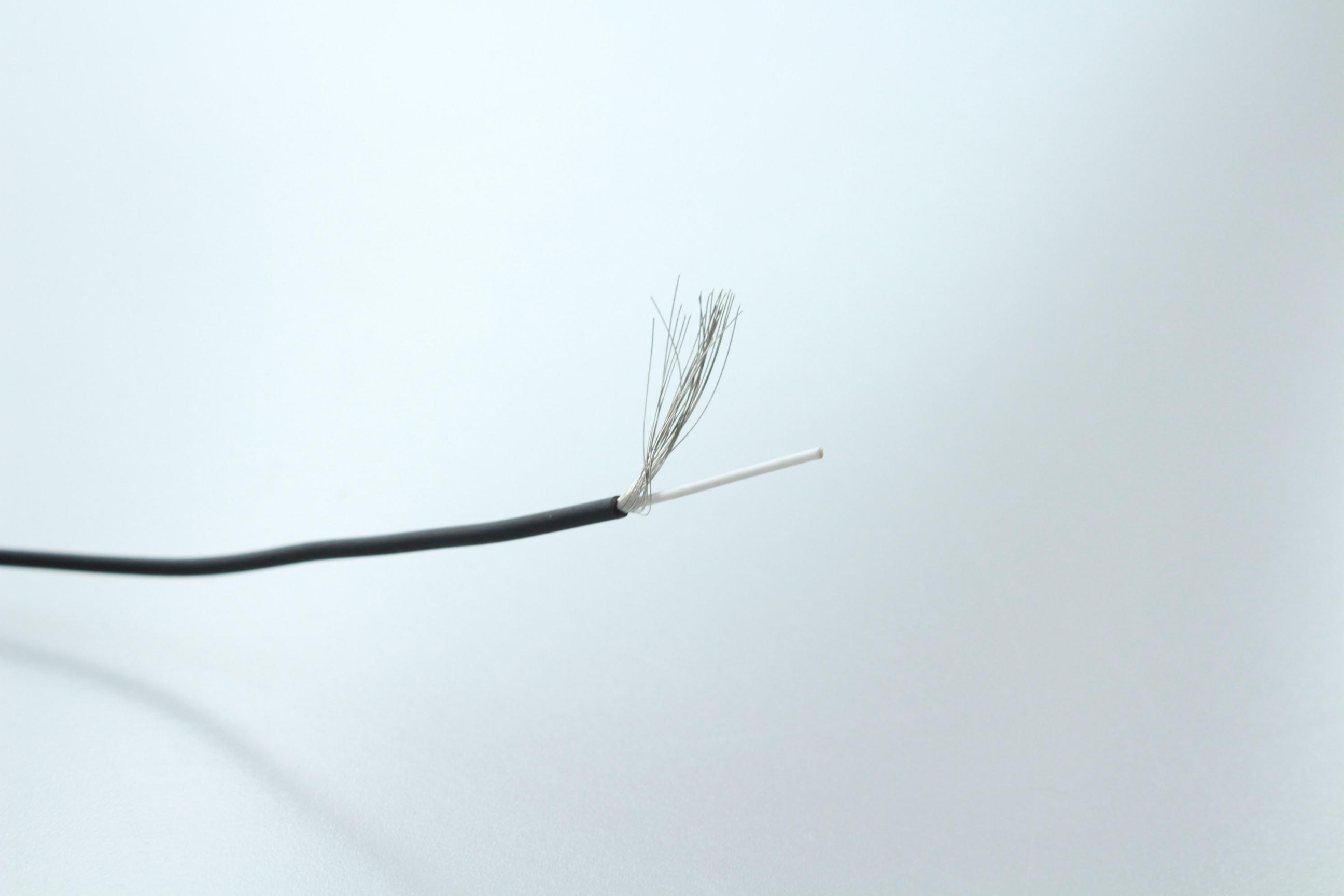
A shielded cable consists of a signal conductor and a shield that protects it, so it is shielded along its whole length. This method uses that kind of cable for the instrument's internal wiring, which naturally reduces the noise reaching the hot signal.
It is commonly used for long runs, such as the output leads from the pickups, and in acoustic guitars, where paint and tape are hard to apply. Shielded wire made specifically for internal wiring is sold for this purpose.
4. Shielding the pickup itself
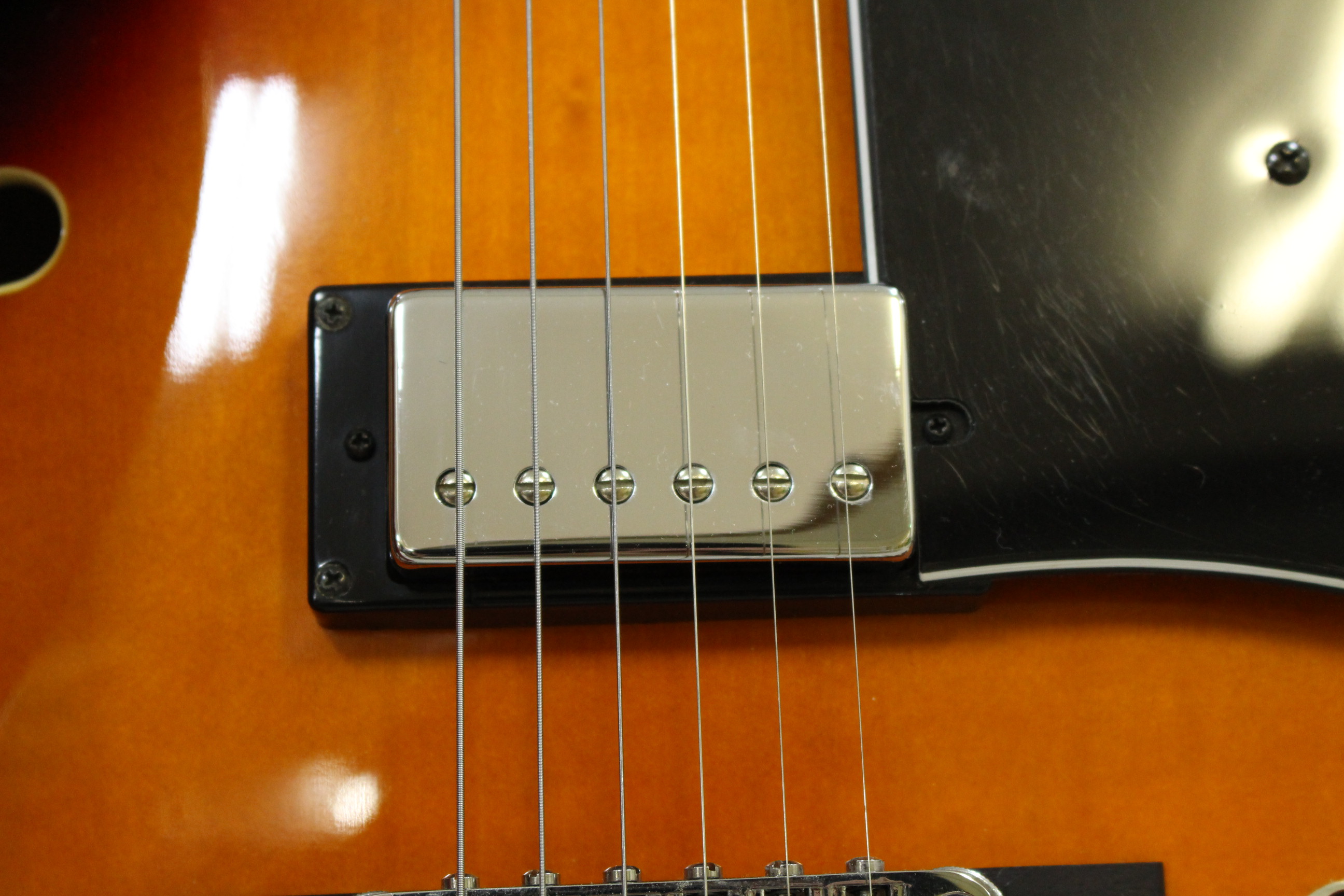
Wrapping metal tape around a pickup and grounding it stops noise from getting into the output at the source. The covers on guitar humbuckers and on a Telecaster neck pickup exist partly for the same reason.
Because the cover material is itself magnetic, this method generally changes the sound. People often say different pickup covers sound different. That is because different metals have different magnetic properties, which alters the magnetic field around the pickup.
How Shielding Changes Your Tone
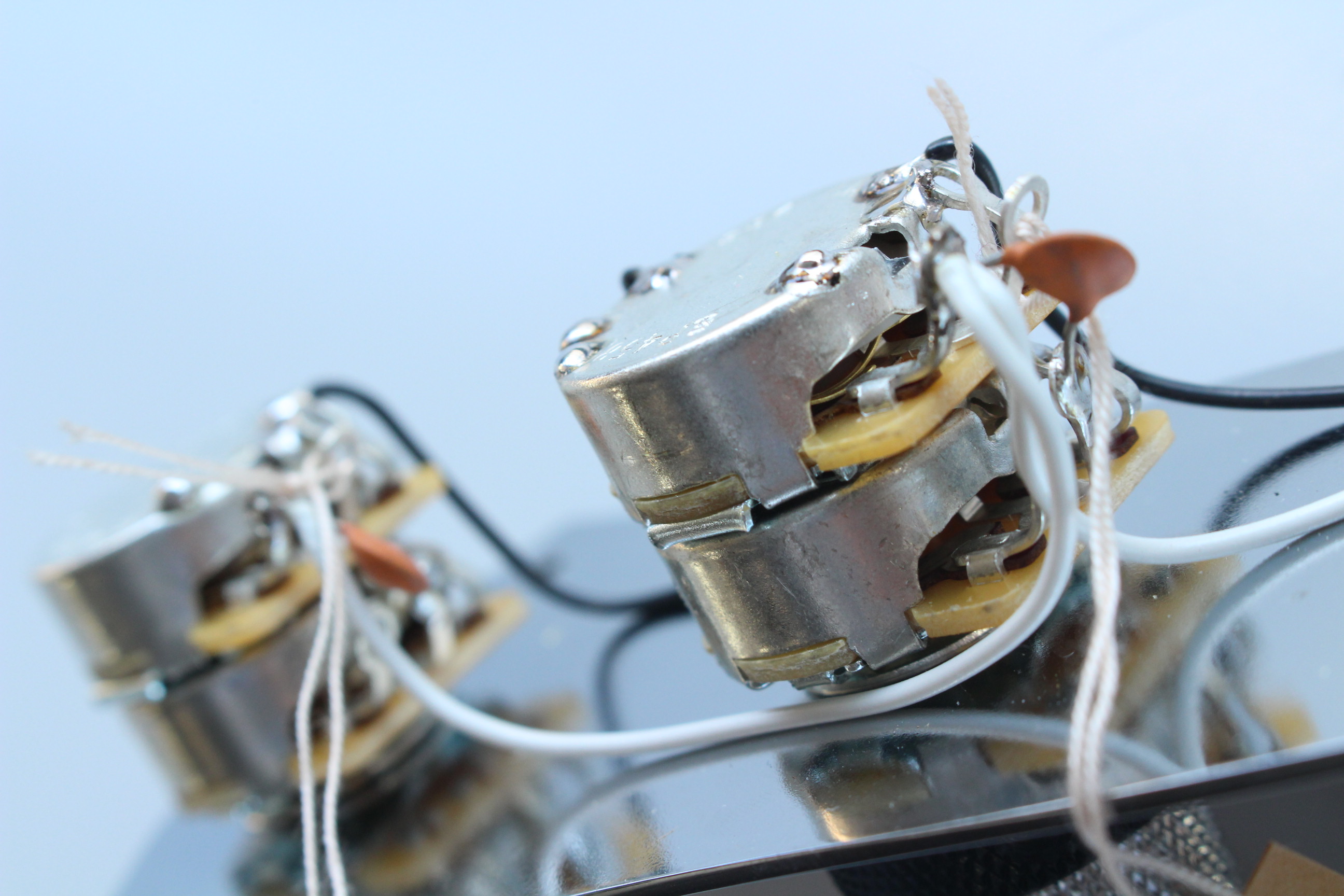
When shielding puts hot and ground side by side, the result behaves much like a tone circuit: high frequencies leak to ground and the sound changes. This is called capacitance loss. The closer the hot and ground are to each other, and the longer the distance they run together, the stronger the effect.
How much it matters depends on the impedance of the signal. The higher the impedance, the bigger the influence, so passive instruments are affected most.
| Method | Where it is used | Watch out for |
|---|---|---|
| Conductive paint | Control cavity, pickup routs | Finish compatibility, thickness, solid grounding |
| Metal tape | Cover plates, pickguards, cavities | Must be grounded; copper can be soldered |
| Shielded wire | Long internal runs, acoustic instruments | Adds capacitance over long lengths |
| Pickup shielding | Around the pickup or its cover | Changes the pickup's sound |
Summary
Shielding always changes the sound to some degree. What matters is choosing the right amount and type of noise treatment for the purpose, the instrument and the player.
Looking for a quiet, well set-up instrument? Browse the basses in stock at Geek IN Box, each one checked by our repair team before shipping.


