

Inside a 1966 Fender Precision Bass: Grey Bobbin Pickup and Early CBS-Era Details
Some basses arrive at our Yokohama shop and the whole staff stops what they're doing. This 1966 Fender Precision Bass in 3-Tone Sunburst was one of them: original grey bobbin pickup, original pickguard, bridge, and tuners, and a sound that's everything people mean when they say "vintage P-Bass."
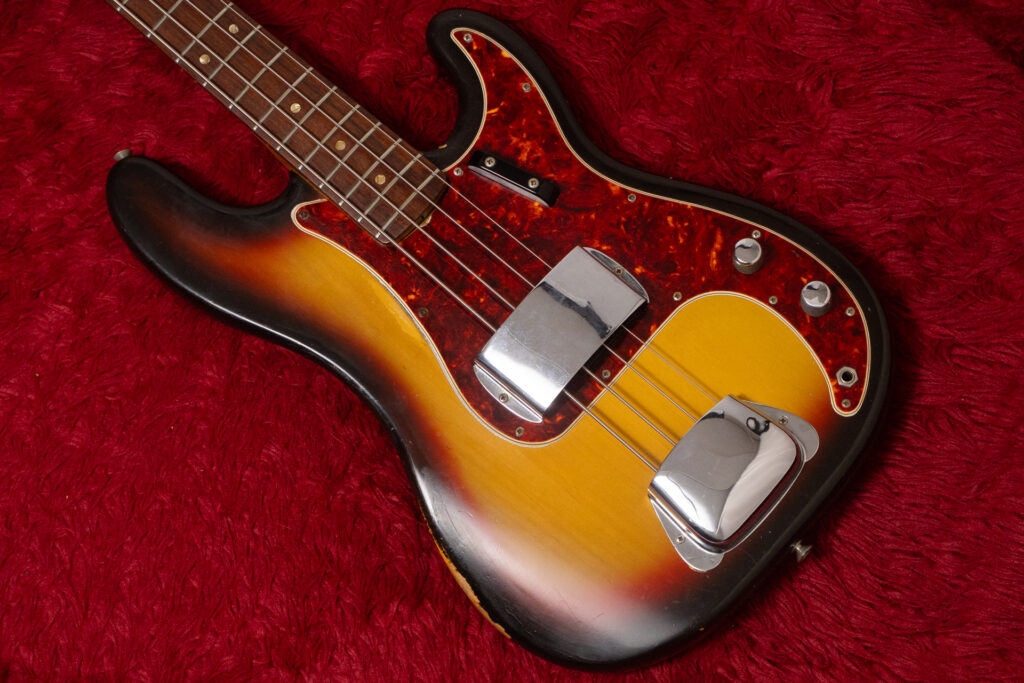
Fender 1966 Precision Bass, 3-Tone Sunburst, 3.92 kg (8.6 lb).
Here's a close look at what makes a mid-60s P-Bass special, and what to check when you're looking at one.
The Precision Bass in 1966
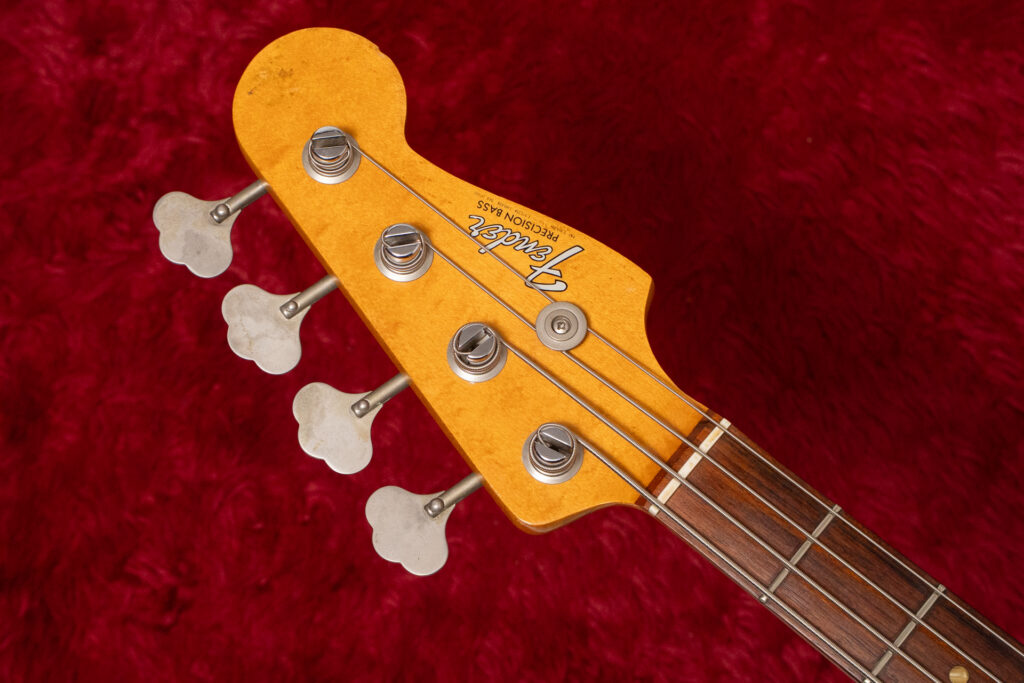
The Precision Bass was the world's first fretted solid-body electric bass, and it changed music almost overnight. The look we all know today, with the split-coil pickup and contoured body, was settled in the 1950s.
1966 is an interesting year. CBS bought Fender at the start of 1965, so this bass comes from the early CBS era, when production was growing but many of the pre-CBS methods and parts were still in use. Collectors often call these years the "transition" period.
How We Dated It
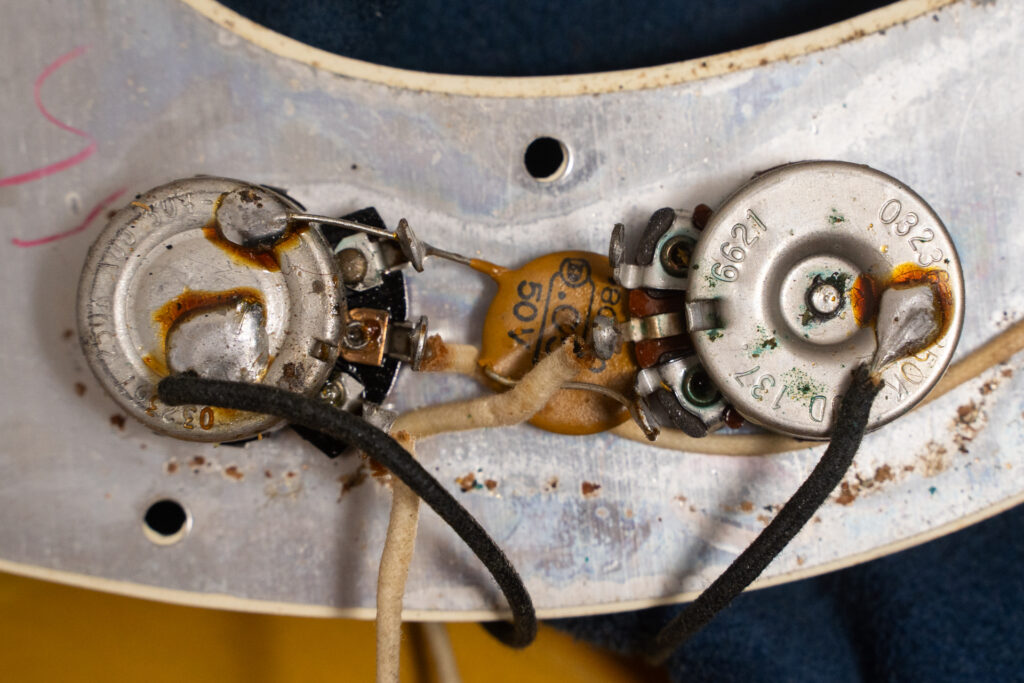
Dating a vintage Fender means checking several clues and seeing whether they agree. On this bass, only the tone pot carries a date code: 137 6621. The first three digits identify the pot maker, and the rest show it was made in the 21st week of 1966.
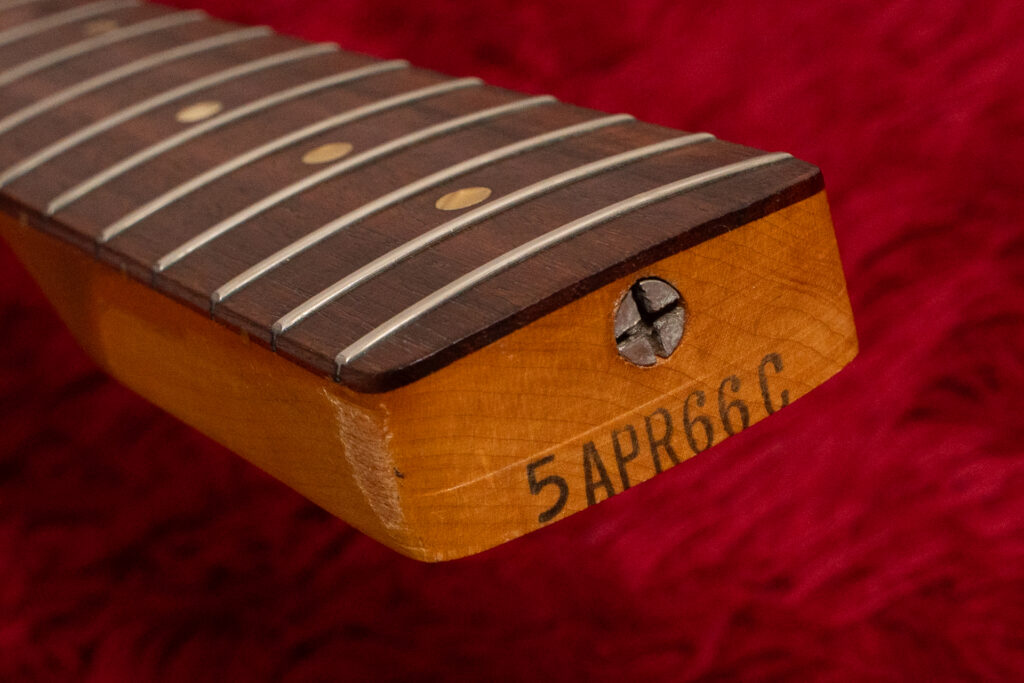
The heel of the neck is stamped 5APR66C, which dates the neck to April 5, 1966. Together with the other specs, everything points to 1966.
Woods and Finish
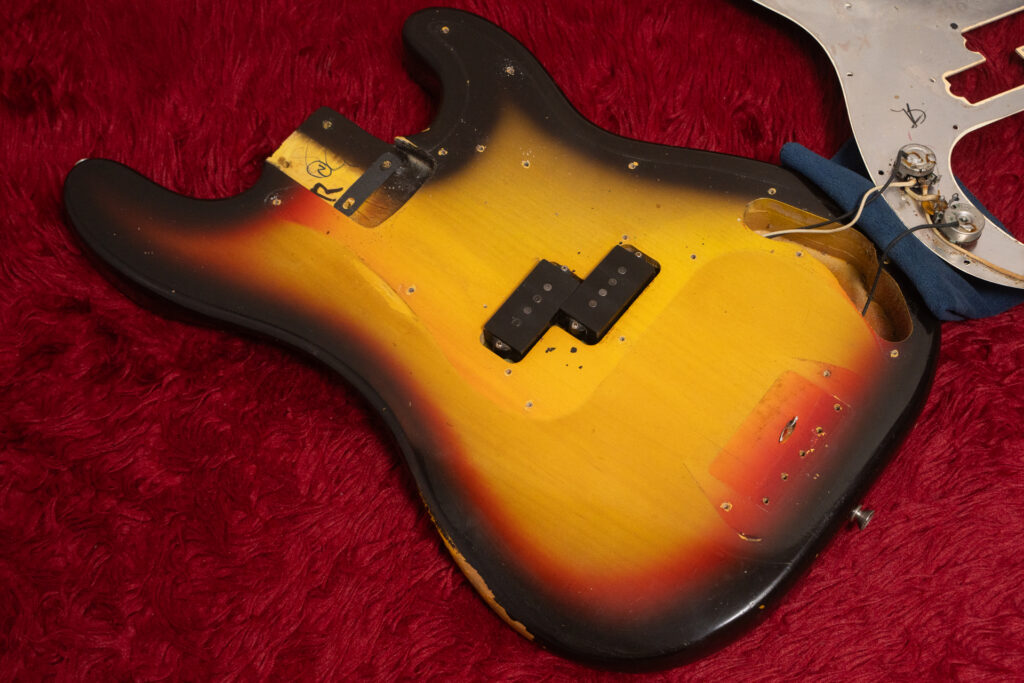
The body is alder, the classic choice for a sunburst Fender of this era. It gives the P-Bass its balanced, punchy midrange.
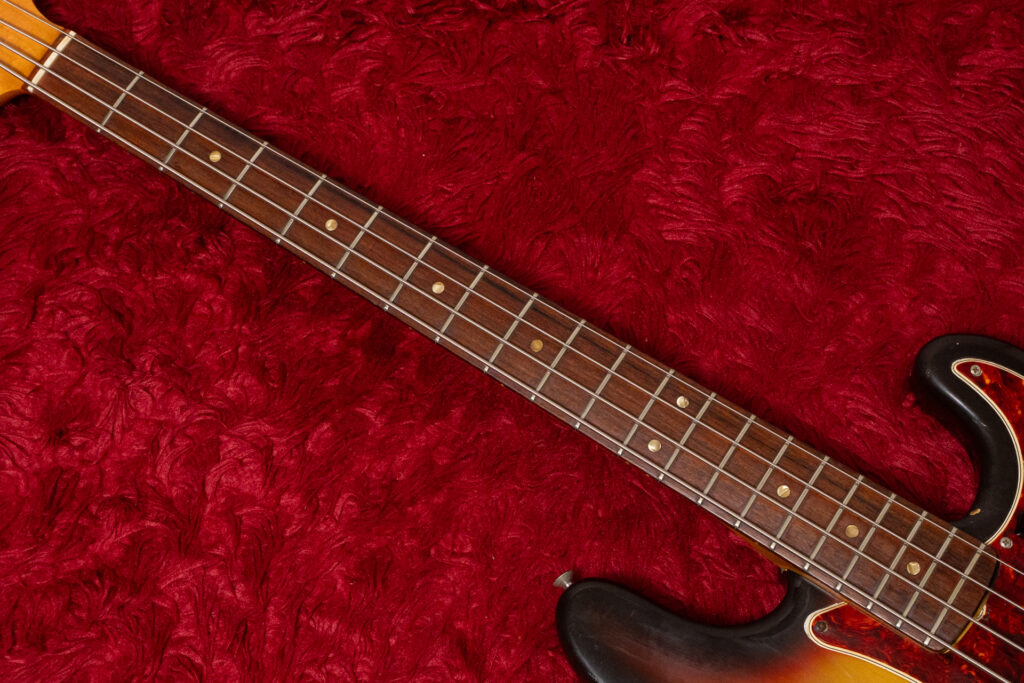
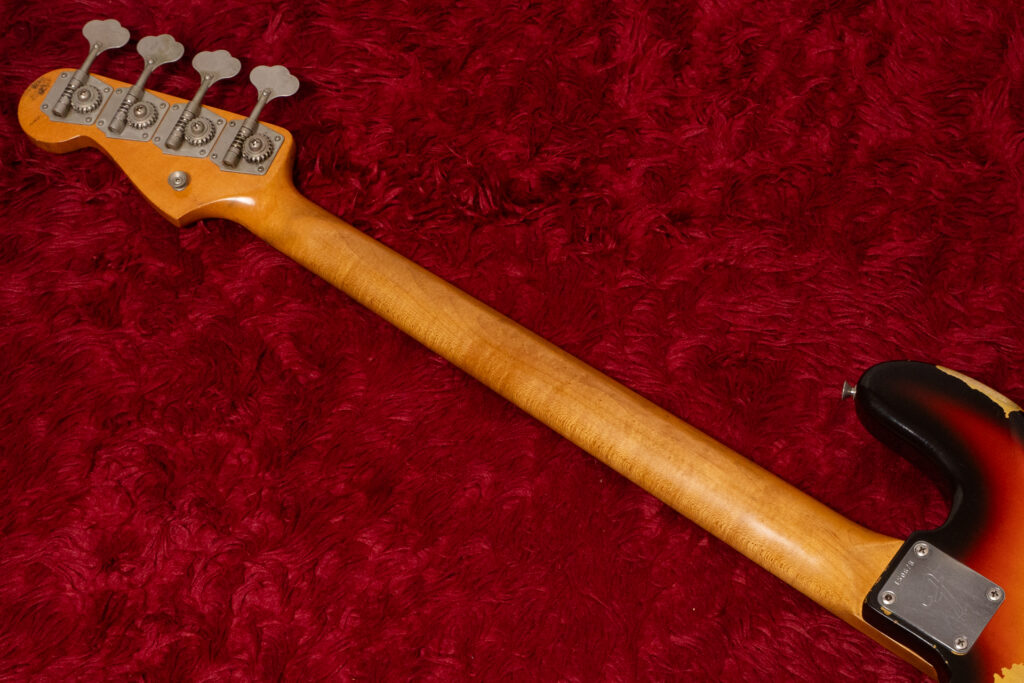
The fingerboard is round-laminated rosewood: a thinner board that follows the curve of the maple neck underneath, used from the early 60s onward. There are dings on the sides and back, but for a bass that's 60 years old, it has kept a beautiful look.
The Grey Bobbin Pickup
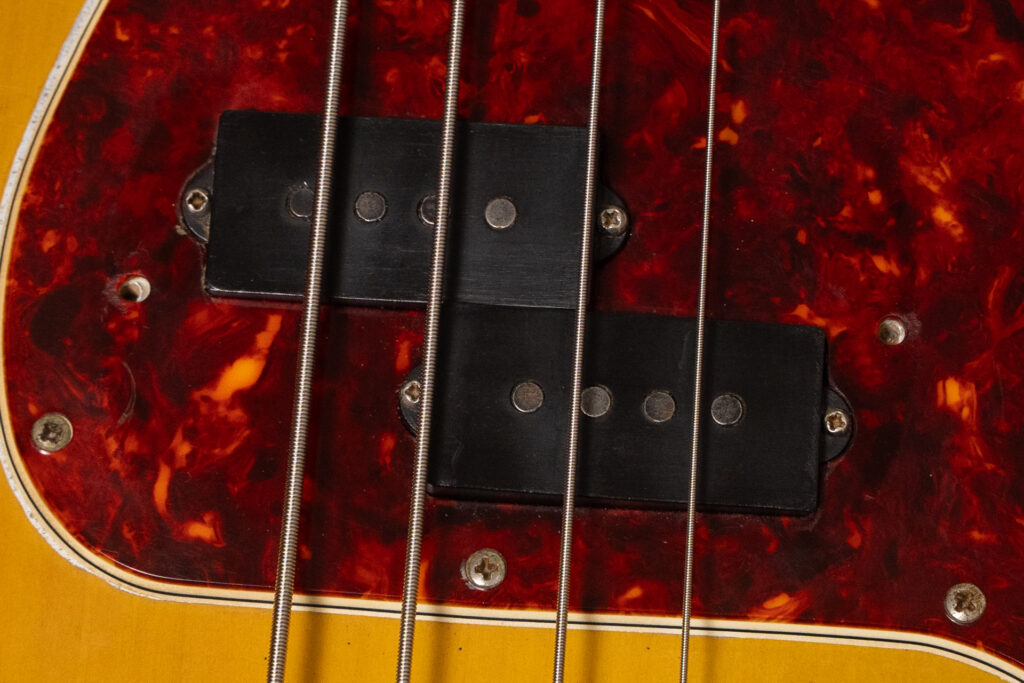
The pickup is the original grey bobbin split-coil. Grey bobbins are the pickups many players look for in a 60s P-Bass, and finding one still original in the bass is a big part of what makes this instrument special.
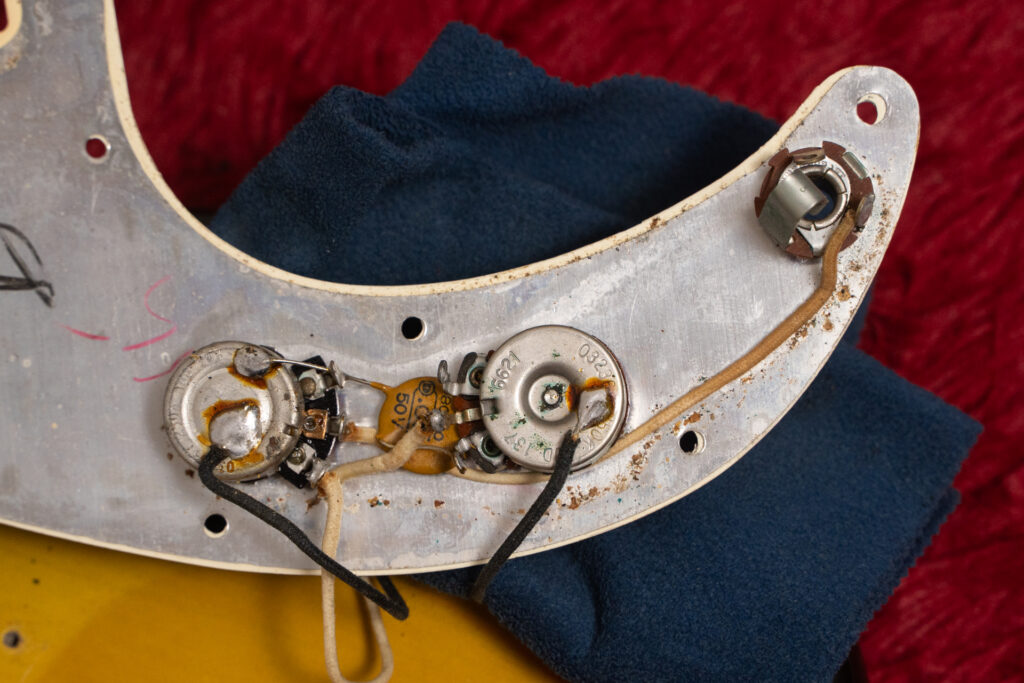
Controls are the classic volume and tone. The volume pot has most likely been replaced at some point; the tone pot is the dated one we used above.
Original Hardware
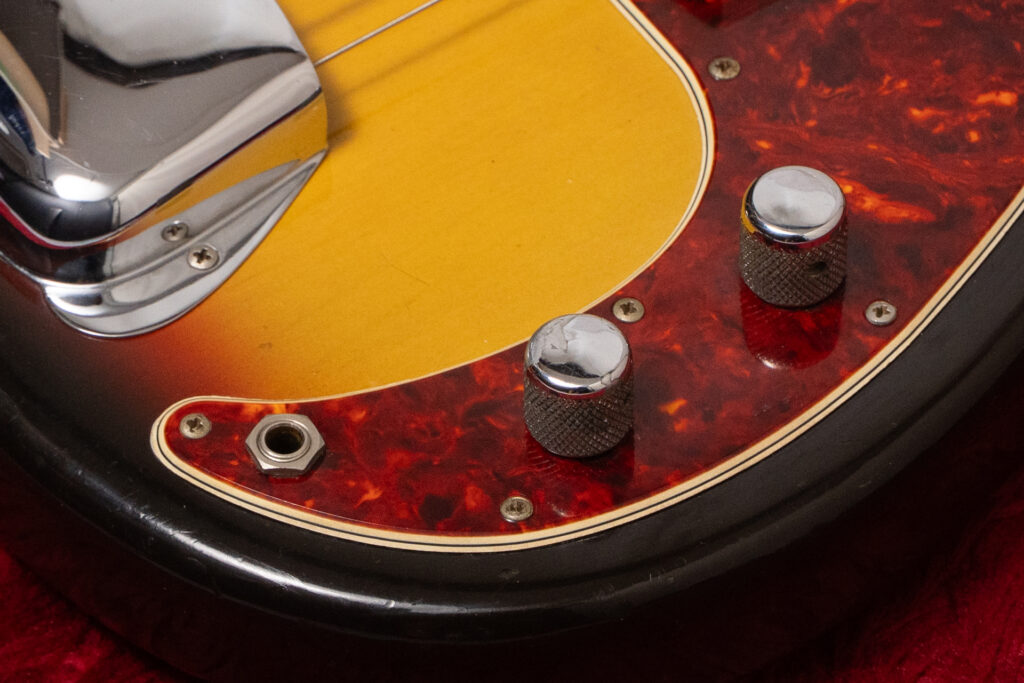
The pickguard is original.
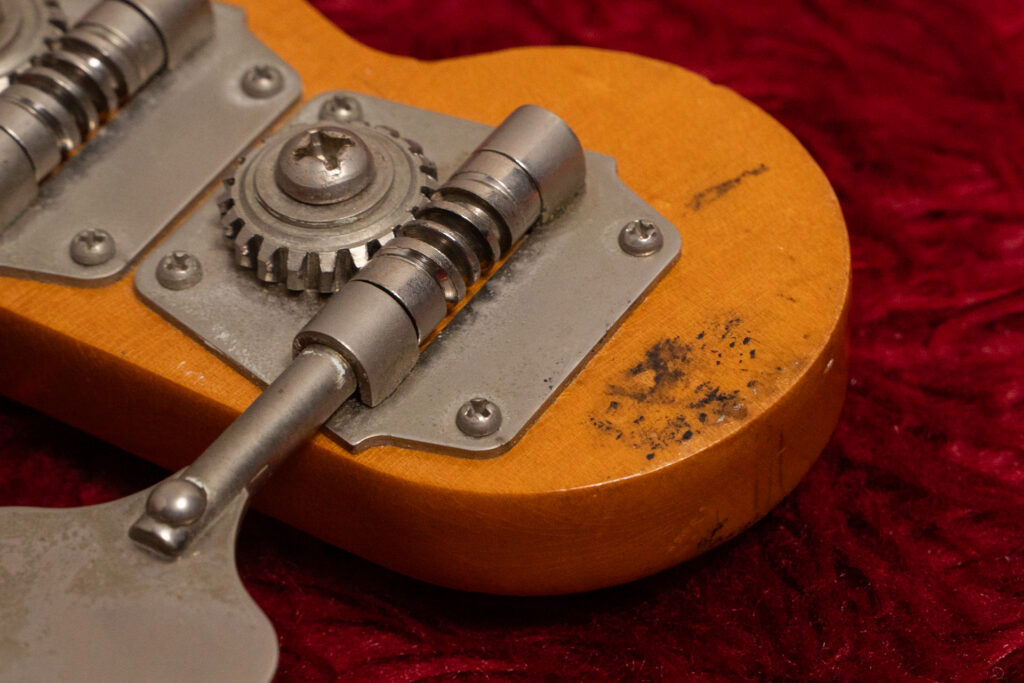
The bridge is original.
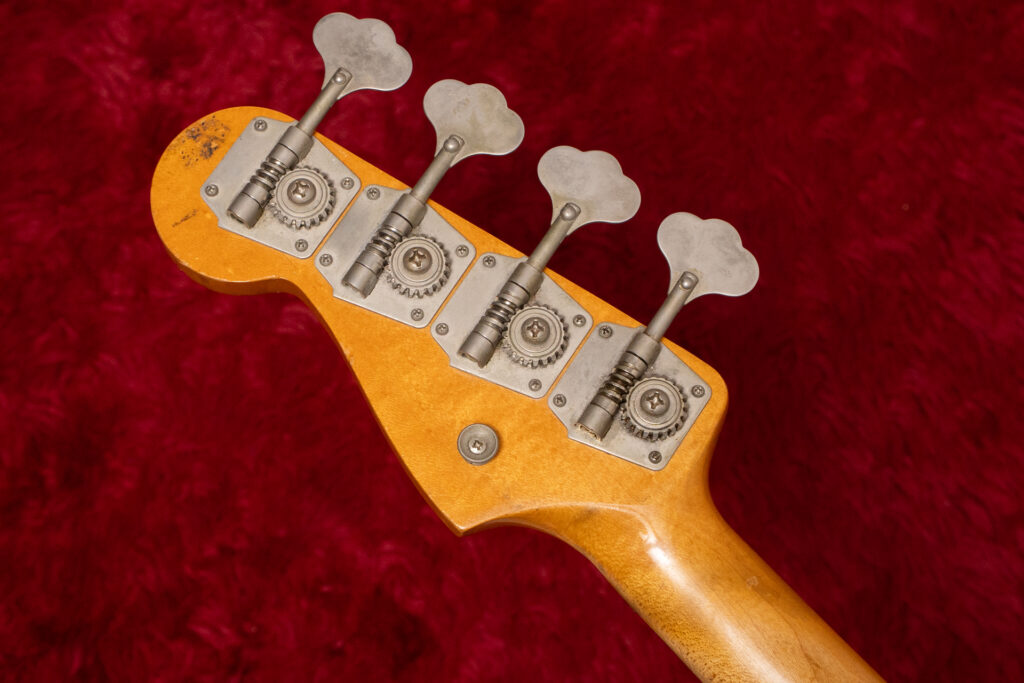
And so are the tuning machines. The metal parts show some dulling, which is natural for their age.
Playing Condition
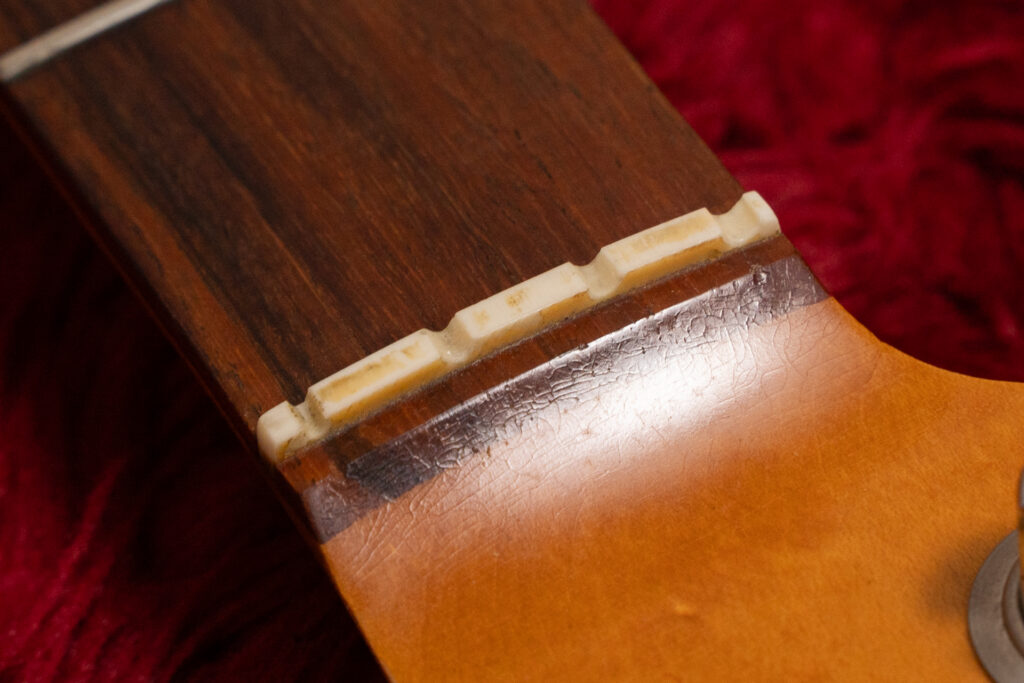
The bass has been refretted and has a new nut, with about 60% of the fret height left. With vintage instruments, a well-done refret is usually good news: it means the bass was kept as a player.
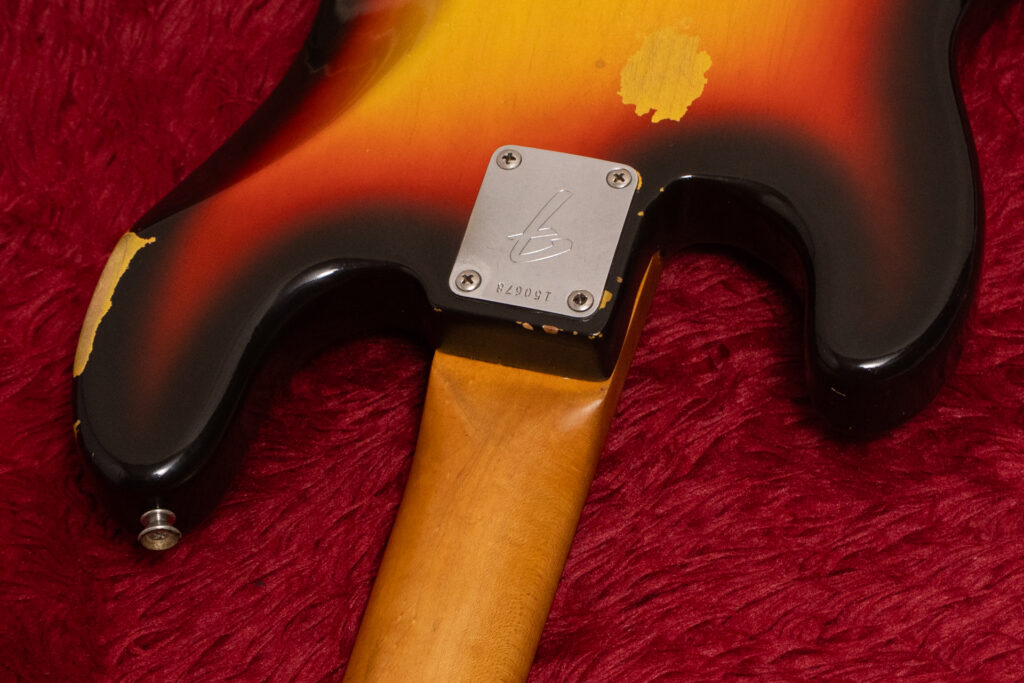
The truss rod works well. The neck has a slight rising tongue, a common trait in vintage basses (we explain how to spot one in How to Check Your Bass Neck). It plays without problems with the action set about 0.5 mm higher than our usual standard: 2.5–3.0 mm at the 12th fret. The electronics are in good working order, and it comes with a hard case.
How It Sounds
This is the Precision Bass sound in its purest form: thick and open. At the same time, it has the speed and clarity typical of the mid-60s, and enough power to hold its own in a modern band. If you love the P-Bass, this is the kind of instrument you should play at least once.
This bass is currently at GIB Yokohama.
Shop with Confidence from Japan
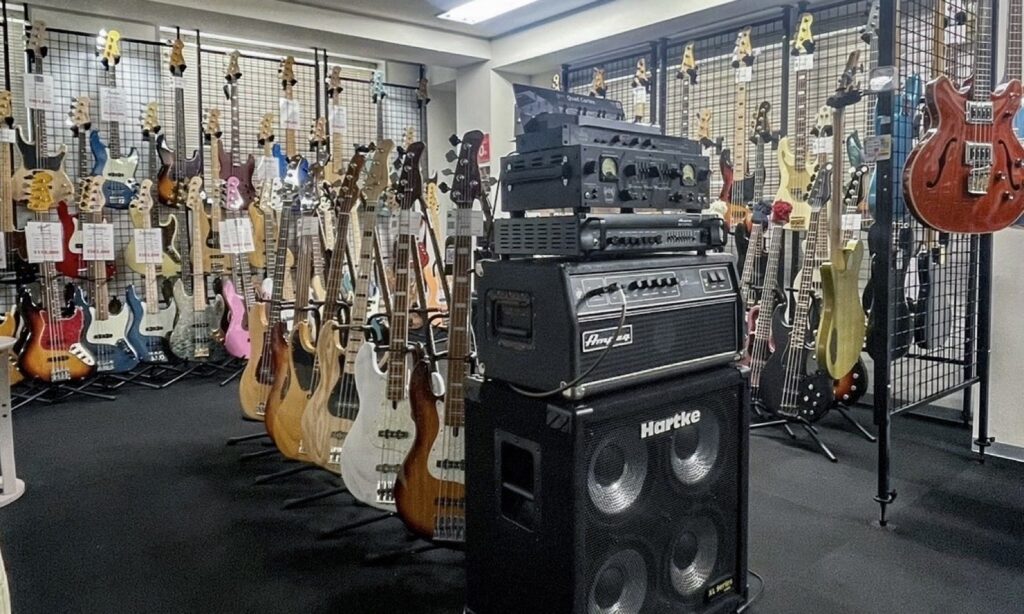
Geek IN Box Yokohama.
Geek IN Box ships worldwide, and every price already includes shipping and import duties, so there are no surprise charges when your order arrives. Every instrument goes through our highest level of quality control before it leaves Japan.


