

Fender Jazz Bass History: How the Specs Evolved from 1960 Onward
The Fender Jazz Bass arrived in 1960 and has been loved by bass players ever since. For many it is simply the electric bass. In this article the team at Geek IN Box, a bass specialty shop in Japan, looks at where the Jazz Bass came from, what made it different, and how its specifications changed over the years.
The Origins of the Fender Jazz Bass
Leo Fender's company grew out of the K&F partnership in the 1940s and took the Fender name in 1946. In 1950 it released the Esquire, the forerunner of the Telecaster, and in 1951 it introduced the Precision Bass, the world's first mass-produced electric bass.
With those instruments established in the market, Fender developed its next generation of products: the Jazzmaster, the Jaguar and the Jazz Bass. The Jazz Bass was officially released in 1960, and prototypes appear to have existed as early as 1959.
What Makes a Jazz Bass a Jazz Bass
The offset body
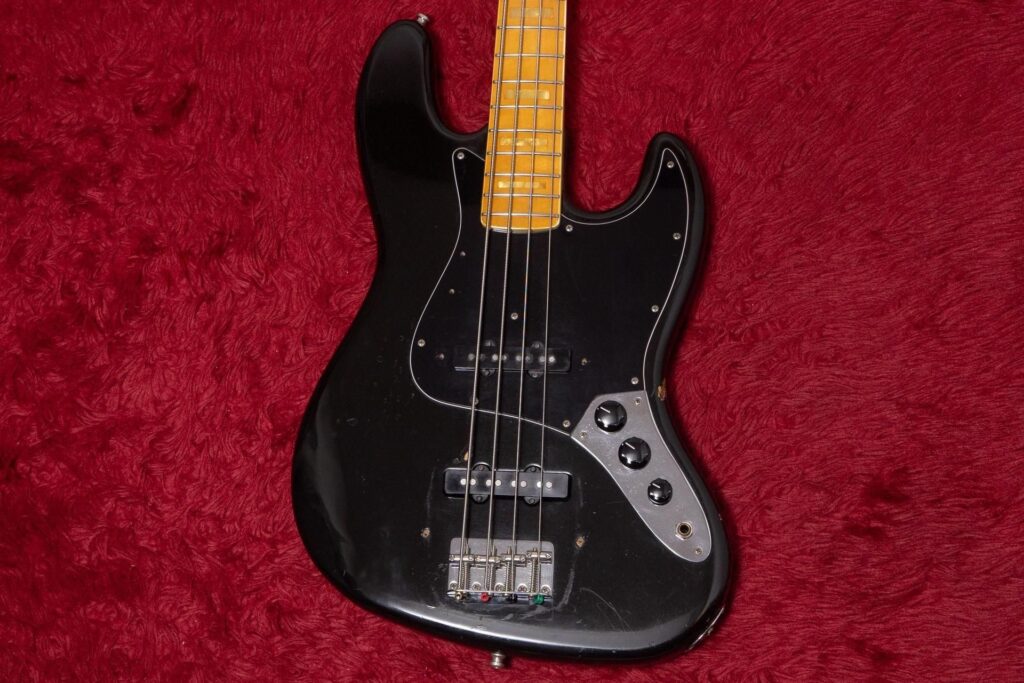
The first thing anyone notices is the body. Compared with the Precision Bass that came before it, the Jazz Bass has an even more asymmetrical "offset" shape, designed to sit better against the body and to improve playability.
The same offset concept is shared with the Jazzmaster and Jaguar of the same period, and it shows how forward-thinking Fender's design philosophy was at the time.
The slim 38 mm nut

The Jazz Bass neck is narrower at the nut than a Precision Bass neck: a slim 38 mm (1.5 in). That makes it comfortable even for players with smaller hands and well suited to fast, technical lines.
Two single-coil pickups
The Jazz Bass carries two single-coil pickups. Used together, they cancel each other's hum, so you get a hum-canceling effect whenever both volumes are fully up, along with a wider palette of tones than a single pickup can give.
How the Jazz Bass Changed Over Time
Woods: from alder and rosewood to ash and maple

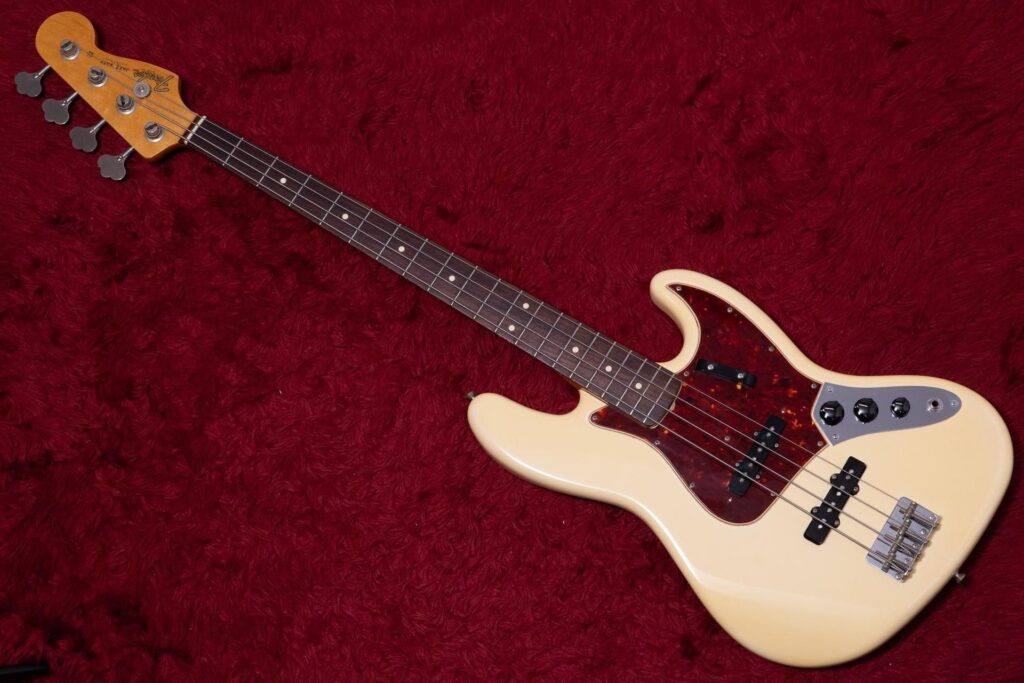
You cannot talk about Jazz Bass tone without talking about wood. The basic 1960s specification was an alder body with a rosewood fingerboard, which gives a warm, well-balanced sound.
In the 1970s the combination of an ash body and a maple fingerboard appeared. It brought a brighter, crisper sound, and the natural finish look became a classic of the decade. The difference in woods changes not only the feel but the character of the sound and the whole visual impression, and that is part of what makes the Jazz Bass so interesting.
Electronics: stack knobs to three knobs

The controls changed as well. The earliest Jazz Basses used "stack knobs," two concentric controls giving each pickup its own volume and tone. Around 1961 this was replaced by the familiar three-knob layout, a volume for each pickup plus a master tone, which is simpler to use.
From the 1970s the bridge pickup was moved slightly toward the bridge, giving a punchier sound.
Timeline at a glance
| Year | What happened |
|---|---|
| 1951 | Precision Bass introduced |
| 1959 | Jazz Bass prototypes reportedly exist |
| 1960 | Jazz Bass officially released with stack-knob controls |
| Around 1961 | Change to three knobs: volume, volume, master tone |
| 1970s | Ash body and maple fingerboard become common; bridge pickup moves toward the bridge |
For a closer look at the two classic eras, see our guide to 60s vs 70s Jazz Bass differences.
Why the Jazz Bass Still Matters
Because the specifications and materials changed from era to era, part of the fun of the Jazz Bass is choosing the version that suits you. Neck shape, wood, finish and pickup layout all connect directly to sound and feel. Rather than judging by the spec sheet alone, pick one up and play it if you can.
The Jazz Bass has enough depth for players devoted to vintage instruments and for those who prefer the latest models. Its history, its evolution and its range of sounds explain why it is so often called Fender's masterpiece. As a first bass or as a carefully chosen lifetime instrument, it is a choice you can trust.


