

5 Japanese-Made 5-String Basses You Should Be Playing Right Now (2026 Edition)
Europe and the U.S. are putting out plenty of excellent bass brands right now — but with the yen showing no signs of recovering, "excellent" increasingly means "expensive" once you factor in shipping and exchange rates. That's the moment to look back at what's happening at Japan. Japan's boutique and small-batch builders have quietly kept getting better, and several of them now go head-to-head with basses costing two or three times as much.
Our buyers spent a full day at the shop plugging in, comparing, and arguing about five 5-string Jazz-style basses currently in stock. Here's what they found — straight from the shop floor, not a spec sheet.
1. Tsubasa Guitar Workshop — Hopper 5-String
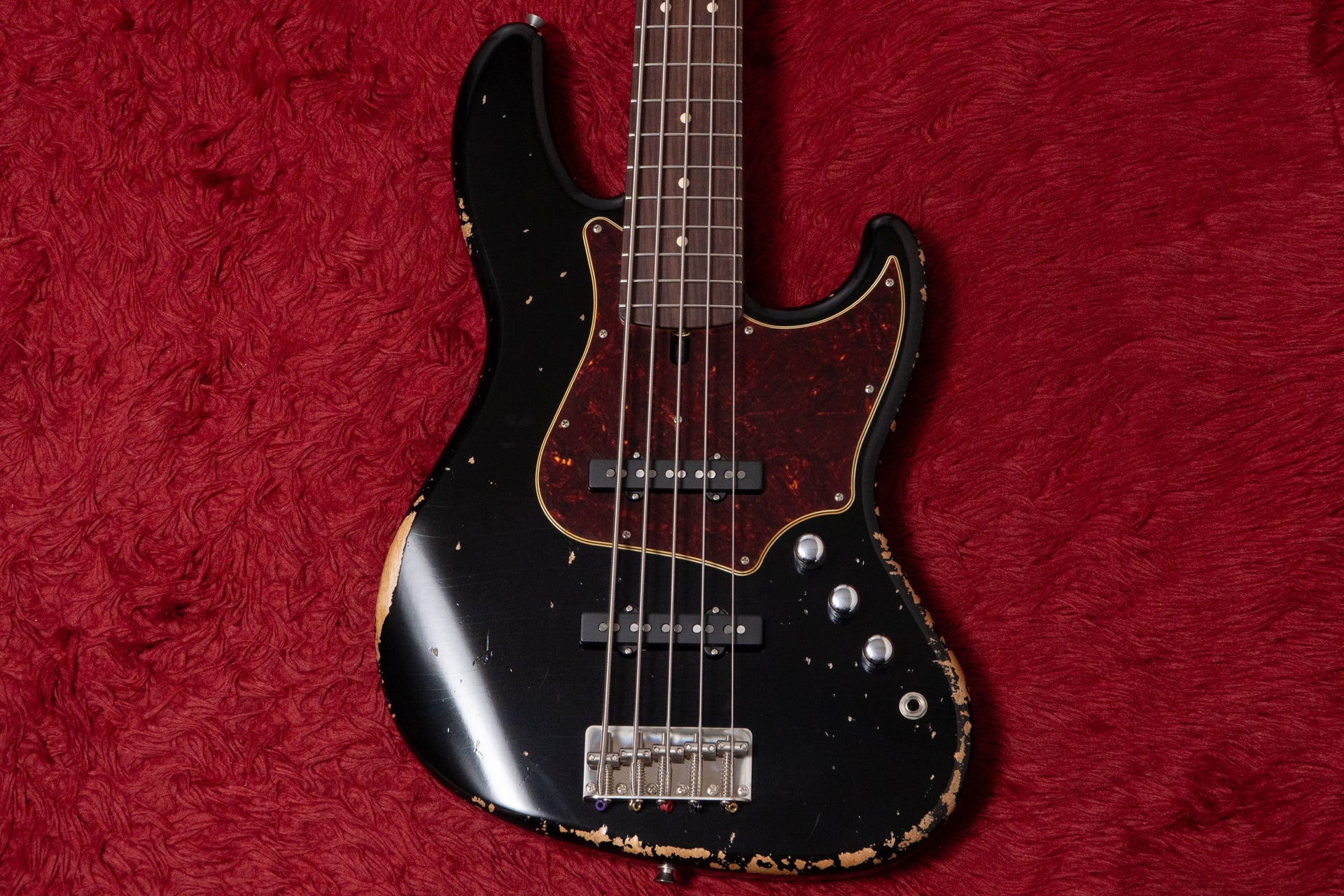
If you only remember one name from this list, make it this one.
Tsubasa Guitar Workshop is run by a luthier who used to build for Fullertone before striking out on his own. We'd been trying to get our hands on his instruments for years — back then, the brand was picky about which shops could carry it, and, fair enough, we didn't make the cut. Now that the distribution model has changed and direct trading with builders is possible, we finally have Hopper in the store, and it was worth the wait.
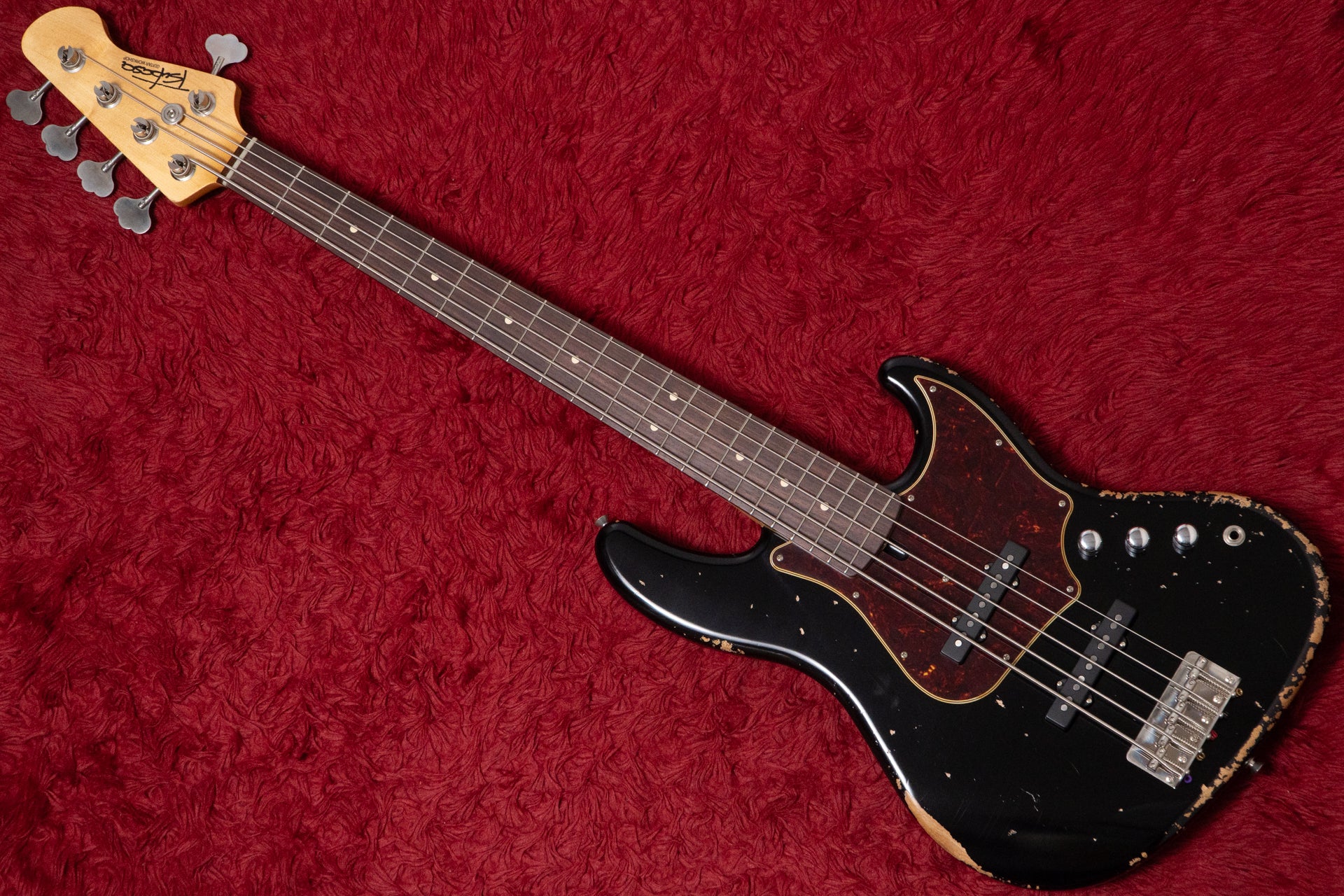
Hopper is a Jazz Bass–style build with an unmistakably classic silhouette — the rounded fingerboard end alone tells you this isn't chasing a modern look. It comes in an aged finish, alder body, rosewood fingerboard, and — this is the detail our buyers kept coming back to — pickups wound entirely in-house.
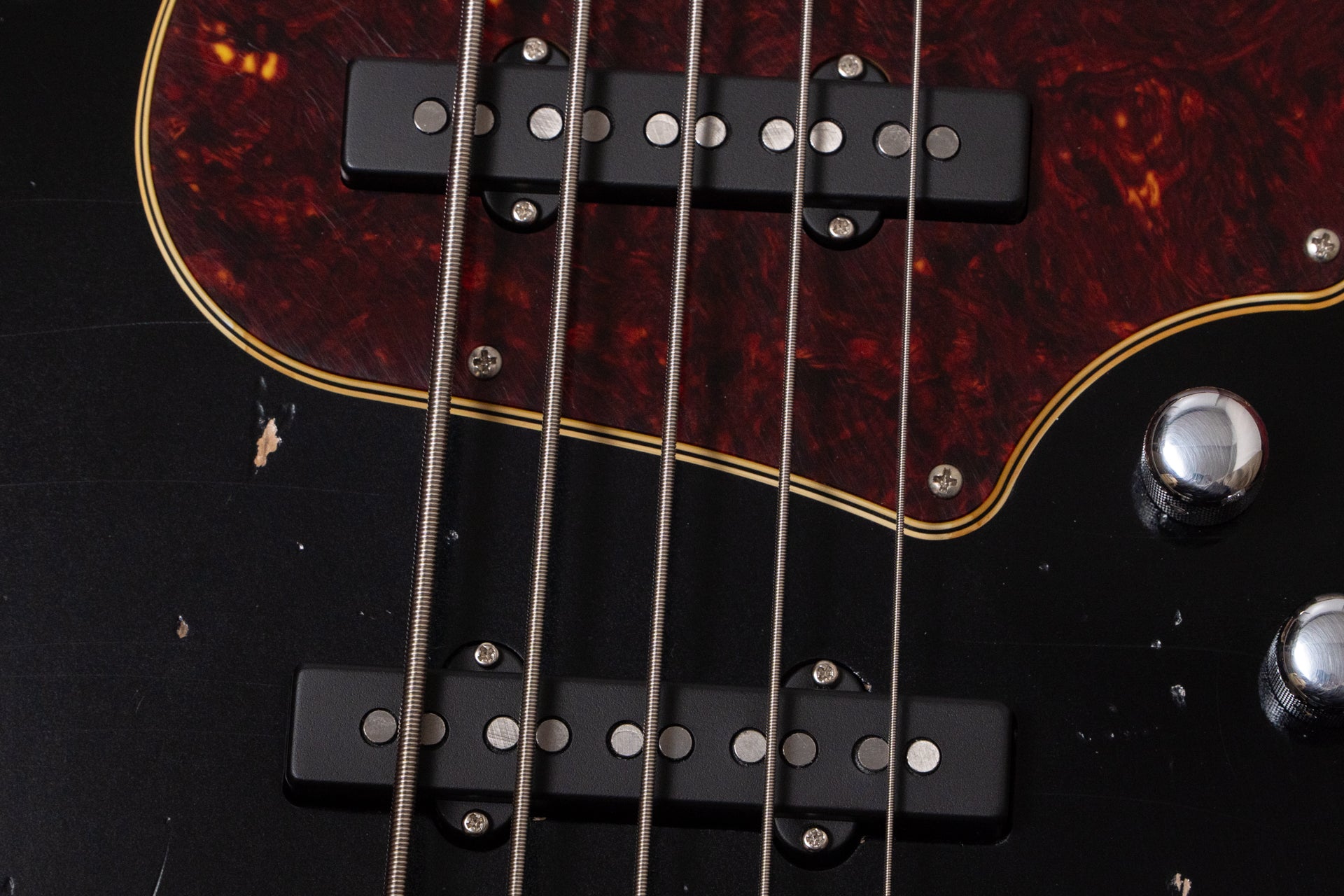
Most "original" pickups from Japanese builders actually come from the same handful of OEM winders, which is why so many Japanese-made basses end up sounding similar once you close your eyes. Tsubasa is one of the few shops actually winding its own, and it shows: this is a 5-string that still feels and punches like a great 4-string.
In blind comparison against the other four basses here, this was the one that sounded most like "the" Jazz Bass tone everyone has in their head — a little dirty, a little vintage, with real character in the overtones. It's a serious finger-style instrument, at home in rock, small-ensemble pop, or R&B.
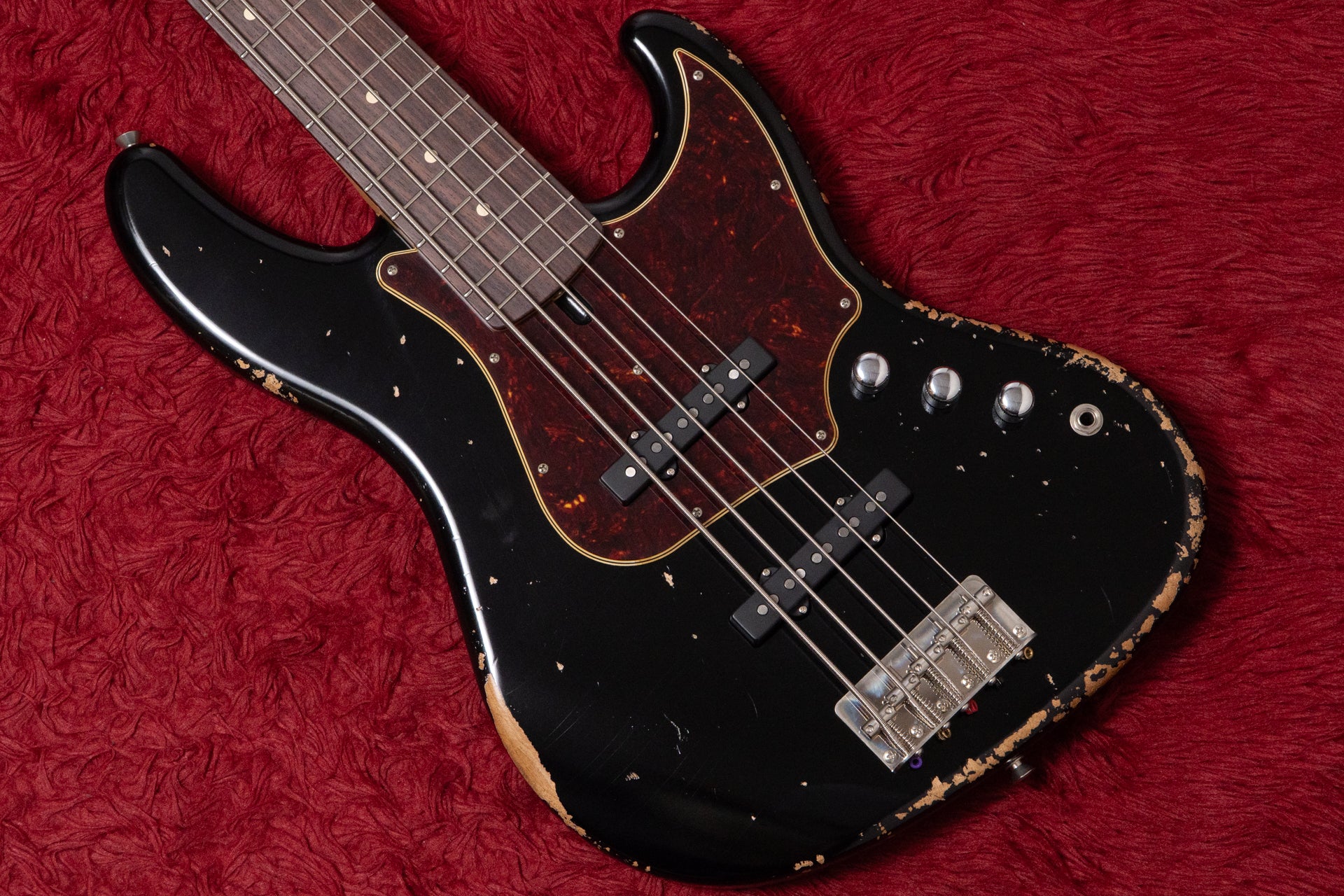
A companion Precision-style model, Earth, is also in stock in the same price range. Quality-to-price, this is arguably the best deal on this list — Tsubasa just hasn't built the name recognition yet that it deserves. Consider this our formal recommendation to fix that.
Brand
Tsubasa Guitar Workshop
View all in stock →
2. Moon Guitars — JB-5C
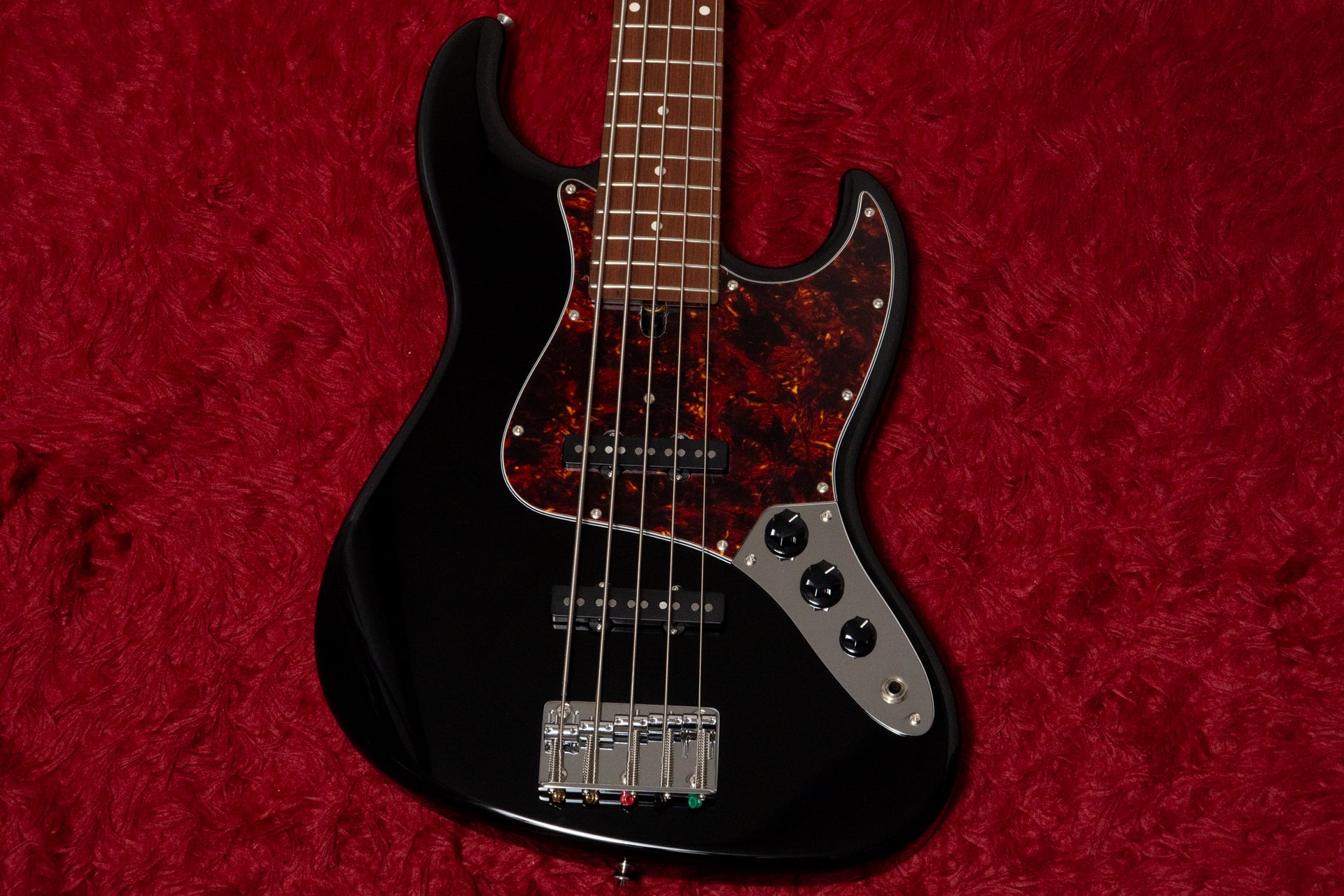
Moon needs no introduction to anyone who's followed Japanese bass building for more than a few years — it's the brand behind instruments played by names like Larry Graham and Mitsuru Sudo, and it remains a personal favorite on our own staff.
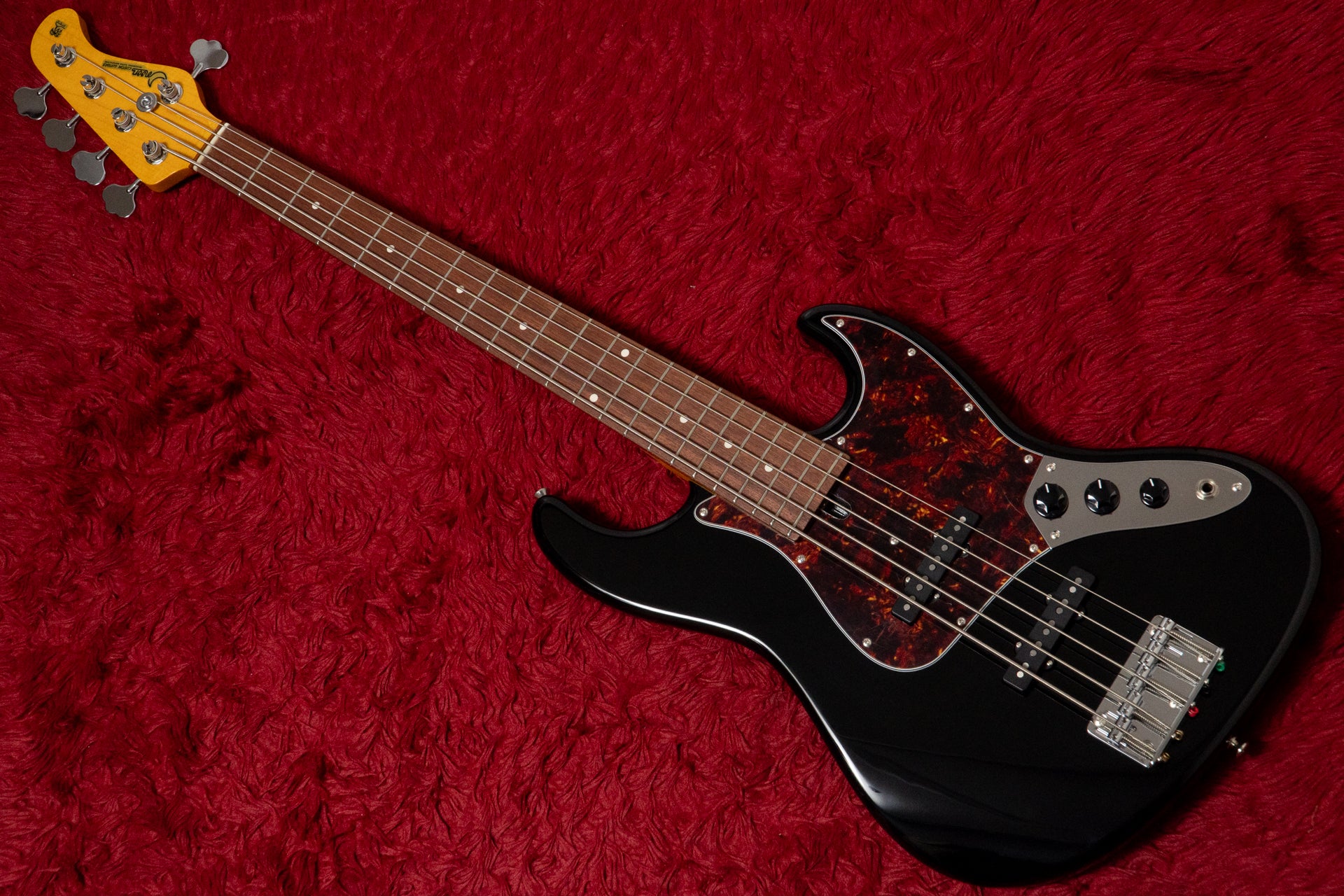
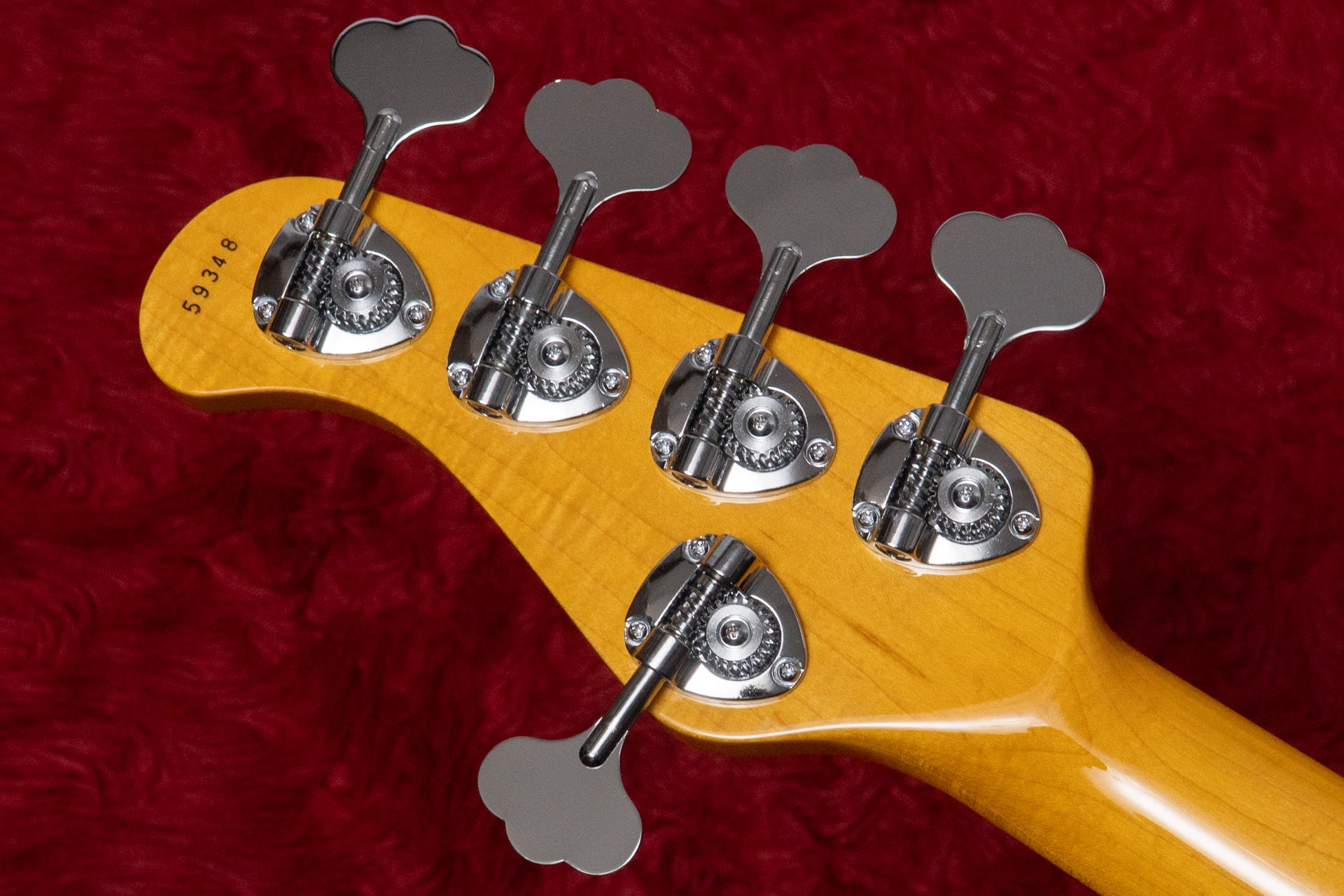
The JB-5C is Moon's classic Jazz Bass, done straight — squared-off fingerboard end, alder body, Honduran rosewood board, black urethane finish, GOTOH tuners, and Moon's own long-trusted single-coil pickups running passive, no onboard preamp.
Compared to the Tsubasa above, it reads a little more buttoned-up and refined — still clearly Fender-inspired, but tighter and more composed, with an easy, forgiving neck that our buyers kept calling "stress-free" to play.
What actually stopped the room, though, was the price.
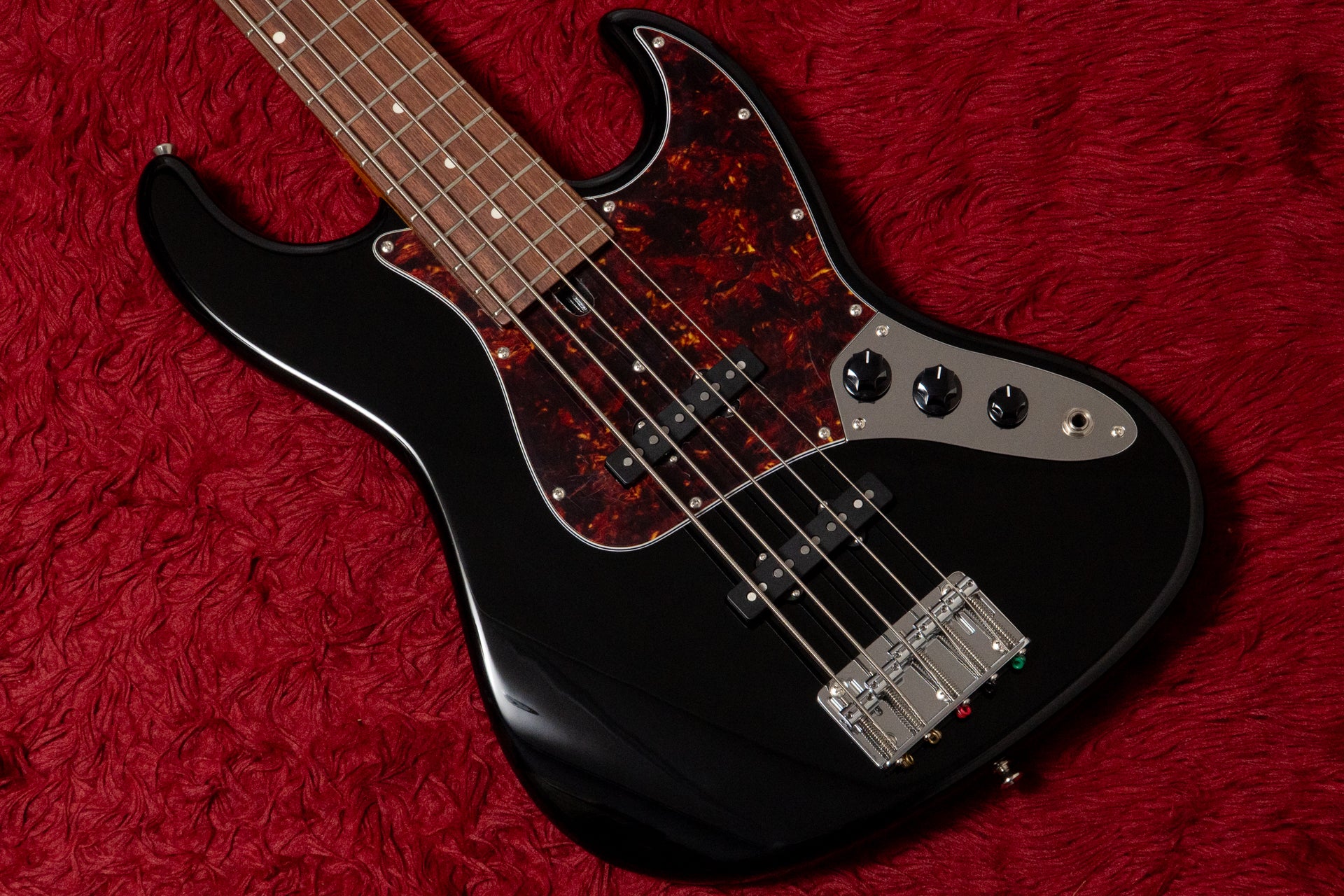
Builders capable of turning out this level of construction quality in the low ¥300,000s are getting rare in Japan — Tsubasa above is one of the few others still doing it. Everything about the JB-5C, from the tuners to the neck carve, punches well above that number. We also have a 4-string JB-4C in stock in Fiesta Red with a tortoiseshell guard and matching headstock — a reminder that Moon's catalog goes well beyond the classic black-on-black look.
3. JIENIE BASSES — Essential MJ-5
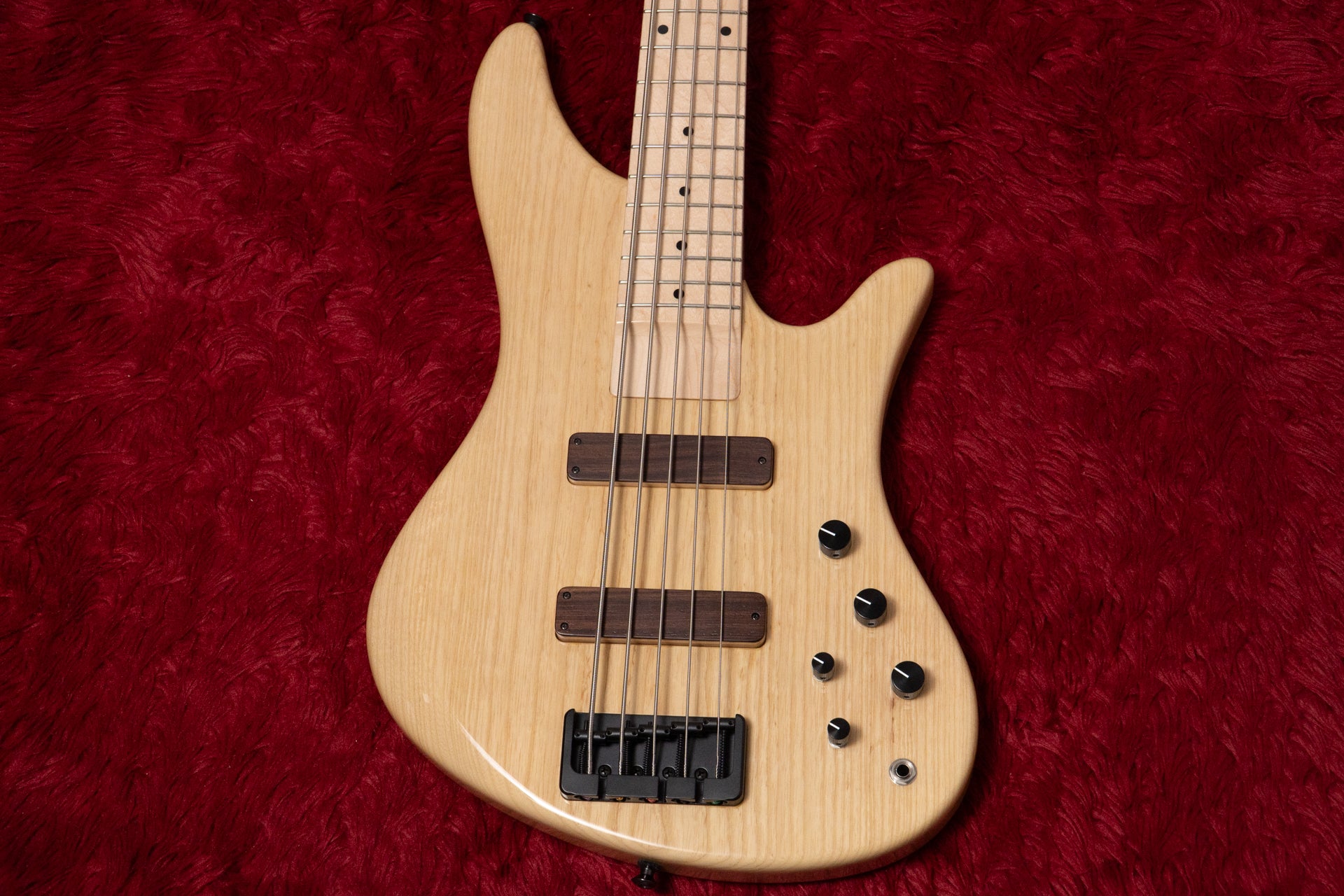
This one's ours.
JIENIE BASSES started as a personal project 13 years ago, when our founder was studying at ESP and became obsessed with a single question: what would the ultimate 5-string Jazz Bass actually look like? That obsession eventually became two product lines — the fully customizable Custom Shop Series (¥770,000, adjustable down to headstock size, scale length, neck profile, and fret count) and the Essential Series, which locks in his own preferred spec at a lower price by cutting production costs, not quality.
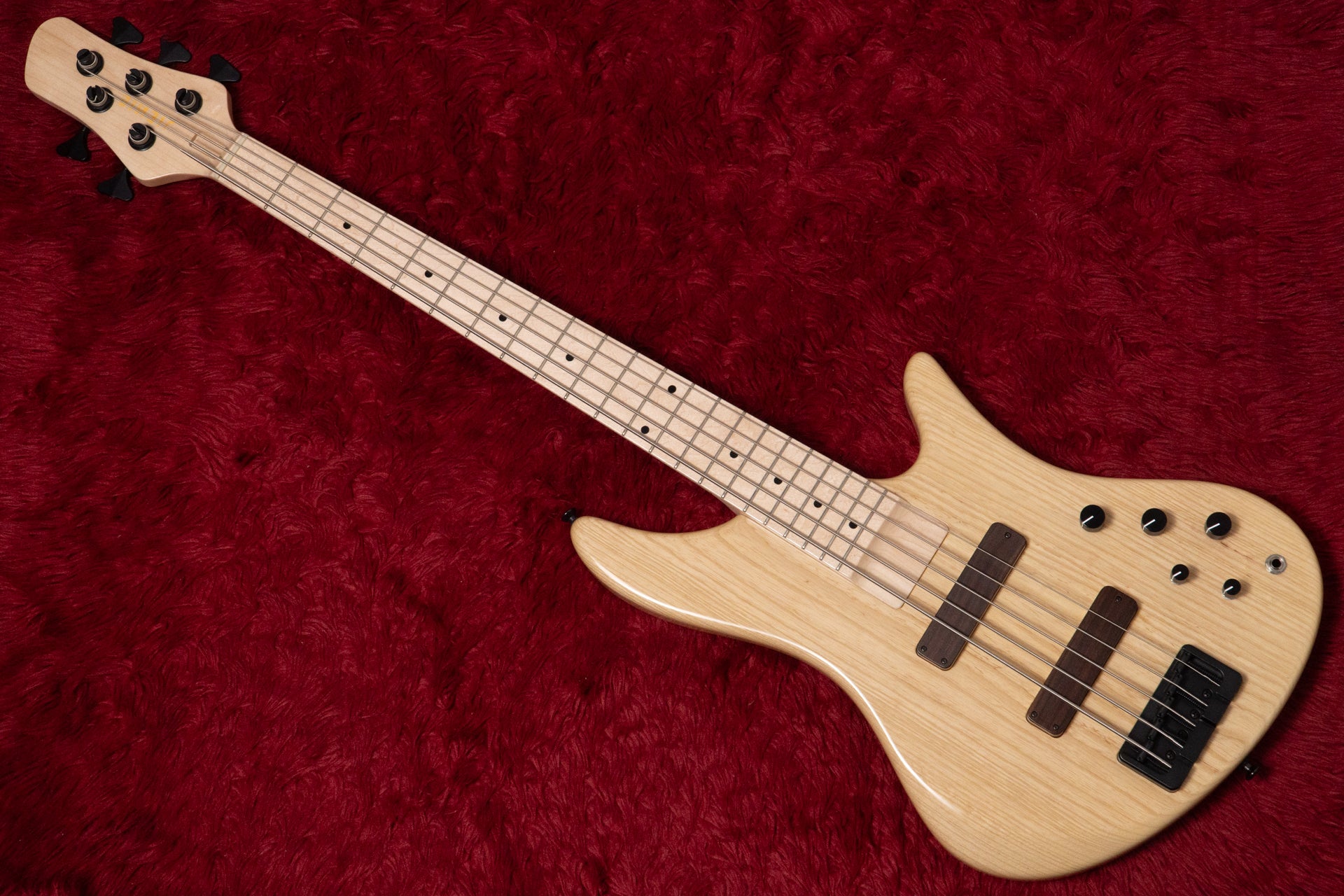
The MJ-5 featured here — the same spec bassist Yuma Takemiya plays — is built on a philosophy most builders don't bother articulating: neck mass changes tone, and a thinner, lighter neck gets a 5-string closer to true 4-string character. Rather than reinforcing the whole neck with carbon or steel rods (which adds stability but flattens tone), reinforcement is concentrated only at the neck joint, where "high-riding" necks actually start to fail — preserving the resonance of a traditional soft-neck Jazz Bass while still fighting off warping.
No pickguard, by design (fewer parts, cleaner resonance), but the string-to-body spacing is tuned to feel identical to a pickguard-equipped bass for slap technique.
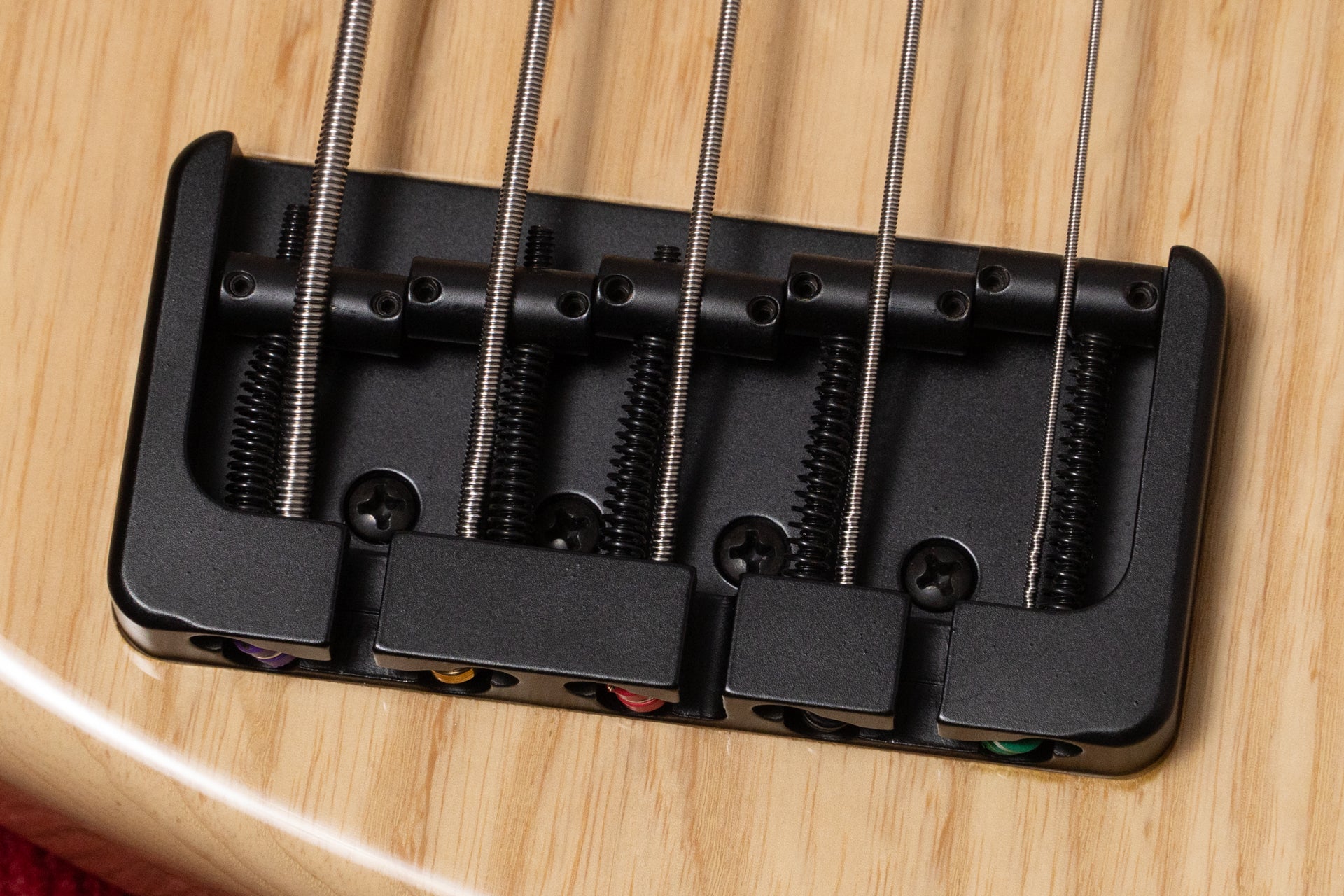
Hardware is Hipshot throughout (aluminum bridge, Ultralite tuners), pickups are custom-wound Delano singles with reduced turns for extra top-end clarity, and the in-house-designed preamp — built by KarDiaN — scoops the mids around 500Hz, the same philosophy behind the Bartolini XTCT preamps our founder has always loved. A passive tone control sits ahead of the preamp to simulate a passive bass's roll-off character.
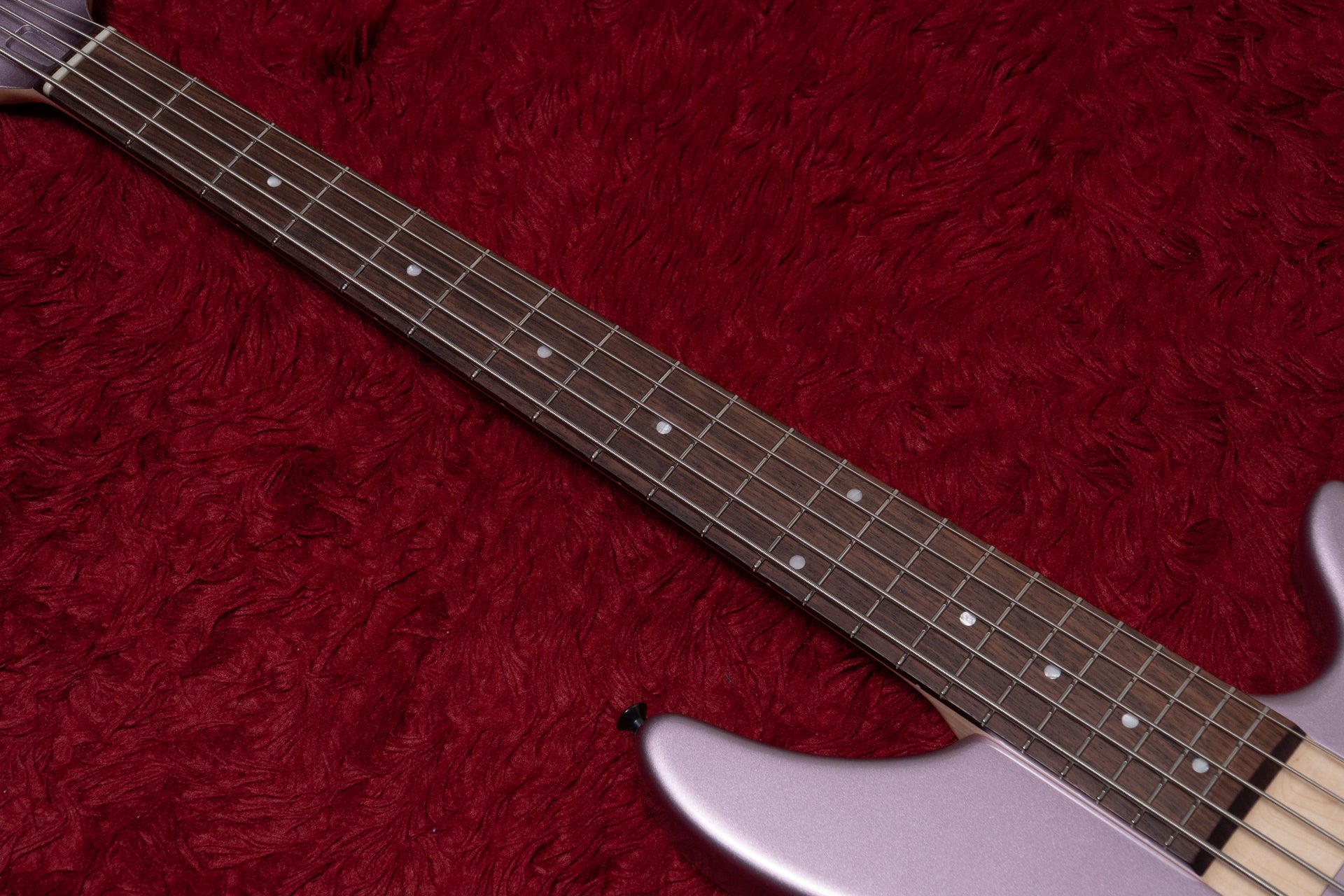
Two wood combinations are in stock: ash/maple (brighter, more "modern-active," described by staff as sounding almost businesslike in its clarity) and alder/rosewood (warmer, more all-purpose, arguably the safer choice if you only own one bass).
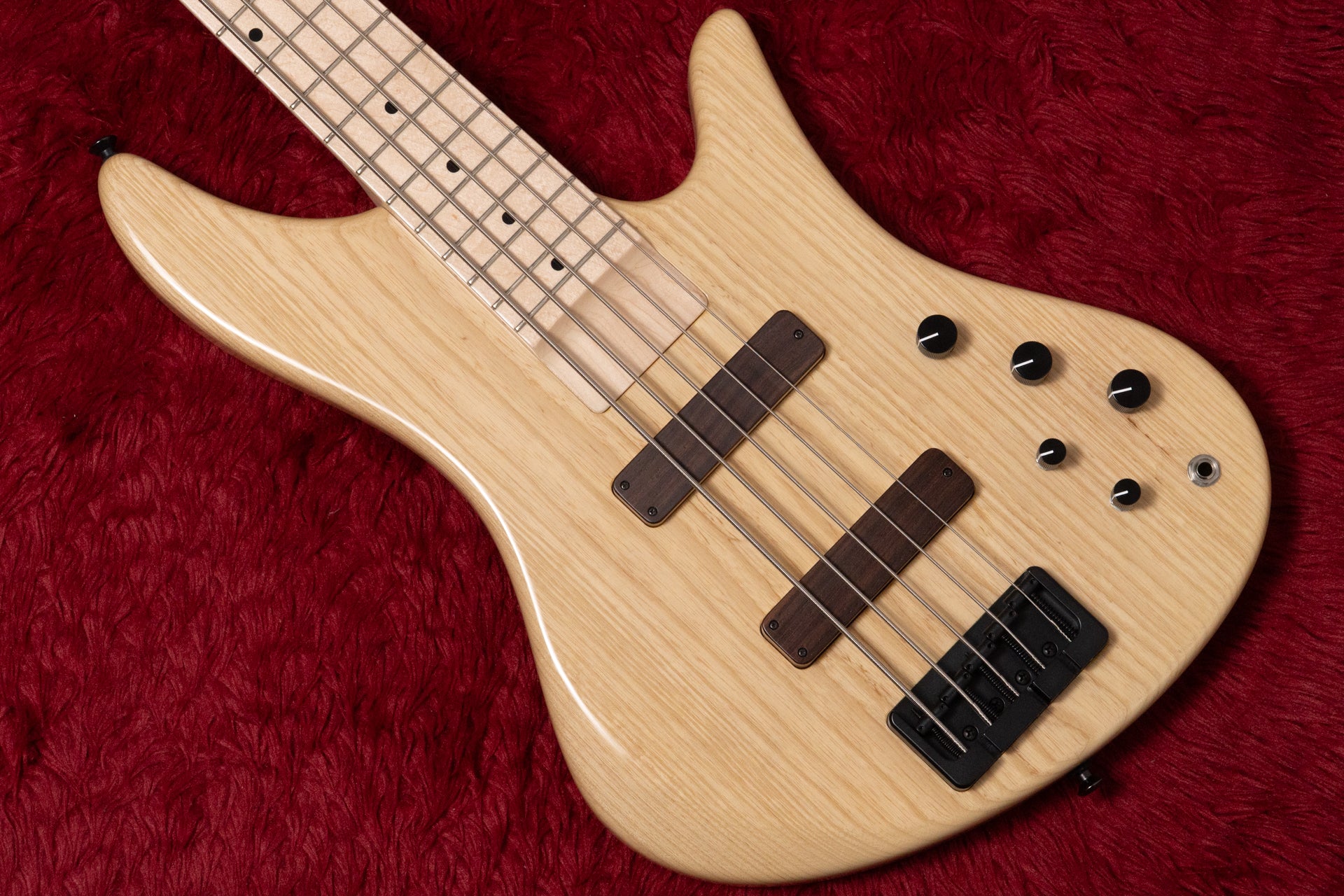
Our own buyers were the toughest critics in the room on this one — and it still won them over.
Brand
JIENIE BASSES
View all in stock →
4. Sago New Material Guitars — Classic Style J5
Sago has been building guitars and basses out of Amagasaki for years, and it's a brand we order from constantly — almost everything they make is full custom, which means we get to experiment.
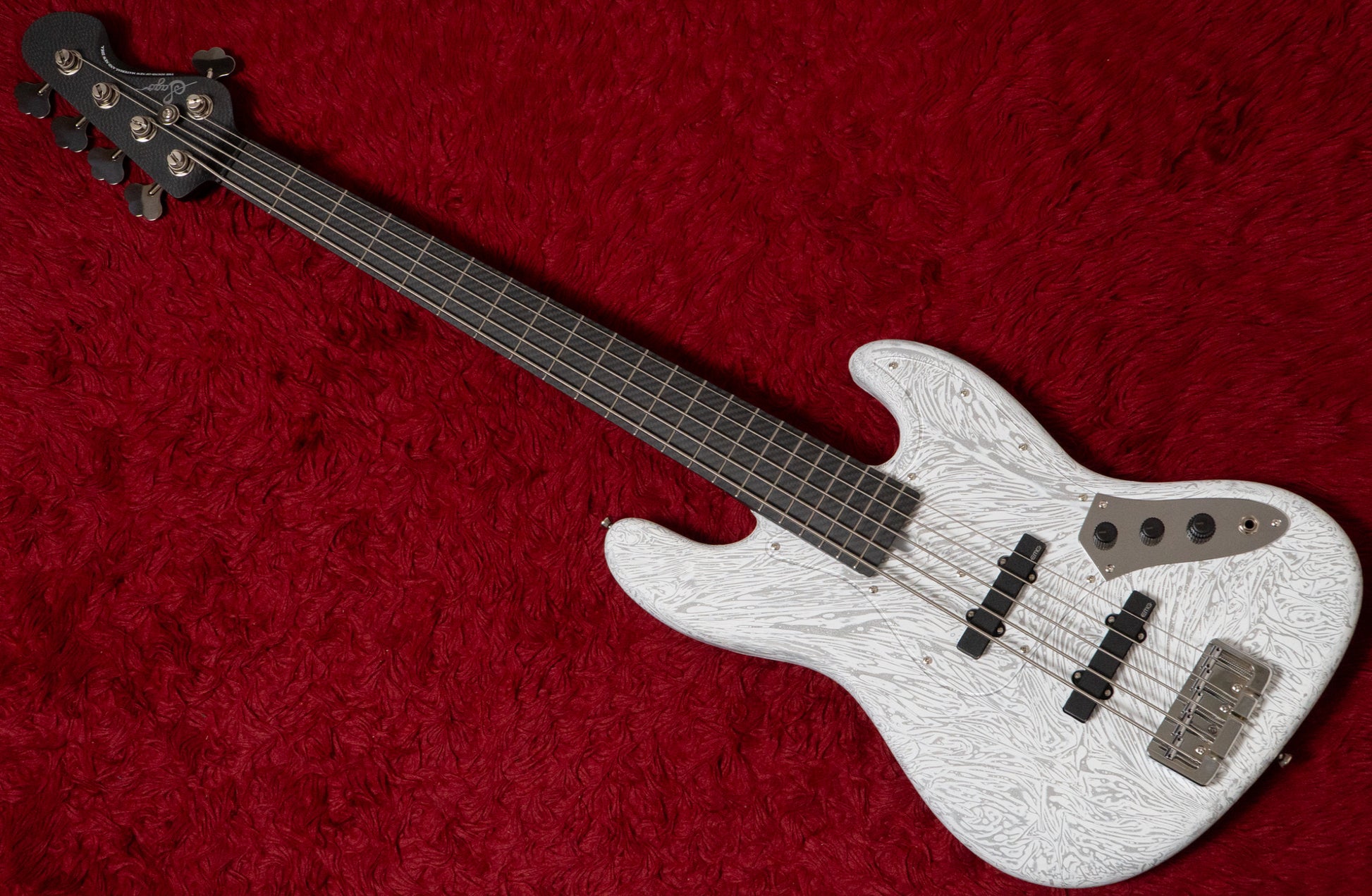
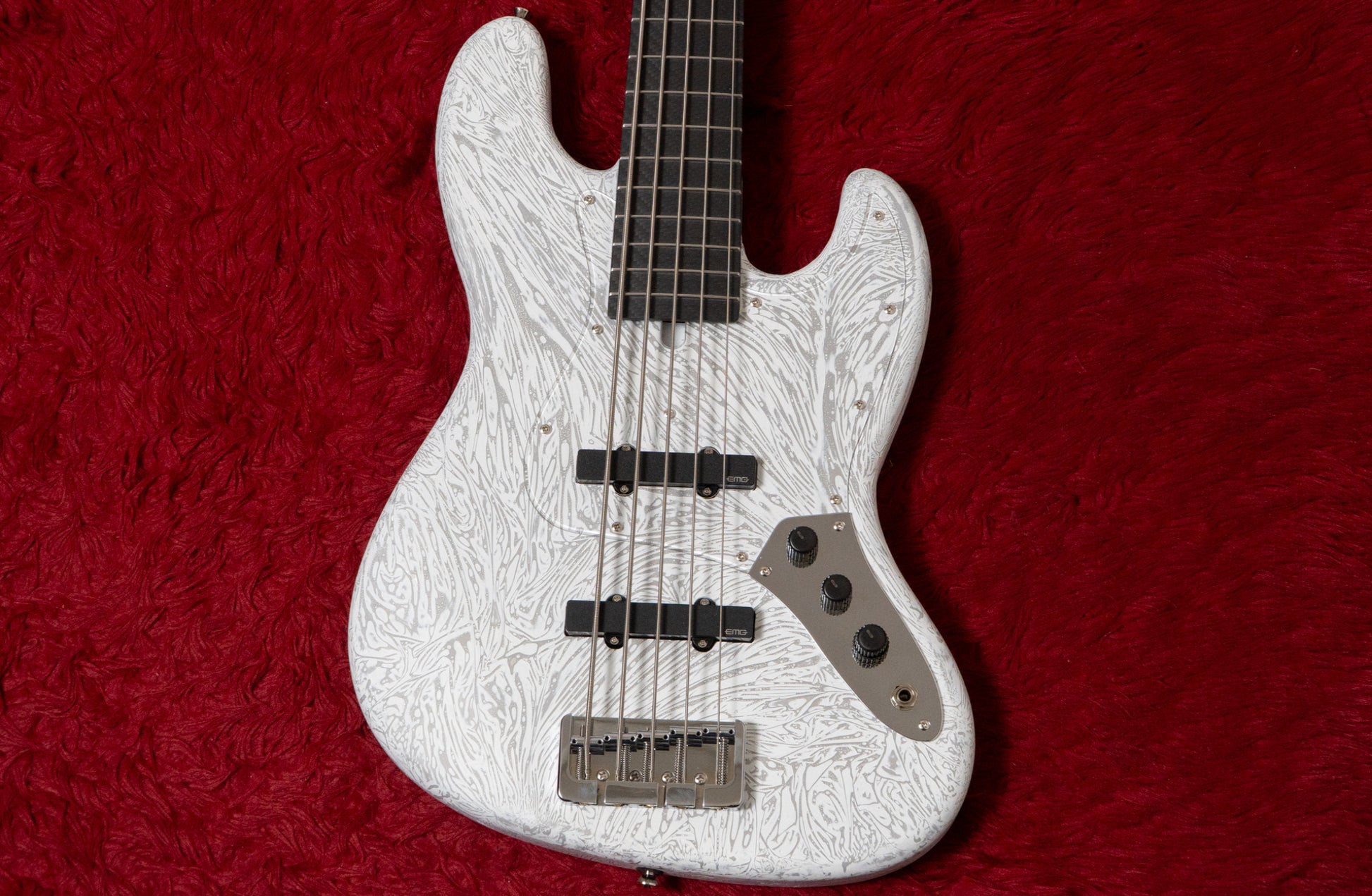
This Classic Style J5 in White Wrap is the result of one of those experiments: a carbon-neck, carbon-fingerboard Jazz Bass, a combination genuinely few Japanese shops can execute. It's a deliberate nod to brands like Modulus and the European carbon specialist Bogart Bass — we'd like to see carbon necks make a real comeback, and Sago's version makes the case well. Unlike a solid carbon slab, the neck core is hollowed, so you get the speed and immediacy of carbon without losing all the "give" of a wood-neck response.
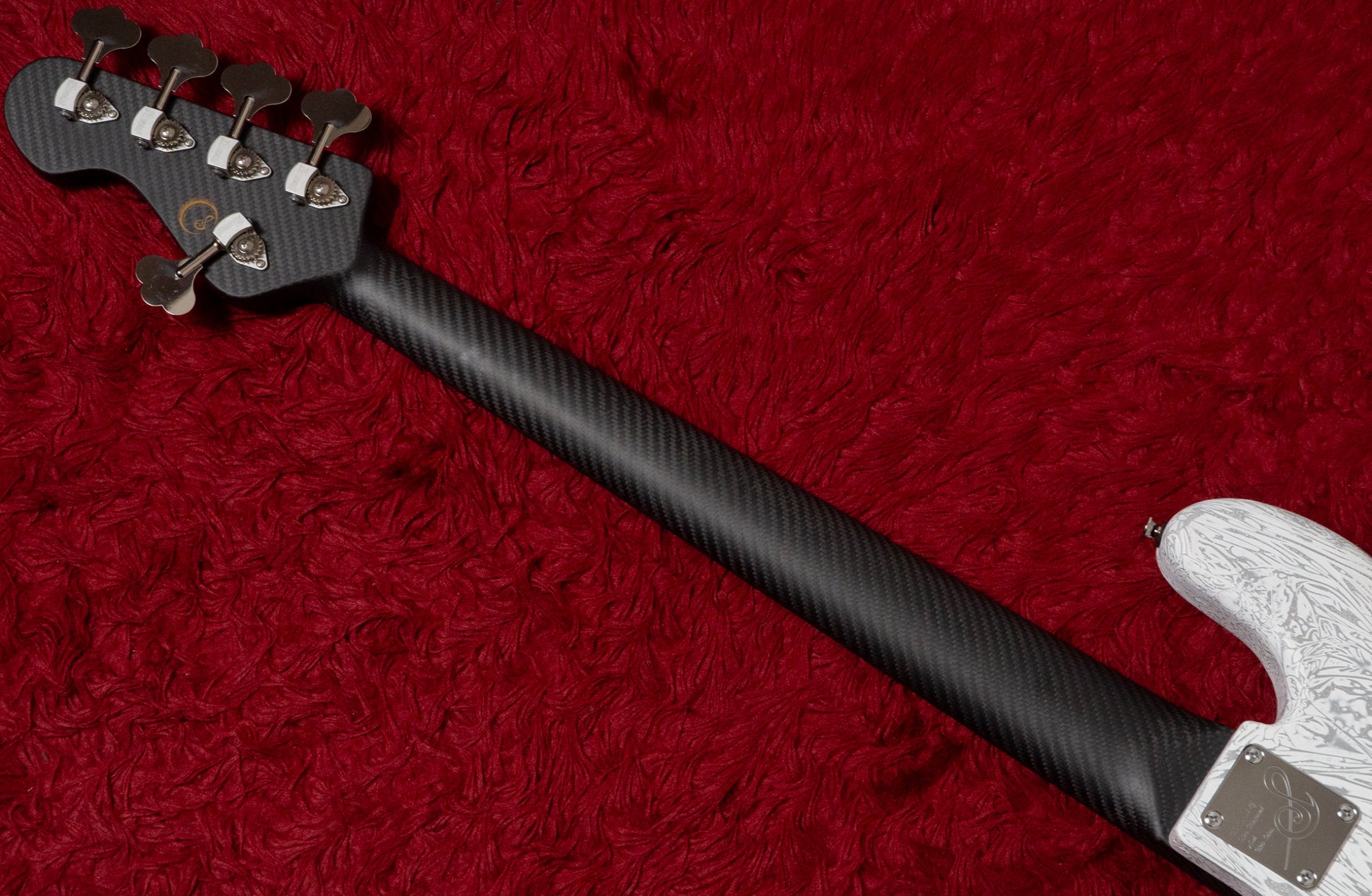
Predictably, we paired it with EMG active electronics — if you're going carbon, EMG is the obvious call — alongside a Hipshot bridge mounted as low as possible to minimize the string's break angle at the saddle (a steep break angle kills sustain fast). The alder body wears a monochrome white-and-silver wrap finish, understated rather than flashy, with an acrylic pickguard; a black 3-ply alternative is also available on request, and yes, full custom ordering is on the table, down to swapping in a set of Lollar Pickups if you'd rather go that route.
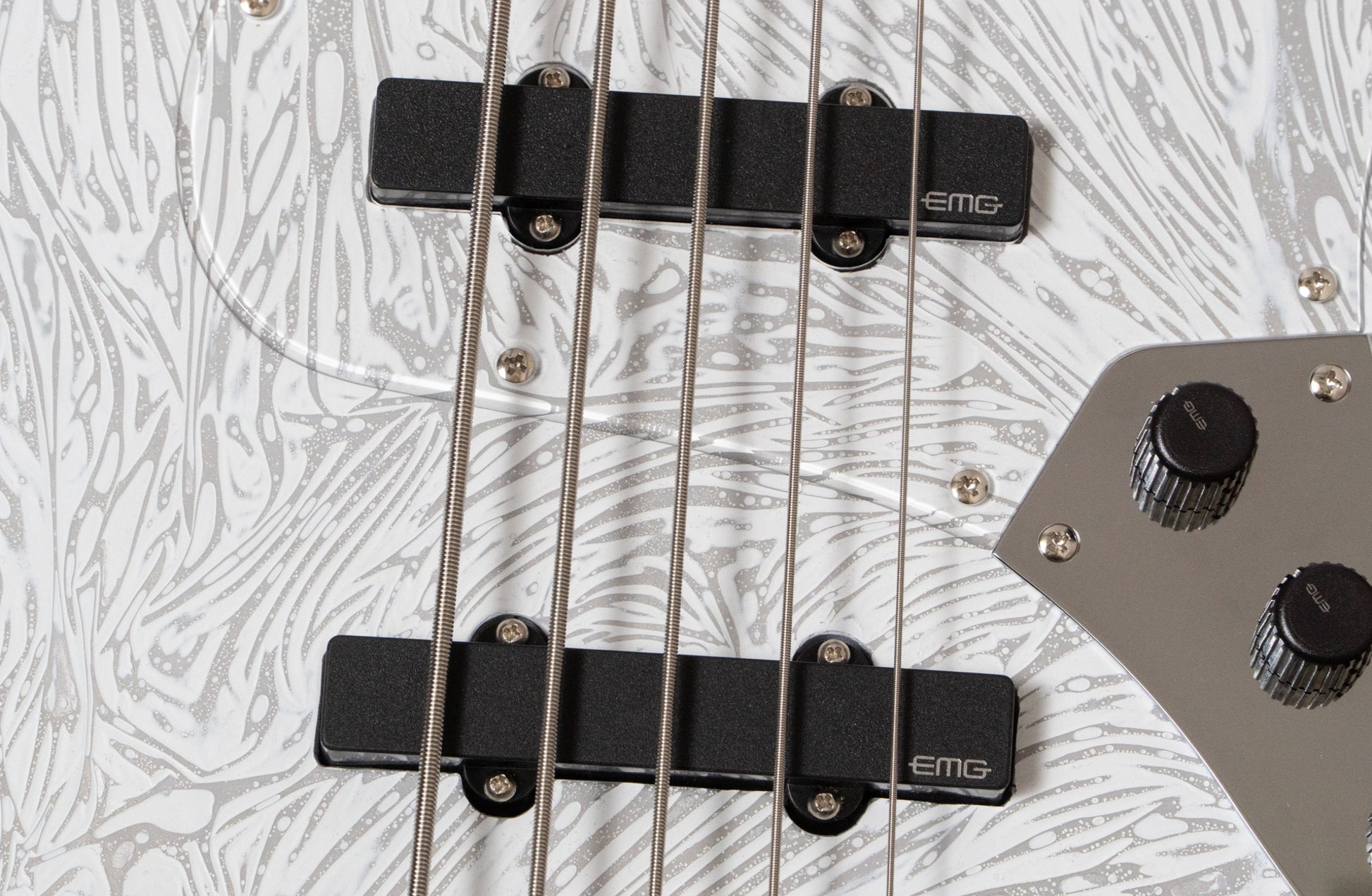
Plug in and the carbon character is obvious immediately — the attack arrives fast, almost ahead of your fingers — but the hollow core keeps the tone from turning sterile. It still carries real midrange warmth, closer to a wood-neck Fender than you'd expect from an EMG/carbon spec sheet. That balance is the whole argument for Sago's craftsmanship.
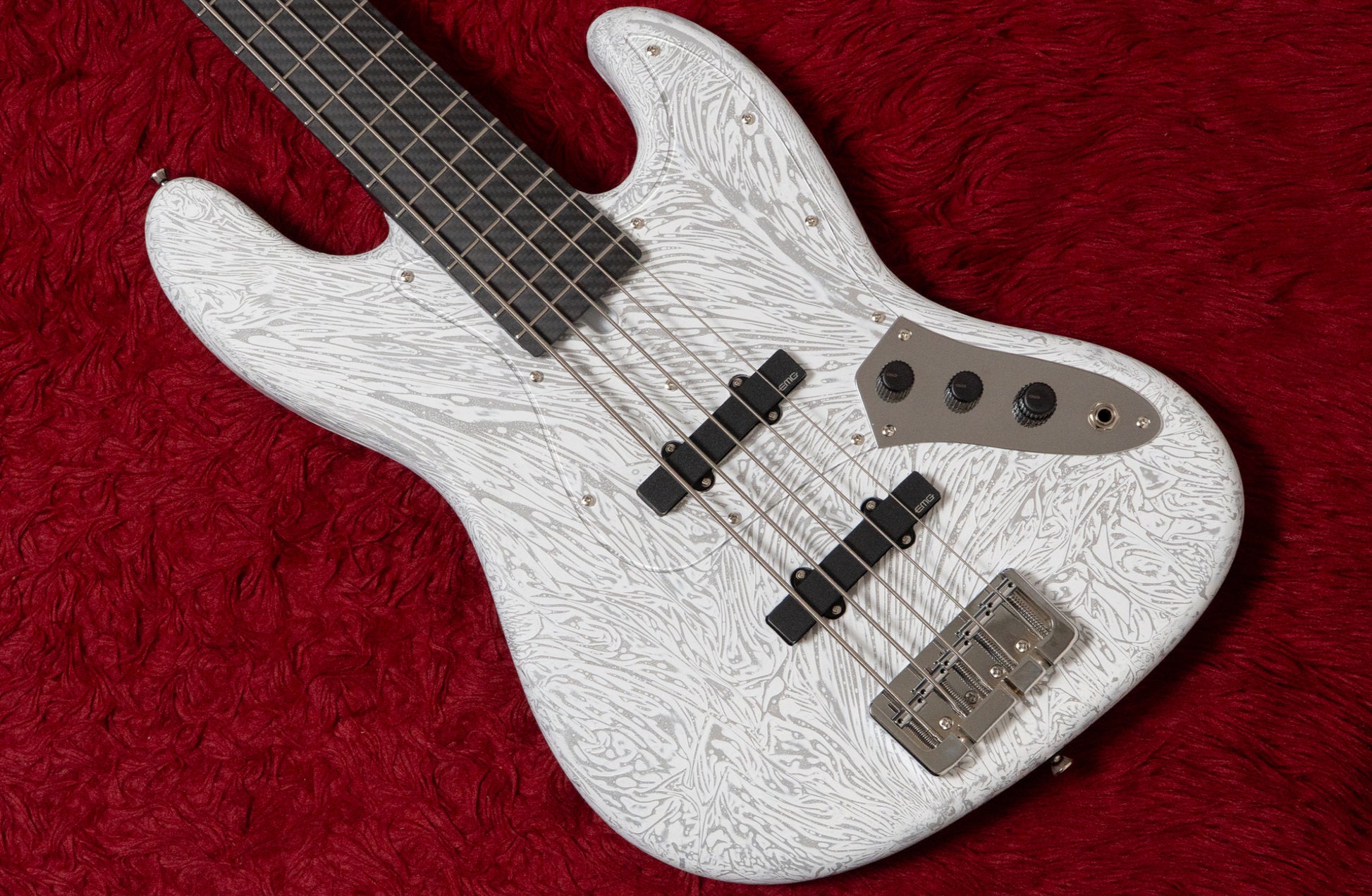
Not a casual purchase, but a genuinely distinctive one — and we currently have a second color option in stock in a thin-lacquer finish, for anyone who wants the same spec with a more traditional topcoat.
Brand
Sago
View all in stock →
5. saitias guitars — Lexell 5
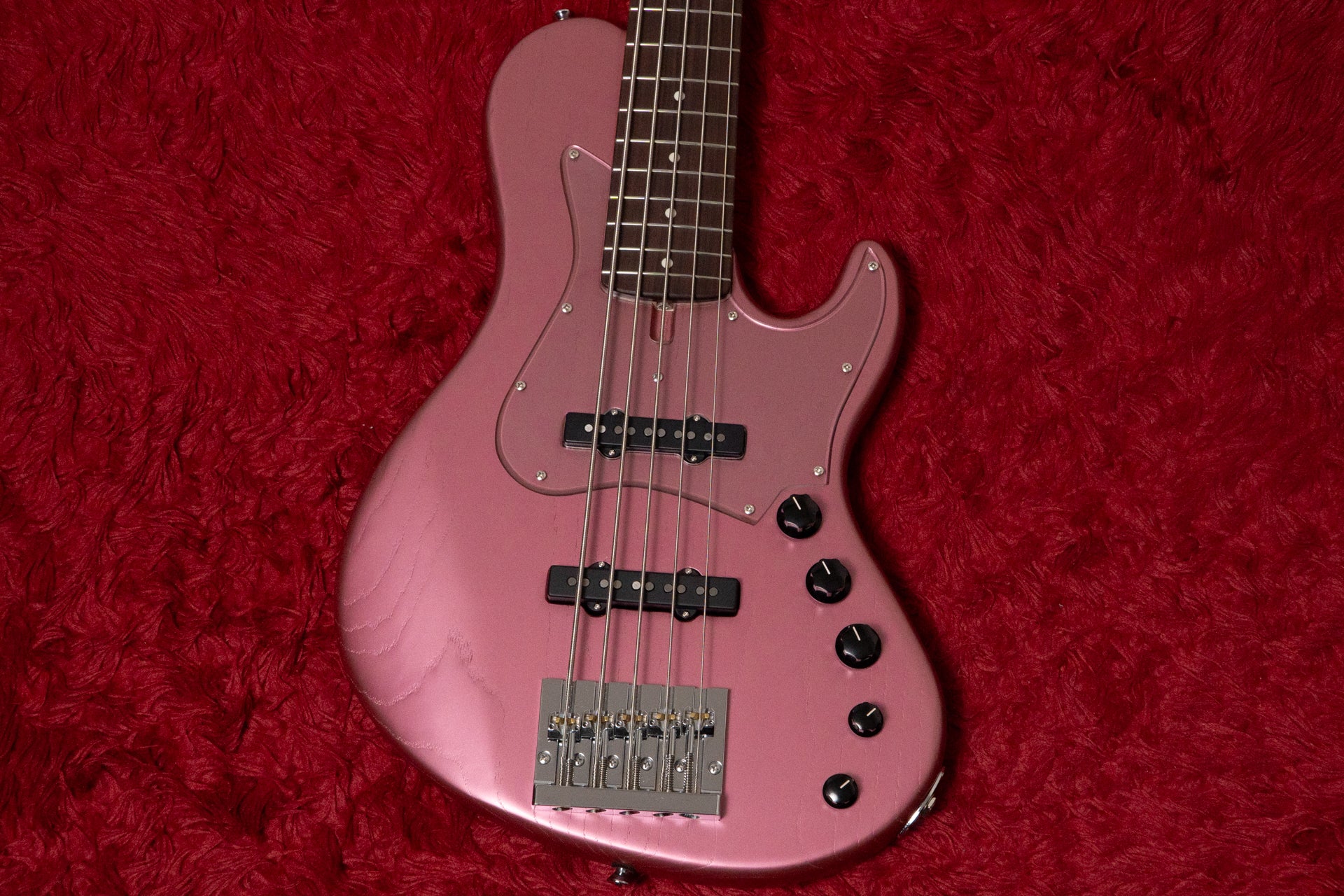
Last, and in our buyers' opinion arguably the most complete player of the five: saitias guitars, run out of Chigasaki by a builder named Saita, who — full disclosure — is as much a reason we carry this brand as the instruments themselves. Tone and build quality matter enormously to us, but so does the character of the person behind the brand, and saitias earns high marks on both counts. It's the bass of choice for RADWIMPS bassist Yusuke Takeda and Wakazaemon, with PARK a recent convert.
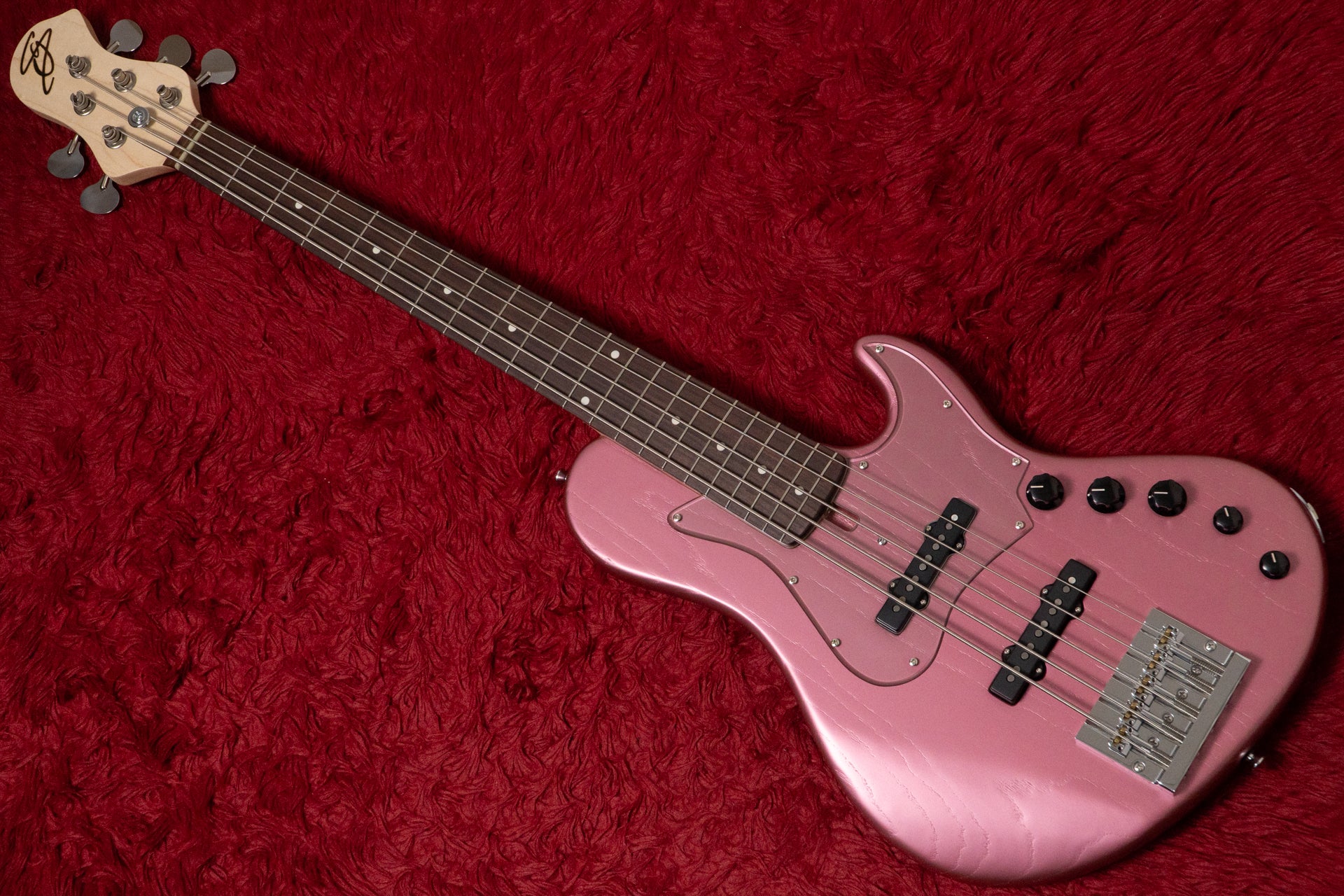
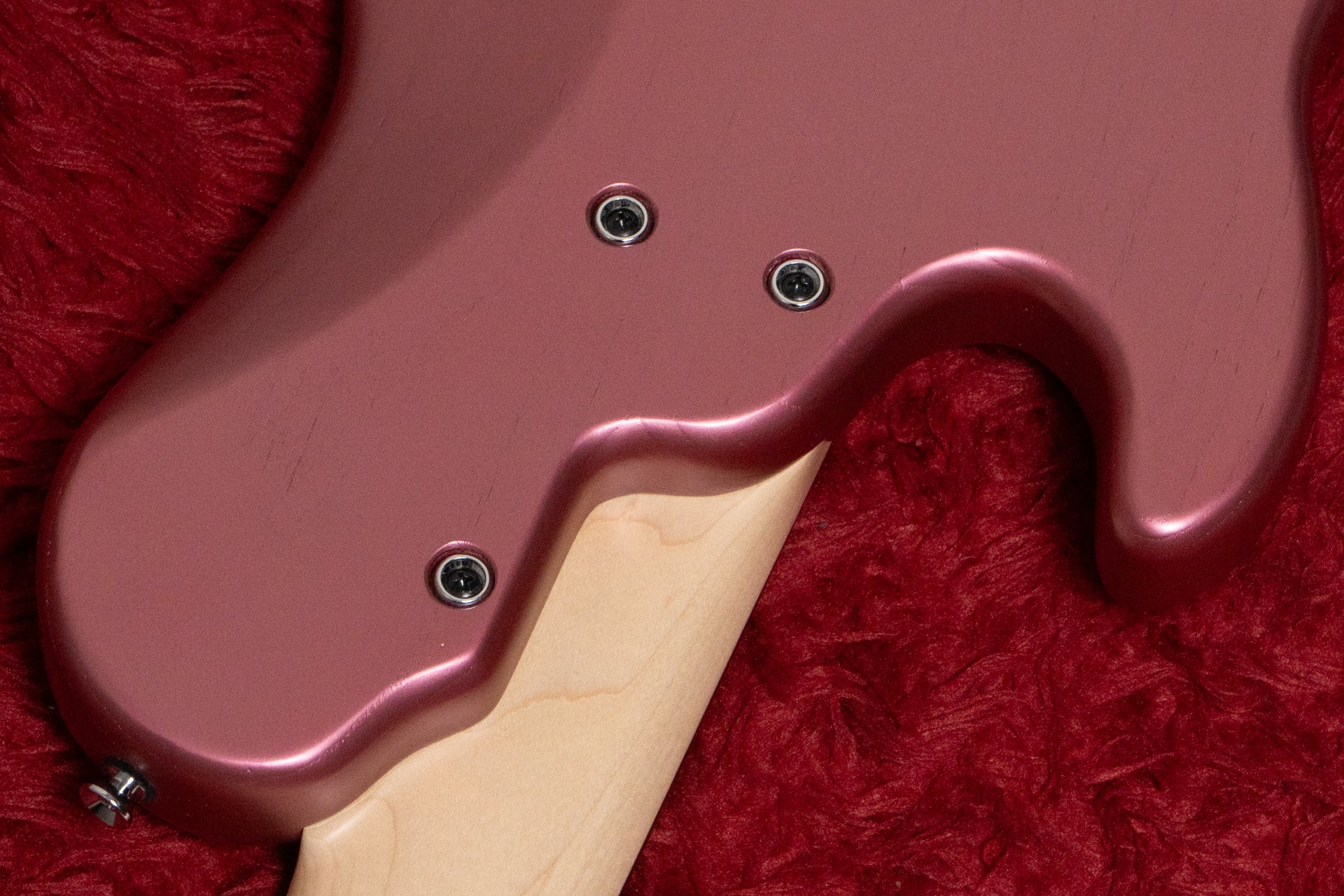
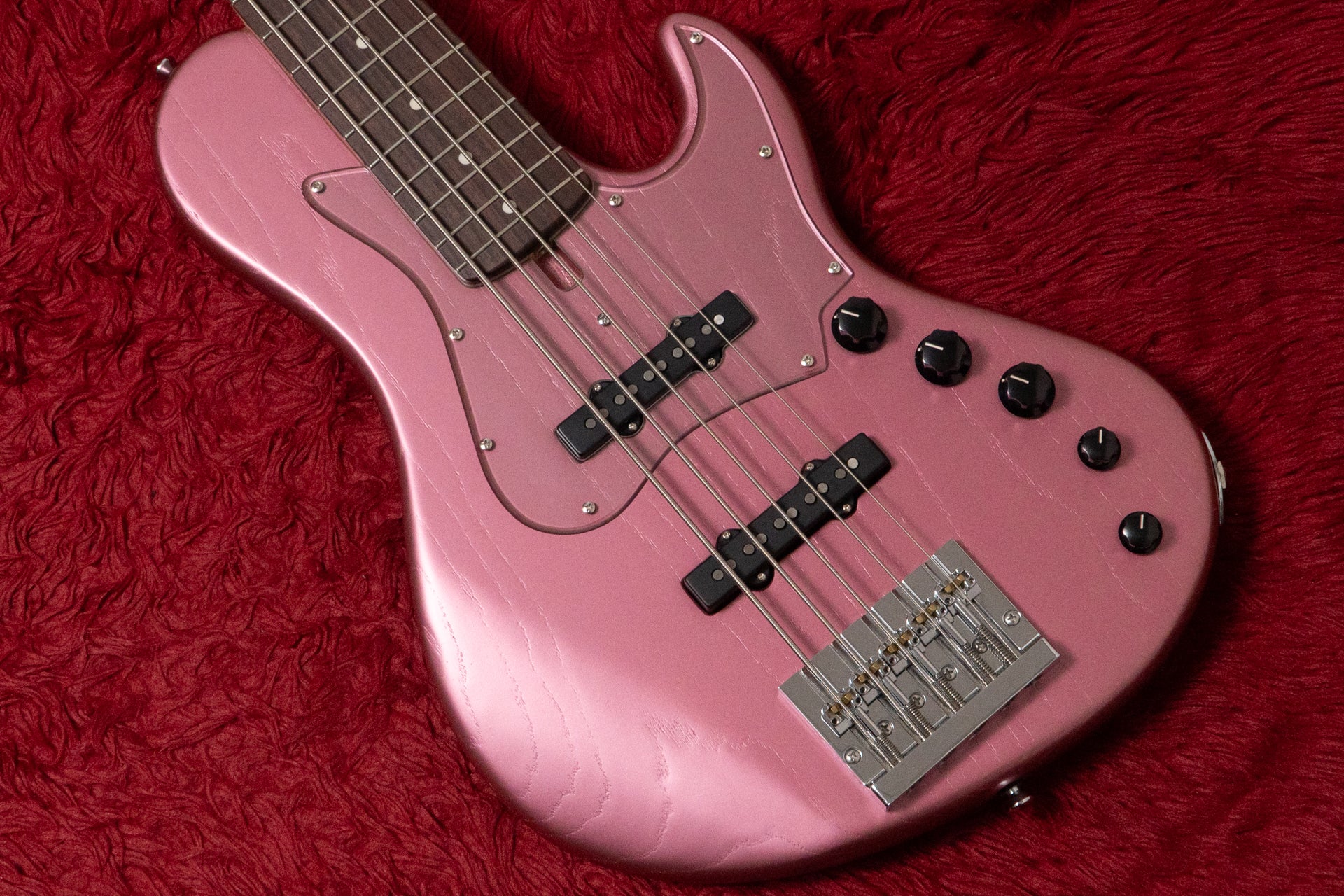
The featured Lexell 5, in Swamp Ash Open Pore finish and a deep burgundy that started life as a Sound Messe show model, is built around a genuinely different formula: a 33.25" scale — three-quarters of an inch shorter than the standard 34" long scale — paired with a Badass-style Hipshot KickAss bridge and a minimalist 3-bolt neck joint.
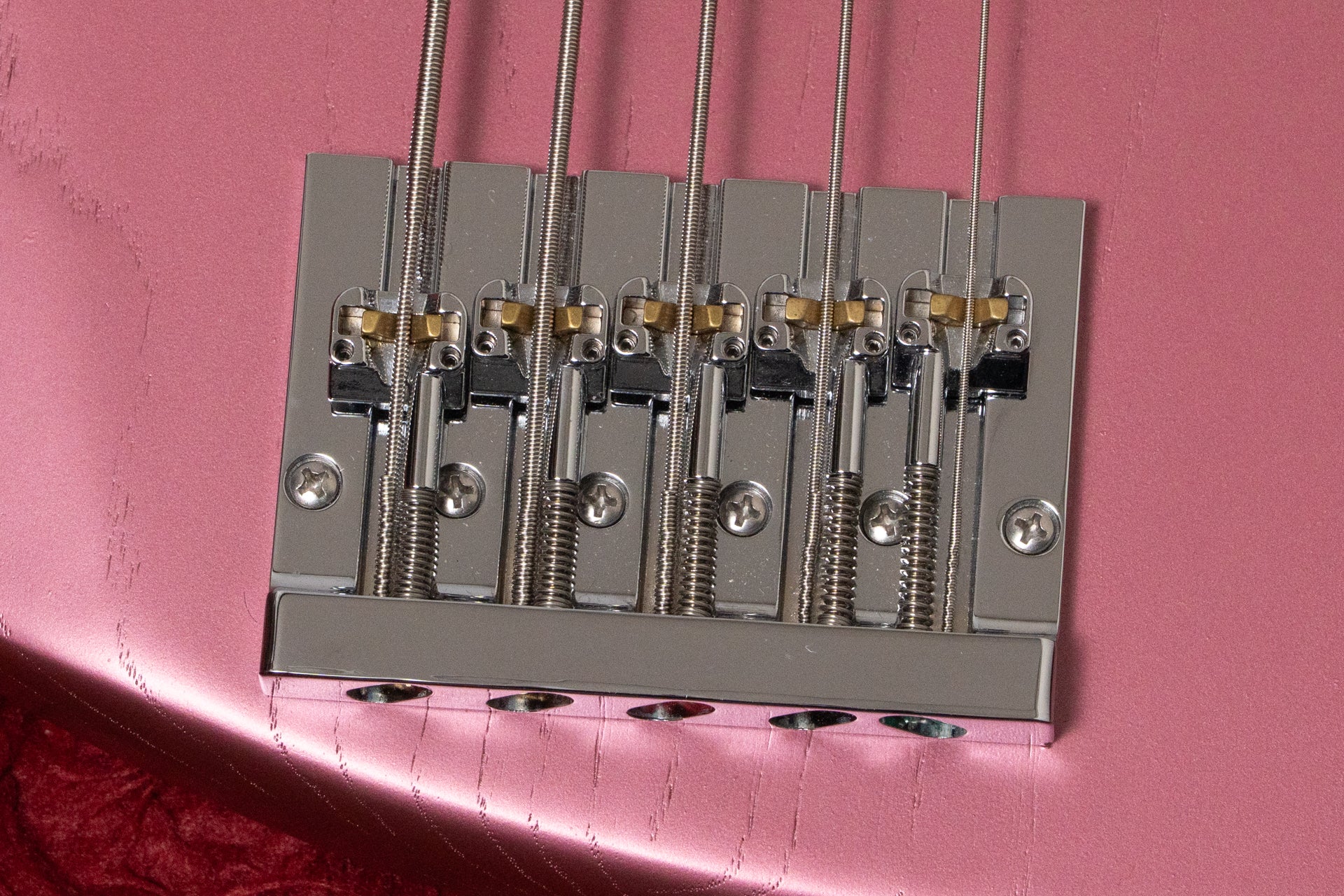
Singlecut basses tend to sound tight and a little sterile on their own; saitias uses the shorter scale and hardware choices to counteract that, landing on something that plays like a singlecut but still sounds like a classic Jazz Bass.
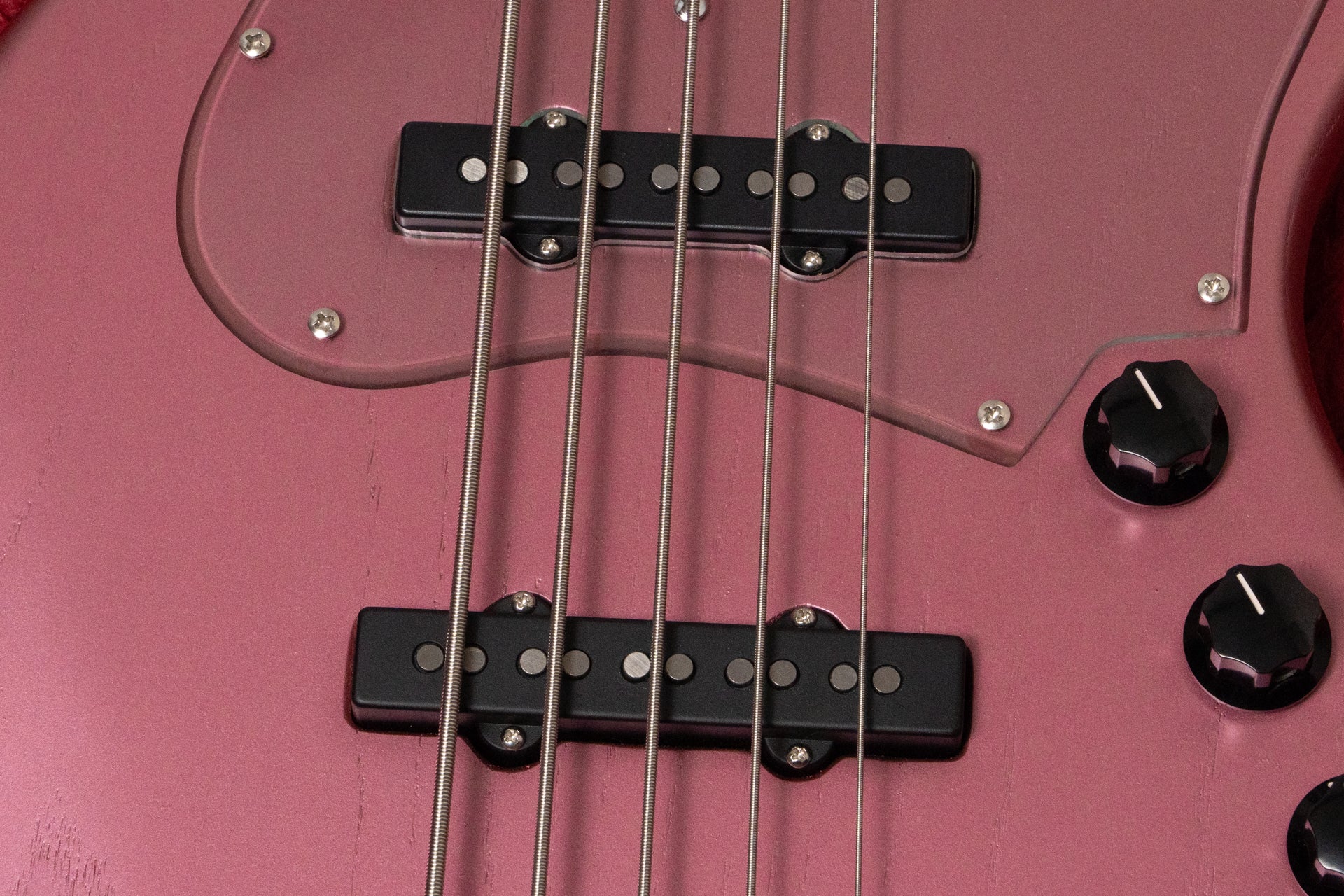
The unit here ships with Lollar Pickups rather than saitias' own house design — Lollar has become a genuine obsession among our staff lately, largely because their 5-string pickups stay properly trebly instead of rounding off, which is the usual tradeoff on a wider 5-string coil.
A Humpback preamp and a carefully weight-selected ash body (3.875kg — genuinely light for the spec) round it out. The finish work alone, our buyers agreed, is some of the best they've seen from any Japanese builder.
We also have a one-off showpiece from the same line in stock — Hawaiian koa top, mahogany back, roasted birdseye maple neck with matching headstock and inlay — bought purely because it sounded exceptional in person, not for the figured top.
Brand
saitias guitars
View all in stock →
The Takeaway
Every bass on this list is, unsurprisingly, some flavor of Jazz Bass — that's a bias we'll happily own. But look past the shared DNA and each one solves a completely different problem: Tsubasa nails vintage character on a budget most builders can't touch, Moon proves refined craftsmanship doesn't require a premium price tag, JIENIE engineers around the exact tonal compromises that make 5-strings frustrating, Sago treats carbon necks as a genuine tone tool rather than a gimmick, and saitias makes a singlecut bass that still plays like tradition.
Right now, Japan's bass-building scene is producing instruments that hold their own against basses costing two to three times as much from Europe or the U.S. — and our current stock reflects that. All five basses above, along with the rest of our Japanese-made collection, ship internationally with duties, taxes, and shipping already built into the listed price — no surprises at customs, no hidden fees.
Explore our full Japanese-made bass collection at Bass Shop Geek IN Box.


